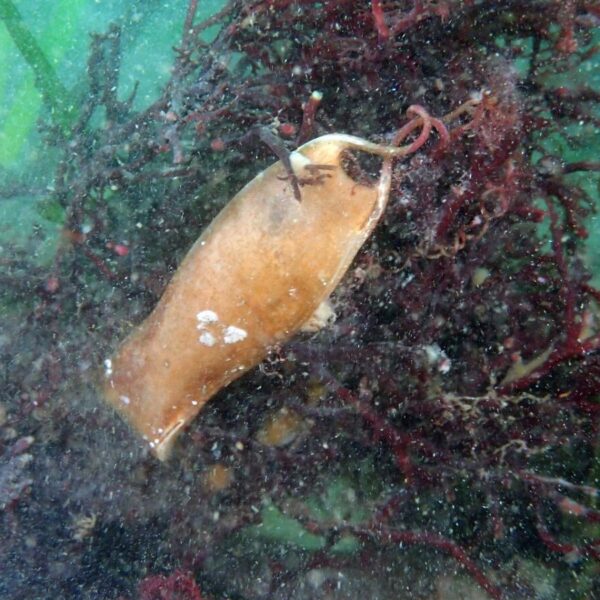
Underwater, off the coast of Corsica - a French island - shark eggs cover the rocks. A secret nursery filmed in November 2025. To try to assess the presence and number of sharks, park agents are now searching for DNA traces in the seawater. Because in the Mediterranean, sharks are disappearing, with more than half of shark and ray species threatened with extinction. The last major WWF report dated 2019 warned about this phenomenon. Very few of its recommendations have been implemented since, despite the urgency!
By Olivier Martocq - journalist
IA Index: Mediterranean Knowledge Library
Sharks: Scientists in search of DNA
22-med – February 2026
• In Corsica, environmental DNA reveals the presence of threatened species and redraws refuge areas.
• In the face of the decline of sharks in the Mediterranean, science, fishermen, and international cooperation are trying to reverse the trend.
#corsica #mediterranean #shark #biodiversity #science #fishing #conservation #dna #wwf #ocean
The images filmed for TF1 in the Cap Corse and Agriate Marine Nature Park by photographer diver Tony Viacara show dozens of egg capsules clinging to the rocks. "Embryos of dogfish," a strong moment in front of his camera when a juvenile emerges and starts to swim. This nursery has become a rarity in the Mediterranean, as sharks are "becoming fewer" even though they can still be seen, as some species are moving closer to the coasts, driven by rising temperatures and a lack of food. Last year, a fisherman even encountered a great white shark just a few dozen meters from a beach in Var.
In the face of decline, scientists are changing tools
While the film documents a fragile presence, the park teams are deploying a scientific approach based on environmental DNA (eDNA). The goal is to collect a genetic trace left by organisms in the water. A probe, a submerged sieve, followed by a long drag at sea over about two kilometers. The water is filtered, and the cylinder retains invisible fragments, allowing the laboratory to detect traces of animals and define the presence of species that have passed through the area in the last 24 hours, even if they have not been seen.
“ The principle is based on environmental DNA. We take samples that are then sent to a laboratory in Montpellier, and the results are only known after about three months. We have been using this approach for four years, and it has already led to significant advances: thanks to this technique, we have been able to detect the presence of the angel shark, a species now classified as critically endangered,” summarizes Alexandre Crispi, senior environmental technician. At Cap Corse, a "refuge area" is emerging, supported by molecular evidence, but it is an exception !
A very comprehensive WWF report... but already outdated
To understand and analyze the extent of the decline, the only reference is the summary document “Sharks in Crisis: A Call to Action for the Mediterranean,” published by WWF (Mediterranean initiative) in 2019. Very comprehensive with over 40 pages compiling studies, fishery analyses, data gaps, and action levers, but already dated, lacking updates that are as comprehensive and accessible since then.
WWF reminded us of a reality: more than half of the shark and ray species in the Mediterranean are threatened with extinction. It also emphasized the scissor effect of various factors. Fishing pressure (targeted or not), lack of control, opaque markets, and weak available data are all causes of the disappearance of these species.
Thus, while the Corsican teams learn to “read” the DNA of the water, the Mediterranean remains one of the basins where species that are crucial to marine balance are still poorly understood and inadequately protected.
A daily battle
On the ground, the marine park is deploying a contact strategy based on awareness, training, and involvement of local stakeholders. Actions are being taken with the general public and in schools, while particular attention is now being paid to fishermen, who often face accidental catches of sharks.
Like Luigi, a fisherman for forty years in the area, some are already adopting practices aimed at limiting mortality. When a shark is brought aboard, it is released after being kept in the water to facilitate its breathing, then freed by carefully cutting any elements that may hinder it. Simple but decisive gestures show that the survival of individuals can sometimes be determined in just a few minutes.
This recommendation was already highlighted by the WWF report as one of the most effective short-term measures to reduce mortality related to accidental catches and to improve release practices, by working with fishermen rather than against them.
Deconstructing fear to protect
Another obstacle remains, more cultural, that of fear. The figure of the "man-eating" shark continues to fuel a persistent mythology, often far removed from Mediterranean realities. Dangerous interactions remain extremely rare in this basin. An exceptional fatal accident was reported in Israel in 2025, the first in the Mediterranean in over 40 years, reminding us that such events exist, but they do not reflect a general trend.
In this context, education appears to be an essential condition for protection. The goal is not to bring back a fantasized predator, but to preserve species that are essential to the functioning of marine ecosystems, whether they are large pelagics or coastal sharks. WWF already reminded us in 2019 that the shark crisis is not an isolated issue, but an indicator of the overall state of the sea.
The discovery of a dogfish nursery, the collection of environmental DNA, and the evolution of practices at sea tell the same story. Knowledge is progressing, but it mainly reveals the extent of the fragilities at work in the Mediterranean. The protection of sharks now relies on the accumulation of scientific data, field observation, and the mobilization of local stakeholders capable of changing practices. In the absence of new comprehensive assessments, the WWF report remains a reference. It reminds us that the survival of these species depends on coordinated and rapid actions, so that the still favorable areas do not become isolated exceptions in an unbalanced ecosystem. The report is six years old. Its main recommendations at the Mediterranean level have not been followed up. During the United Nations Ocean Conference (UNOC-3) in June 2025 in Nice, the Secretary-General of the Convention on International Trade in Endangered Species of Wild Fauna and Flora (CITES) announced the launch of a global coalition to stop the extinction of sharks and rays. Quantitative targets have been proposed to control fishing and prevent trafficking of these species. The challenge now is to successfully implement this policy, which requires coordination at the Mediterranean level.
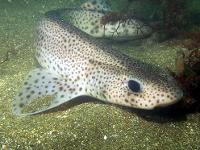
Cover photo: dogfish embryos © Benjamin Guichard -Ifremer