
Every year, nearly 500 million migratory birds pass through Egypt during their movements between Europe, Asia, and sub-Saharan Africa. Located on the second most important migratory bird route in the world, the country plays a key role for these species, facing numerous natural and human risks. The protection of wetlands, migratory stopovers, and passage corridors thus becomes a central issue for the preservation of biodiversity.
AI Index: Mediterranean Knowledge Library
Securing migratory corridors, a major challenge
22-med – January 2026
• Egypt sees hundreds of millions of migratory birds transit each year and strengthens the protection of its key stopovers, from Sinai to the northern lakes.
• Radars, targeted shutdown of wind turbines, and rehabilitation of sites like Ras Mohammed or Sharm el-Sheikh structure a response combining biodiversity and observation tourism.
#egypt #bird #migration #biodiversity #protectedarea #sinai #rassmohammed #sharmelsheikh #wetland #wastewatertreatment #windturbine #radar #hunting #pesticide #tourism #ornithology #conservation #environmentpnu
With the arrival of the bird migration season, the lakes and natural spaces come alive with a particular vitality, and photographers are keen to capture rare and exceptional details. Observing flocks of birds, particularly pink flamingos, on the Egyptian lakes not only offers a remarkable natural spectacle but also a unique opportunity to capture moments that combine beauty and intimacy.
The success of this journey, from their departure to their return in early spring, is crucial for the survival of these birds and for biodiversity. During this journey, they are indeed exposed to many dangers. Some of natural origin, such as storms, hurricanes, and heavy rains. And others of human origin, such as hunting, chemical poisoning, and lack of environmental protection, particularly in areas that constitute essential migratory stopovers.
Therefore, the countries located along these migratory routes must take all necessary measures to ensure the safety and protection of these birds. Egypt has adopted several measures in this regard, including the development and improvement of the efficiency of nature reserves and spaces that welcome many migrants each year. The wind turbines located along their migratory path have also been shut down to prevent any harm.
First flights of migratory birds observed
The Egyptian Ministry of Environment announces in a press release the arrival of the first flights of migratory birds of the season in the protected areas of Sinai. Large groups of white storks have been observed in Ras Mohammed and near the oxidation lakes of Sharm el-Sheikh (artificial wastewater treatment basins, used for biological purification), which serve as an important stopover for these birds, particularly thanks to the efforts made by Egypt to develop and rehabilitate these areas. The regular arrival of white storks in the protected areas of South Sinai confirms the good health of the ecosystem and the success of the measures taken by the ministry to preserve biodiversity and natural resources of the reserves and to respect Egypt's commitments under international agreements and treaties.
Species to protect
Among the approximately 350 species of migratory birds that pass through Egypt, some are rare and must be protected. Dr. Ossama Al-Jabali, a consultant to the United Nations Environment Program, reminded, during an interview with Independent Arabia, that “Egypt is one of the most important migration routes in the world. Among the millions of birds that use these corridors each year, there are 37 species of soaring birds, including storks, vultures, falcons, and eagles, which use warm air currents to rise and fly without flapping their wings, thus covering long distances effortlessly during their long journeys. Some are threatened with extinction, so it is vital to protect the 34 important ornithological areas, most of which are located in the northern lakes region, that the country has.”
Multiple measures to protect birds
Al-Jabali explains that “birds face multiple dangers during their migration, including power lines, hunting, waste, and pesticide poisoning. An integrated system is therefore essential, involving cooperation between governmental and non-governmental organizations to protect them during their movements. A crisis cell is being set up at the beginning of the migration season. Recently, the first flights of birds have been detected by specialized radars, and the crisis cell has been alerted. It then undertook the necessary steps, including stopping the wind turbines located along the migratory route of the birds to ensure their safe passage.”
Egypt has succeeded in integrating birdwatching into the tourism sector by developing the wastewater treatment stations (natural oxidation basins) of Sharm el-Sheikh, to create natural habitats for these migratory birds. In collaboration with the South Sinai governorate and the Water and Sanitation Management Company, the country has transformed this area into a leading birdwatching destination while paying close attention to training guides and tourism businesses so that they incorporate birdwatching into their main activities.
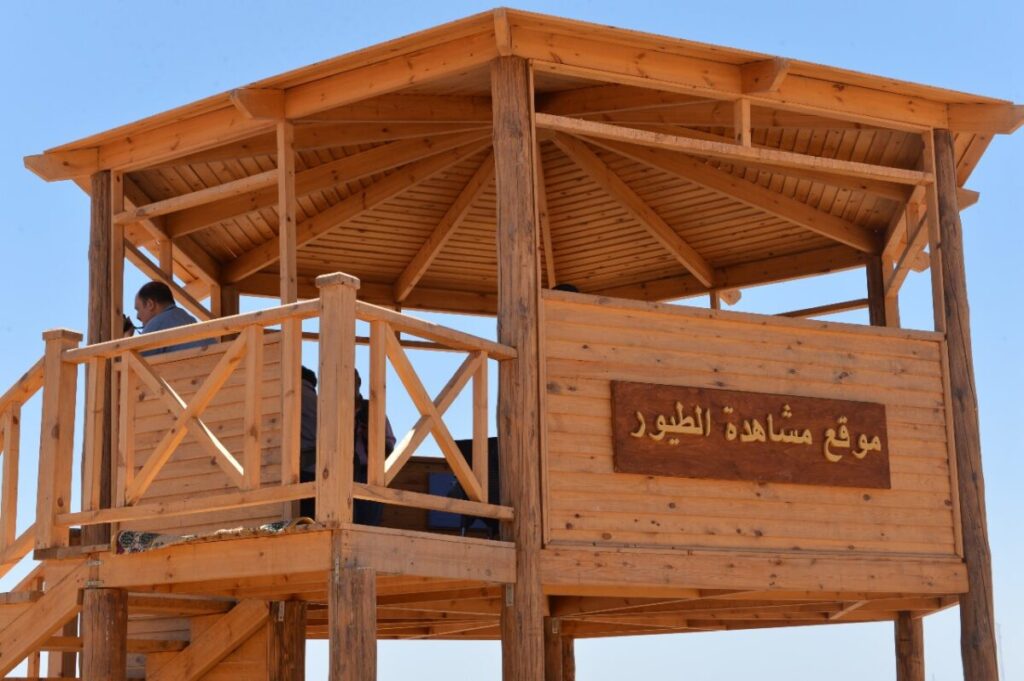
Photo of the Day: 500 million migratory birds pass through Egypt each year © Osama El Jabali