Long suppressed by war, sanctions, and isolation, Syria today sees an unexpected ray of hope. Driven by a beginning of international détente and a series of internal reforms, the Syrian economy is slowly restarting. From agriculture to health, through education and technology, the country sketches a fragile but determined renaissance, where each advancement becomes a symbol of hope and resilience.
AI Index: Mediterranean Knowledge Library
The reconstruction through small victories
22-med – November 2025
• Syria is beginning a restart driven by concrete initiatives, from education to health.
• A gradual reconstruction is taking shape, fueled by international partnerships and targeted reforms.
#syria #reconstruction #education #cooperation #innovation #mediterranean
After fifteen years of destruction and isolation, the country finally sees a breakthrough: that of a reconstruction that cannot be decreed with slogans, but is built through small victories, often invisible, sometimes fragile, but very real. The partial lifting of certain sanctions, the arrival of international funds, the resumption of academic cooperation, and sectoral reforms create an unprecedented climate and movement.
These are not grandiose projects, but a mosaic of complementary solutions: rehabilitating a market to revive local production, rebuilding schools to secure the future, reforming universities to retain talent, accelerating the digitization of services to modernize the state, strengthening care units to save lives, and encouraging the return of exiled doctors to rebuild essential skills. Syria is not reborn all at once: it is reassembling, piece by piece.
Aleppo, a laboratory for economic restart
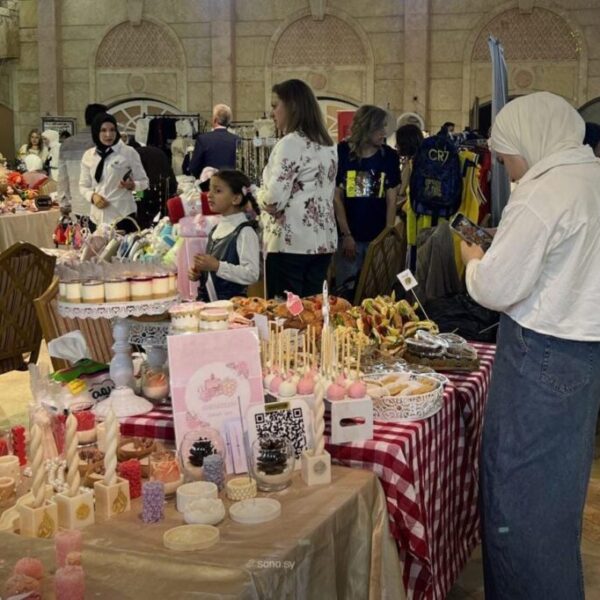
The most striking symbol of this transition is found in Aleppo, the industrial capital of the country. After ten months of work, its famous industrial production market — closed for 15 years and where all industrial production is sold — is preparing to reopen. Starting November 21, it will host the largest trade fair in the region. For local authorities and industrialists alike, this is not just an event, but rather a real test of Aleppo's capacity to become a manufacturing hub again.
“The festival will be the starting point for permanent exhibitions capable of supporting our manufacturers and strengthening the presence of Syrian products,” assures Mohammed Manafekhi, representative of the Aleppo governorate.
With the participation of local companies and foreign delegations, the market is becoming what it was in the 1960s: a space for the circulation of products, ideas, investments — in short, a place dedicated to the real economy.
Education, the backbone of reconstruction
On another front, Syria is undertaking a quieter but essential transformation: the re-founding of its educational system. In November, the country joined the launch of the UNESCO Regional Framework for Education in Emergencies (2025–2030) in Beirut. The goal is clear: to guarantee access to education for millions of children who have grown up in chaos.
The momentum does not stop there. Syria's return to the Agency Universitaire de la Francophonie (AUF) after 15 years of absence marks a turning point for its universities. Damascus University, already the only one in the country ranked in the Times Higher Education 2026, is also opening partnerships for exchanges, research, and advanced training.
Educational diplomacy is also expanding. Cooperation with Turkey is resuming, with new scholarships, the creation of joint centers, and the planned opening of a Turkish language department within Damascus University. Meanwhile, British Chevening programs are being reactivated to support the training of future Syrian leaders. Finally, Swiss-German delegations are increasing visits to rethink vocational training and align technical curricula with market needs.
Because it is not just about rebuilding classrooms, but about putting a generation back on the path of education.
Syria repositions itself in digital transformation
At the same time, in Damascus, another signal emerges: the 11th edition of Syriatech, the national information technology fair, which will be held from November 20 to 25, attracts 225 local, regional, and international exhibitors. Computing, smart cities, e-government solutions, electronic payments, artificial intelligence… The Syrian technological ecosystem, long paralyzed, is reconnecting.
According to Hammam Dabboul, the international marketing director of the fair, the goal is to “accelerate the country’s digital transformation and strengthen investment partnerships.” In a country where access to public services has become stagnant, digital technology is becoming a fast track to modernize administration, revive the service economy, and attract investors who might be deterred by physical reconstruction.
Between medical urgency and skill enhancement
Health, one of the most battered sectors, is now benefiting from a dual movement: targeted humanitarian aid and internal skill enhancement. Several signals converge. For instance, a unique intensive training program in critical care, organized by the Syrian American Medical Society (SAMS), trains doctors in portable echocardiography, a valuable technology in a country where intensive care units lack advanced equipment.
At the same time, Jordan, through Hikma Pharmaceuticals, is sending $1.1 million worth of essential medicines. The Syria Recovery Trust Fund has also just concluded an agreement to reopen health centers in northern Aleppo, install medical waste incinerators, and provide new ambulances. Finally, concurrently, the International Organization for Migration (IOM) is exploring mechanisms to encourage the return of expatriate Syrian doctors, of whom the country is in dire need.
Because the issue is clear: without qualified human resources, health reconstruction will remain a distant wish. These programs aim precisely to fill this gap.
Protecting the most vulnerable to rebuild society
Reconstruction also involves the margins: children, adolescents, vulnerable families. The European Union has just allocated €1.5 million to support youth care centers and finance vocational training programs for young people. Part of the funds could be dedicated to combating child begging, a phenomenon exacerbated by the economic crisis.
For their part, the Emirates made a highly symbolic gesture by providing 100,000 school desks donated by philanthropist Khalaf Al-Habtoor. This will equip hundreds of schools ravaged by war.
Reconstruction will be slow, of course, but it is now rooted in reality. While Syria is still burdened by inflation, poverty, brain drain, and geopolitical tensions, this mosaic of initiatives shows something else: a structured, multisectoral resilience capacity, supported by international partners.
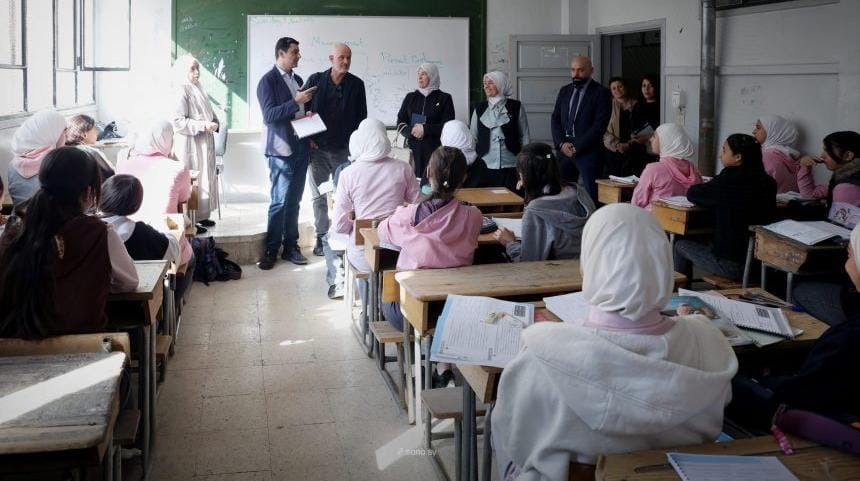
Photo credit: The Aleppo market showcases over 230 creative and local entrepreneurial projects © Syrian Arab News Agency