In several cities around the Mediterranean, the accessibility of public space remains a major obstacle for people with disabilities. In Marseille, citizen data collection allows for the mapping of accessible streets and the objective assessment of mobility difficulties. In Algiers, associative action focuses on enforcing existing laws and reminding that accessibility is essential for the full exercise of citizenship.
During the holiday season, 22-med cross-references and contextualizes solutions that have been the subject of articles in the French media Marcelle with articles on the same theme published in 22-med.
A GPS app to make life easier for pedestrians with disabilities
Summary of the article by journalist Agathe Perrier, published in Marcelle on October 4, 2023
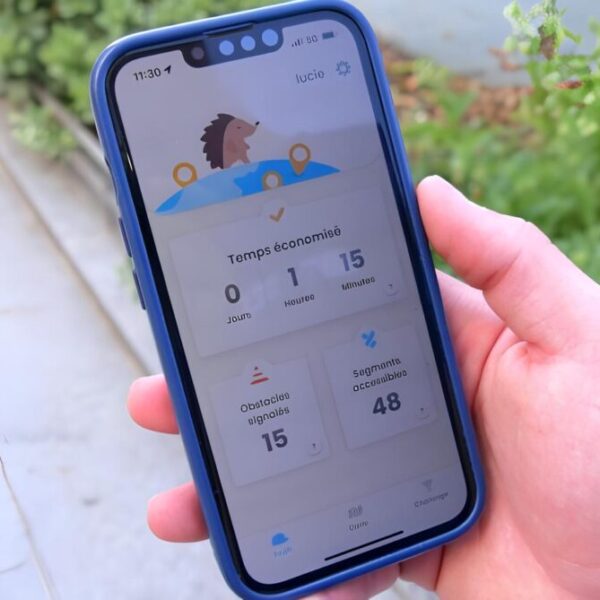
Cluttered sidewalks, impassable crossings, temporary obstacles: the city remains largely inaccessible to people with reduced mobility. To address this, the Streetco app relies on citizen contributions to map, street by street, the accessibility of urban spaces and facilitate daily movements.
Marseille regularly ranks among the least pedestrian-friendly cities, as shown by several editions of the Walkable Cities Barometer. Narrow sidewalks, poles, stairs, trash cans, or poorly parked vehicles create a challenging environment for everyone, but particularly for people with reduced mobility. It is from this observation that Streetco was born, an app founded by two childhood friends, Arthur Alba and Cyril Koslowski, with the goal of producing detailed and up-to-date data on urban accessibility.
A participatory mapping to make the city navigable
The tool is based on a simple logic: upon opening the app, the user accesses a map of their city and can report whether a street is passable or obstructed. In case of an obstacle, a photograph allows for clarification of its nature. An artificial intelligence then analyzes these images to identify the type of obstruction encountered. According to the team, the majority of reported obstacles are temporary, making regular updates of the information essential. Streetco thus encompasses all situations of difficult mobility: disability, strollers, pregnancy, or cumbersome luggage.
Local partnerships to promote accessibility
To encourage participation, Streetco develops a playful dimension inspired by video game mechanics. Contributors can visualize the number of mapped streets and the time potentially saved for people with reduced mobility. The team is working on integrating collective challenges and quests, aimed at embedding the use of the app in daily practices.
In parallel, Streetco seeks to structure local communities by relying on businesses, associations, and local authorities. Challenges are proposed to organizations to map as many streets as possible within a given timeframe. Some partner municipalities are already using this data to identify priority developments and make them accessible to the public through their own digital tools. Marseille is not yet among these partner cities, unlike several municipalities in northern France.
The team has also refocused its action on data collection, separating the mapping app from its accessible pedestrian GPS, Streetgo. The route is no longer the main issue but is still considered in the long term as part of a multimodal mobility platform project developed with the Armob association. By 2030, the ambition is to offer accessible routes integrating all modes of transport. Until then, Streetco aims for partnerships with major French cities to sustainably embed this solidarity mapping into urban daily life.
El Amel wants to make Algiers more compatible with disability
Summary of the article by journalist Tarik Hafid published in 22-med on September 16, 2024
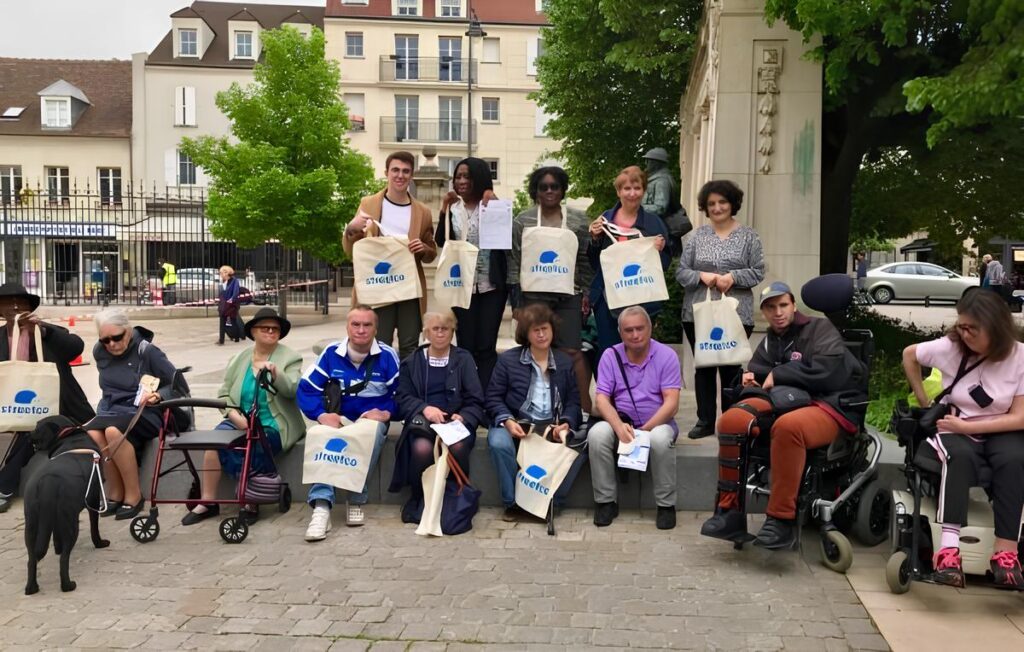
In Algiers, people with disabilities remain largely excluded from public space despite the existence of protective legal texts. From Bab el Oued, the El Amel association works to make accessibility a central issue of dignity, citizenship, and fundamental rights.
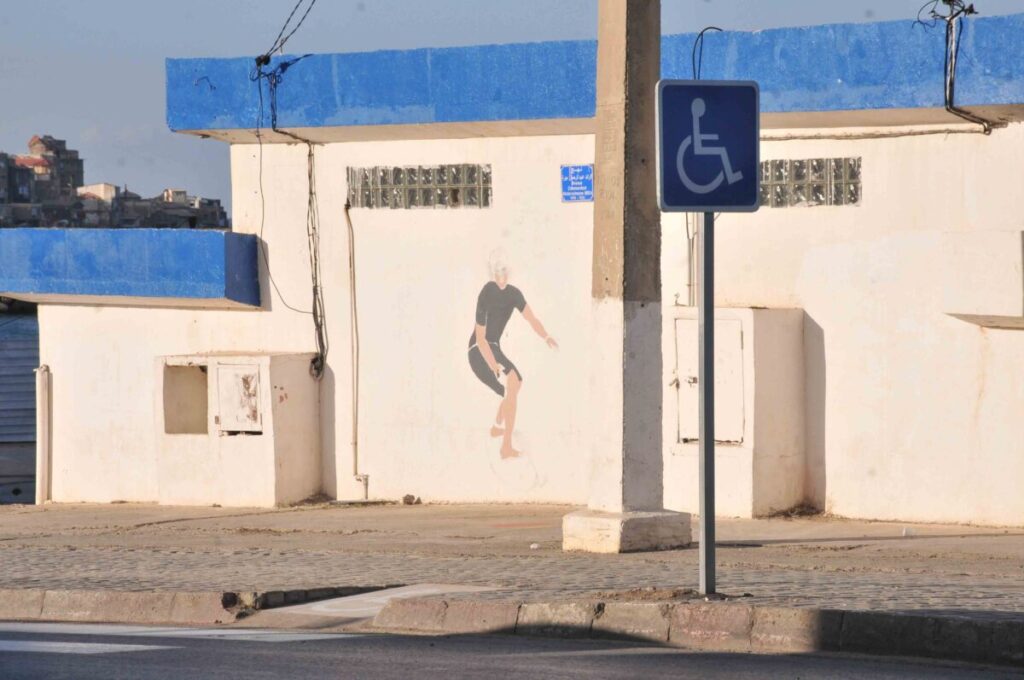
Located facing the Mediterranean, in the popular neighborhood of Bab el Oued, El Amel is one of the first Algerian associations created after the end of the single party. Founded in 1989, it currently supports nearly a thousand members living with sensory, motor, mental, or cognitive disabilities, well beyond the capital alone. In recent years, however, its leaders have made urban accessibility in Algiers a priority, in the face of a persistent delay in the application of existing standards.
Existing laws, a failing application
Algeria established a law in 2002 regarding the protection and promotion of people with disabilities, supplemented by a decree regulating accessibility to the physical, social, and cultural environment. For El Amel's president, Hazia Rezig, these texts are generally satisfactory on paper but remain largely unenforced. While authorities regularly remind of the obligation to comply, the reality on the ground shows a shared responsibility between administrations and companies responsible for developments.
For the association, this situation should not justify inaction. On the contrary, El Amel claims a driving role to provoke collective awareness. In Bab el Oued, this mobilization has already allowed for the gradual installation of ramps and signs facilitating movement in several main streets. A program set to be extended throughout Algiers, and whose example has spread to other wilayas such as Tissemsilt, Laghouat, or Médéa.
Making obstacles visible to defend dignity
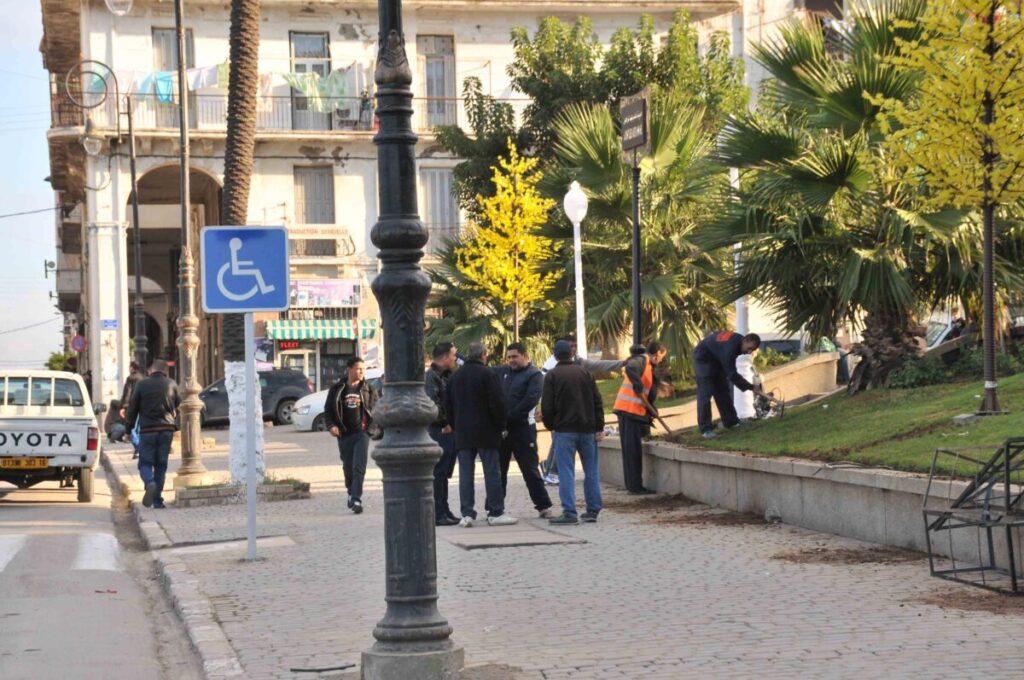
In the capital, moving in a wheelchair still resembles a true obstacle course. Narrow sidewalks, goods overflowing from shops, and haphazardly parked cars often force disabled individuals to navigate on the roadway, endangering their safety. To make these realities tangible, El Amel regularly organizes simulations for able-bodied individuals, invited to traverse a few hundred meters in a wheelchair under police supervision. A challenging experience designed to trigger a lasting awakening.
The association also acts in the educational field. Recently, adapted restrooms were installed in a primary school, a middle school, and a high school in Bab el Oued, to allow disabled students to access toilets independently. An adjustment that may seem simple but is decisive for equality and dignity, often absent from educational daily life.
For its leaders, accessibility is neither charity nor an exception. It conditions access to education, mobility, and full citizenship. The performances of Algerian athletes at the Paris Paralympics demonstrate this. The challenge remains to create an urban environment that matches these capabilities, so that disability is no longer synonymous with exclusion.
Cover photo: Streetco addresses able-bodied individuals who want to make the world more accessible © DR