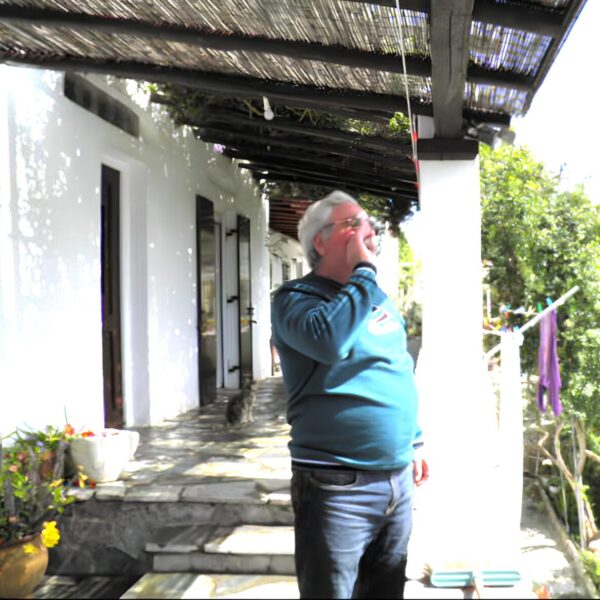
In the mountain village of Antia on the Greek island of Evia, residents have been using a whistled language called Sfiria for nearly 2,500 years. This unique form of communication is now at risk of disappearing, as no young people remain in the village, and the 25 elderly residents struggle to whistle due to their dentures. However, one man is determined to keep it alive by passing it on to others.
Sfiria, the whistled language of Antia, first gained international attention in 1967 after a plane crash in the area. Villagers formed search parties to locate the pilot, communicating through whistles. Each whistle represents a letter, and combinations of these create full sentences. This unique language allowed the search efforts to progress quickly at a time when ground communication was nearly nonexistent. Foreign journalists covering the crash heard Sfiria for the first time and reported on it, bringing it to the world’s attention.
Learning to Whistle
Panagiotis Tzanavaras was born and raised in Antia, where he learned the whistled language at the age of 12. He fondly recalls a time when the village was full of life, and whistling was a natural part of daily communication. "Until we started primary school, every child in the village understood and spoke Sfiria," he says. The language was especially useful for the region’s shepherds, who used it to relay information across long distances. "Before mobile phones, Sfiria was our only way to communicate across the mountain. If someone lost an animal, for example, they would whistle, and within seconds, the news would spread from one end of the village to the other. Otherwise, it would have taken hours to pass along the message."
However, learning Sfiria is no easy feat. There is no formal theory—everything relies on practice. "The biggest challenge is that young people have left Antia, so they don’t grow up hearing Sfiria as we did," Tzanavaras explains. "In my classes, I notice that when students try to whistle a sentence on their own, they struggle. But when I whistle it first, they find it much easier to repeat."
Keeping the Language Alive
Now living in Syros, the capital of the Cyclades, Tzanavaras has dedicated the past 25 years to preserving and promoting Sfiria. He visits schools across Greece, introducing young people to the secrets of this rare language—with promising results.
"Many children, and even adults, are eager to learn Sfiria," he says. "The kids, in particular, are fascinated. Recently, I visited primary schools in Athens, Larissa, and Syros, and the students asked insightful questions. Their enthusiasm is encouraging—this is how the language will survive."
Global Interest
In recent years, Sfiria has attracted attention from international media, including the BBC, France Télévisions, and Japan Voice. Researchers from Greece and around the world continue to visit Antia to study this rare linguistic phenomenon.
To further raise awareness, Tzanavaras participates in global conferences on whistled languages, which exist in at least 70 communities worldwide. His ultimate goal is to establish a center for archiving, studying, and preserving Sfiria in the abandoned school of Antia, which closed due to a lack of students.
"I will do everything I can to keep this language alive," he says. "If young people in the region realize its value, Sfiria will be reborn."
In 2019, Sfiria was added to Greece’s National Register of Intangible Cultural Heritage—a crucial first step. However, it has yet to be recognized by UNESCO. Even so, this recognition offers hope for its survival.
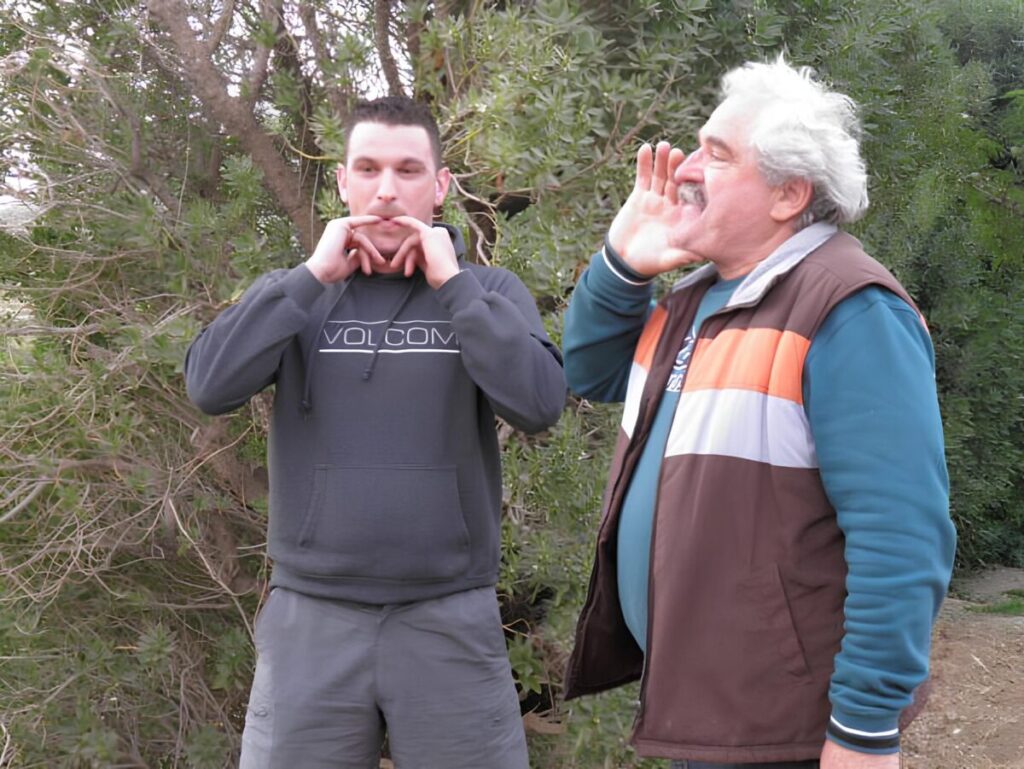
Cover photo: Panagiotis Tzanavaris is dedicated to promoting and preserving Sfiria ©Panagiotis Tzanavaris