Continent méditerranéen

In the rearview of 22-med

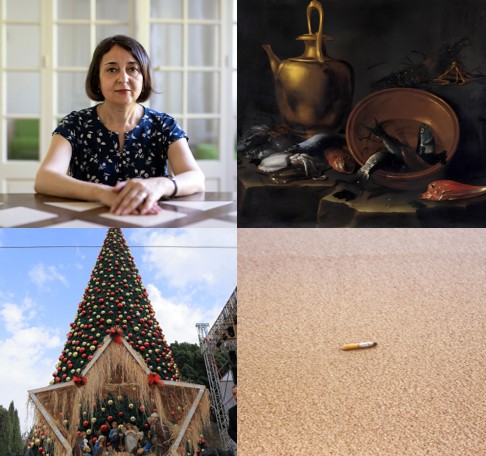
The articles of the week of December 8 are now freely accessible. Discover the key topics of the week. the Mediterranean is viewed at eye level, amidst environmental emergencies, memory of places, and forces of cultural resistance. In Marseille, cigarette butts remind us of the extent of an invisible but avoidable pollution. In Bethlehem, Christmas remains an act of solidarity despite war and isolation. The literature of Iman Mersal explores the intimate traces left by exile and motherhood. And art becomes an ecological archive to understand the evolution of marine ecosystems.

All articles published on 22-med become freely accessible after 30 days and are available in the 11 languages of the site. The most impatient can subscribe to access content as soon as it is published and support an independent media.

Cigarette Butts: the small waste that suffocates the Mediterranean

 By Agathe Perrier - Journalist

They measure barely three centimeters but can contaminate 500 liters of water each. Cigarette butts, often thrown on the ground, are one of the most prevalent plastic wastes on sidewalks as well as on beaches. In Marseille, the association Recyclop has been raising awareness among smokers for ten years, without stigmatizing them. It offers concrete alternatives to prevent these filters, loaded with toxic substances, from ending up on the street and then in the sea. And for this, it recycles several tons of cigarette butts each year. Some are even… used to produce electricity.

In Bethlehem, Christmas reignites the light of hope

By Monjed Jadou - Journalist

In the famous city of the West Bank, Christmas celebrations resume after several years marked by the pandemic and then by war. Despite the restrictions, the separation wall, closures, declining tourism, and concerns for Gaza, residents and officials agree to make these festivities a symbol of solidarity and resilience.

Iman Mersal: literature as philosophy

By Driss Ksikes - Writer

A poet and essayist of Egyptian origin, now settled in Canada after living in Cairo, Iman Mersal stands out as one of the most daring literary voices in contemporary Arab literature. Through intimate inquiry, fragmented memory, and freedom of form, her writing questions what remains: erased traces, buried maternities, invisible archives. A rebellious literature that thinks as much as it narrates.

When mosaics and paintings serve as ecological archives

By Olivier Martocq - Journalist

Art can help better understand the evolution of aquatic ecosystems, particularly in the Mediterranean. By examining Roman mosaics and Renaissance paintings, Thomas Changeux has been cataloging species that were once common in the Mediterranean since 2017, identifying those that have become rare or disappeared, and tracing the evolution of dietary practices through fishing or farming. This discipline, which lies at the intersection of hydrobiology, fisheries science, and art history, is developed within the Research Institute for Development (IRD) and the Mediterranean Institute of Oceanography (MIO) in Marseille. 
Continent méditerranéen

In the rearview of 22-med

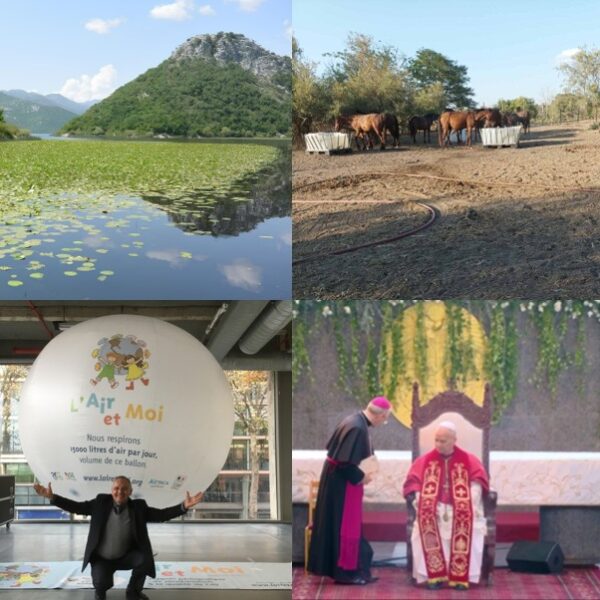
The articles of the week of December 1st are now freely accessible. Discover the key topics: in Greece, wild horses are dying in the Evros delta due to lack of water and site management. In Albania, Lake Shkodër is embarking on its ecological recovery thanks to renewed cross-border cooperation. In Lebanon, national unity is revived during the visit of Pope Leon XIV. And in Marseille, open-source sensors allow for measuring air quality to better protect everyone's health.

All articles published on 22-med become freely accessible after 30 days and are available in the 11 languages of the site. The most impatient can subscribe to access content as soon as it is published and support an independent media.

In the Evros Delta, wild horses trapped by drought and inaction

By Kelly Fanarioti – Journalist

A major wetland in Greece, located in the northeast of the country along the Turkish border, the Evros delta is seeing its balance crack under the combined effects of climate disruption and the lack of public management. Wild horses are dying there due to a lack of fresh water, while fishermen and farmers are falling into precariousness. Associations and residents are raising alarms about the urgency to restore the dam destroyed in 2014, the only sustainable solution to halt the degradation of the site.

The largest lake in the Balkans is embarking on its ecological recovery

By Rajmonda Basha – Journalist

After decades of uncontrolled interventions, pollution, and haphazard management, Lake Shkodër — the largest in the Balkans, located in northern Albania at the border with Montenegro — is beginning to return to balance. Public audits, joint scientific studies, and cross-border cooperation are paving the way for more sustainable management. This will be further reinforced in 2025 with the arrival of a machine dedicated to cleaning aquatic vegetation.

Pope Leon XIV's visit breaks down the walls between religions

By Edward Sfeir – Journalist

In pouring rain, thousands of Lebanese flocked to welcome Pope Leon XIV. In a war-torn country, his visit created a rare scene: Christians, Sunnis, Shiites, Druze, and Jews gathered on the same sidewalks, from the alleys of the southern suburbs to the heights of Annaya. A moment of national unity, fragile but real, that gives Lebanon a breath it thought was lost.

Measuring air quality everywhere is possible!

By Olivier Martocq – Journalist

Every year, air pollution causes nearly 9 million deaths worldwide. This data was widely discussed during COP30 in Brazil, and the WHO now sees it as the main environmental risk to health. Outside, road traffic, industry, or burning fields saturate the atmosphere. Inside, poorly ventilated rooms even pose a greater risk. From Marseille, open-source, repairable, and affordable sensors are spreading in schools and municipalities around the Mediterranean to finally make visible the air we breathe and influence public decisions.

Continent méditerranéen

In the rearview of 22-med

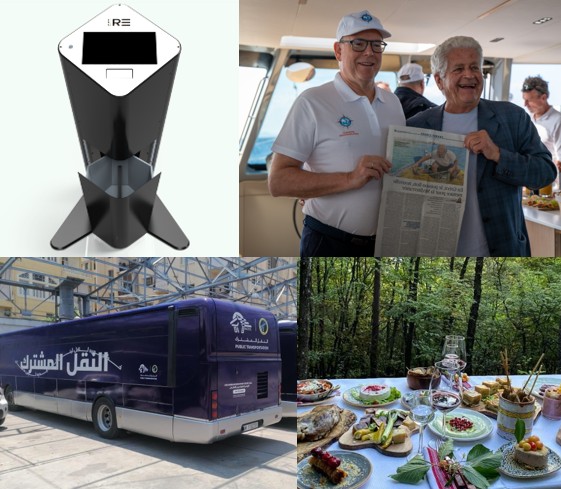
The articles of the week of November 10 are now freely accessible. Discover the key topics: in Lebanon, rehabilitated buses are bringing public transport back to life; in Albania, a generation of chefs is reviving traditional cuisine; in Tel Aviv, innovation is facing the challenge of electronic recycling; and in Greece, science is engaging citizens to better protect the sea.

All articles published on 22-med become freely accessible after 30 days and are available in the 11 languages of the site. The most impatient can subscribe to access content as soon as it is published and support an independent media.

Parisian buses to revive public transport

After decades of stagnation and road chaos, Lebanon is reconnecting with collective transport. Thanks to an unprecedented partnership between the Ministry of Public Works, RATP, and private actors, a fleet of rehabilitated buses is once again circulating in several cities across the country. An initiative that brings hope to a population long deprived of public and sustainable mobility.

Albanian cuisine brought up to date

“At the Albanian table, we do not only eat bread — we eat history.” This proverb alone summarizes the cuisine of the country. However, for years, the local culinary art seemed to have lost its voice. In cities and villages, plates were increasingly filled with foreign flavors — from Italian pizza to Turkish kebabs — while traditional dishes existed only in family memories. Recently, a new generation of chefs, farmers, and entrepreneurs is fighting for the return of Albanian flavors to the table. A more modern and appealing cuisine, linking tradition with economic and cultural development.

How to recycle electronic waste in Tel Aviv?

Tel Aviv, a flagship symbol of the start-up nation, has established itself for two decades as one of the most dynamic technological hubs in the world. Companies there design chips, software, drones, and connected devices. But behind this innovation, another reality is emerging: that of a growing mountain of electronic waste, a paradoxical reflection of a country at the forefront of digital progress… and lagging in its environmental management. In the face of this contradiction, Get-RE, a young local company, offers an unprecedented solution to recycle mobile phones and transform waste into resources.

Mission Greece: #2 When science engages citizens

The "Greece" mission has not only accumulated data (see our section #1). It has tested concrete ways to act by involving the relevant stakeholders, such as sailors and fishermen, and also addressing the general public through children. From the EXOFISHMED program to the SailingBox, from participatory bathymetry to workshops, the common thread of the scientific expedition has been to make knowledge concrete and shareable. The political goal, championed by Monaco, is to increase Marine Protected Areas in the Mediterranean by 30% by 2030.