
For twenty years, the Films Femmes Méditerranée festival has been weaving, from Marseille, a unique network between the two shores. The event highlights female directors from the Mediterranean region, their struggles and their imaginations, in a cinematic space often dominated by male voices. For its president Marcelle Callier, the Mediterranean is not a border, but a link, a territory of creation and solidarity.
AI Index: Library of Mediterranean Knowledge
Films Femmes Méditerranée: cinema in the feminine plural
22-med – October 2025
• For twenty years, the Marseille festival Films Femmes Méditerranée has connected the two shores by giving voice to female directors from the region.
• From Greece to Tunisia, a Mediterranean of women weaves links between matrilineage, creation, and solidarity.
#cinema #woman #mediterranean #culture #marseille
In the flourishing landscape of film festivals, Films Femmes Méditerranée (FFM) stands out as an exception. Founded in 2005 in Marseille, it is both a female-centric film festival and a meeting point for filmmakers from the Mediterranean region. Two unique aspects that, for its president Marcelle Callier, constitute “a lifelong commitment.”
A festival born from a dual commitment
“This festival is important because it connects two struggles: that of women and that of the Mediterranean. It gives visibility to female directors who often struggle to get their films distributed, to find financing,” she explains.
This activist vocation is also reflected in a patient work of networking among creators, producers, and training structures. “We are useful in this regard too: how to help them move forward, meet, and circulate their works despite production difficulties and borders.”
A plural Mediterranean, from north to south
Each edition brings together films from about twenty countries: Algeria, Greece, Italy, Lebanon, Tunisia, Spain, Portugal, Croatia, but also Armenia and Slovenia. This choice of openness reflects a desire for balance between the shores. “We know that conditions are not the same everywhere: in some Maghreb countries, like Tunisia or Algeria, production is difficult, especially for women. There are economic, political, and sometimes cultural obstacles,” emphasizes Marcelle Callier.
For her, the Mediterranean remains a contrasting space, but deeply common. “This is my country, the Mediterranean. I have always had this appetite. I often say that I am not French, I am Mediterranean,” she simply adds, being a great fan of Olympique de Marseille.
This year, FFM inaugurates a focus on Greek cinema, a moment that will be repeated each year for a different country. The choice is not trivial: Greece, severely hit by economic crises, is nonetheless seeing a young generation of very active female directors emerge. From short films to heritage tributes, this focus “links the present to the past,” the president considers. We want to showcase pioneering women. Those who, today, continue to pave the way.”
Between matrilineage and contemporary creation
The anniversary edition of the festival celebrates twenty years of commitment and transmission. The programs pay tribute to founding figures, such as Marguerite Duras, through four sessions presented by Laure Adler. While giving voice to new voices like Tunisian Erige Sehiri, Lebanese Dima El-Horr, or Algerian director Zoulikha Tahar.
For Marcelle Callier, this articulation between past and present is part of the festival's DNA. “Women have always filmed, but they have been little shown. The cinematic matrilineage is as important as the heritage: it must be kept alive, connected to younger generations.”
The matrilineage is, for example, at the heart of “Musique Maestra!” by Anne Alix. Is classical music, opera, and contemporary music a male domain? In this documentary film, three women from different generations – a pianist, a composer, and a student – trace or have traced their path in a rapidly changing musical world, setting the tone for an ongoing revolution...
Beyond celebration, FFM asserts itself as a Mediterranean laboratory where fiction, documentary, and experimentation intersect. In 2025, forty-four films from eighteen countries are presented, including six previews and three French premieres. “We try to be representative, but without being exhaustive. What guides us is the strength of the female gaze on the Mediterranean world,” confides the festival spokesperson.
Bridges between the shores
One of the pillars of the festival is the Professional Days, created to support young female directors from the Mediterranean basin. Each year, ten projects are selected following an international call, then presented to producers from across the Mediterranean region.
“This is an essential meeting space. Female filmmakers from the South often have very good stories, but few means to produce them. By supporting them, we give them the tools to exist in a still very male-dominated environment,” emphasizes Marcelle Callier.
This year, these days are enriched by a photography direction workshop and a partnership with the Provence studio in Martigues. “We want them to leave with something concrete, a skill, a contact, a hope,” she adds.
Anna Mouglalis, voice and symbol
For this anniversary edition, the festival has invited Anna Mouglalis, an actress and committed figure of feminism. “She represents everything we stand for: freedom, sisterhood, intelligence,” confides the president. Their meeting was decisive: “When I approached her, she immediately accepted. I had seen her testify in the Senate about violence in cinema. Her words moved me: it was obvious that she should be here.”
The actress will lead a master class alongside Julie de Bohan, intimacy coordinator, to address the representation of the body and sensuality in cinema — a theme that is still sensitive, often taboo. Here again, the Mediterranean is not absent: it runs through the films, languages, and perspectives, like a sea of women filming freedom and desire.
Marseille, home port and springboard
While the festival shines beyond borders, its roots remain deeply Marseille. The screenings take place in several iconic venues: Artplexe, Les Variétés, Le Gyptis, La Baleine, Le Miroir, but also the Baumettes prison, where sessions are offered to incarcerated women, in partnership with the association Lieux Fictifs.
“I wanted the festival to be open to everyone, not reserved for a small circle of film enthusiasts. Marseille is a world city, a port. It perfectly symbolizes what we want to tell: the meeting of differences,” insists Marcelle Callier.
This openness also involves a strong educational dimension. Throughout the year, the team conducts image education workshops in working-class neighborhoods and with audiences distanced from cinema. “We work with women’s associations, middle school students, social centers. The idea is to make cinema a space for exchange and trust.”
“Culture often remains a variable of adjustment. Yet, what we do here is political in the noble sense: giving a voice to those who are not heard,” adds this tenacious and committed woman.
A Mediterranean of women, a future to write
Through the voices from Athens, Tunis, Beirut, or Marseille, Films Femmes Méditerranée draws another map of cinema. An emotional and engaged geography, where the sea is no longer a barrier, but a common thread. And Marcelle Callier concludes: “Mediterranean women share this quiet strength: they resist, they create, they move forward despite everything.”
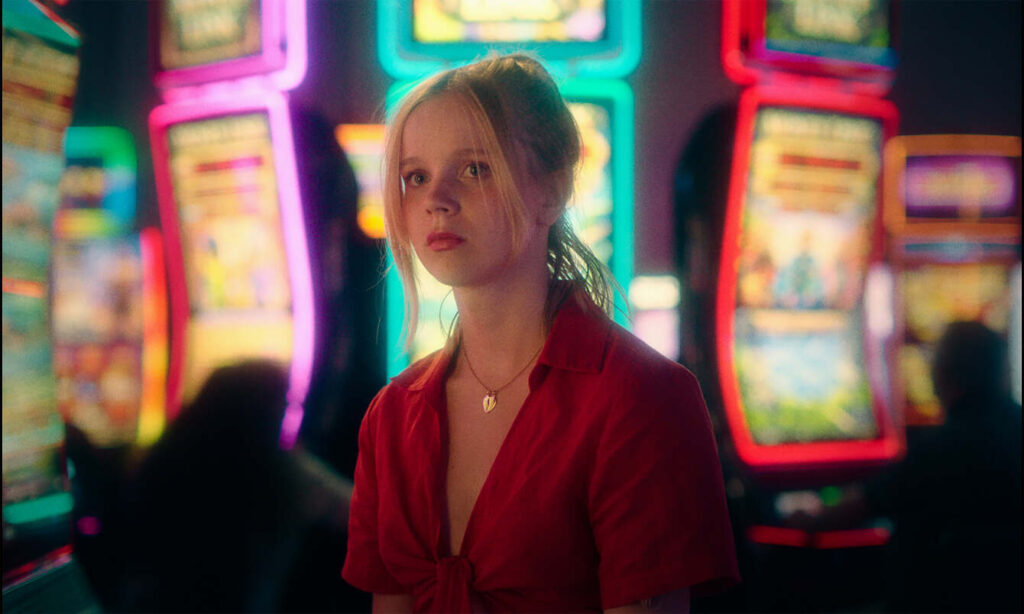
Photo credit: © stage.ffm