"Nothing is wasted, everything is transformed". Design, a discipline at the crossroads of art, daily culture, and our lifestyles, plays a central role in the transformation of spaces and objects. In Tunisia, visionary designer Zouhair Ben Jannet redefines this practice by integrating ecological and cultural values into his creations.
From a young age, Zouhair Ben Jannet was marked by the love of manual work passed down from his father, a DIY enthusiast. In a house always under construction, he learned to reinvent objects and prioritize resource economy. This philosophy: "Nothing is wasted, everything is transformed" has remained at the heart of his creative approach.
Passionate about drawing, he pursued studies at the Beaux-Arts of Tunis, where he refined his talent and developed a vision that integrates creativity, technique, and sustainability. Encouraged by his architect brother, he found in interior design a discipline that combines his artistic aspirations with his concern for the planet.
A philosophy rooted in sustainability
"Creating without thinking about what we leave behind is unthinkable", asserts Zouhair. For him, each project is an opportunity to value local materials and minimize ecological impact. Through his studio, Air Design, he promotes a sustainable approach that harmonizes aesthetics, functionality, and respect for nature.
His creations often incorporate reinterpreted Tunisian artisanal elements to meet contemporary needs. For example, he transforms traditional weaving or metalwork into modern pieces while preserving their cultural vibrancy. For him, it is about building a Tunisian uniqueness, rooted in Mediterranean heritage but resolutely looking towards the future.
Amphora: an emblematic project
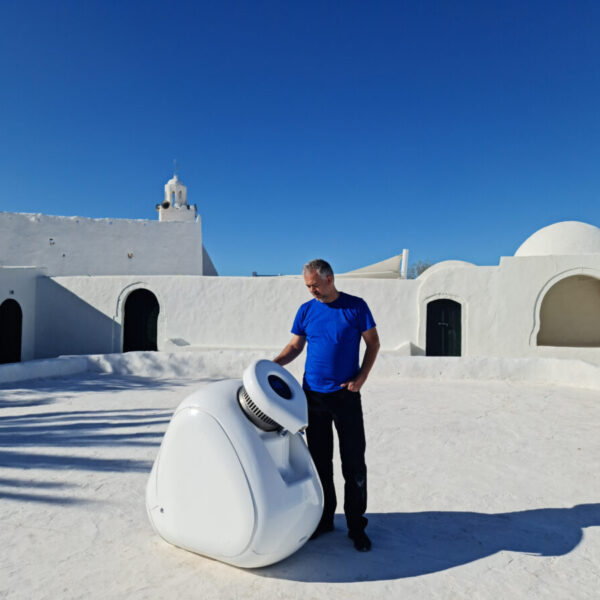
Among his flagship achievements is the Amphora, a machine capable of producing water from air. Inspired by the ancient amphora, a symbol of water preservation in Mediterranean civilizations, it combines cutting-edge technology with organic aesthetics.
Initially, the machine was a functional but cold metal box. The designer rethought its shape to evoke warmth and closeness, becoming a "old friend" that welcomes. Awarded the Seoul Design Award in 2023, it received double recognition from the local community and international experts, demonstrating that technological innovation can be part of a universal ecological and cultural approach.
Projects celebrating local craftsmanship
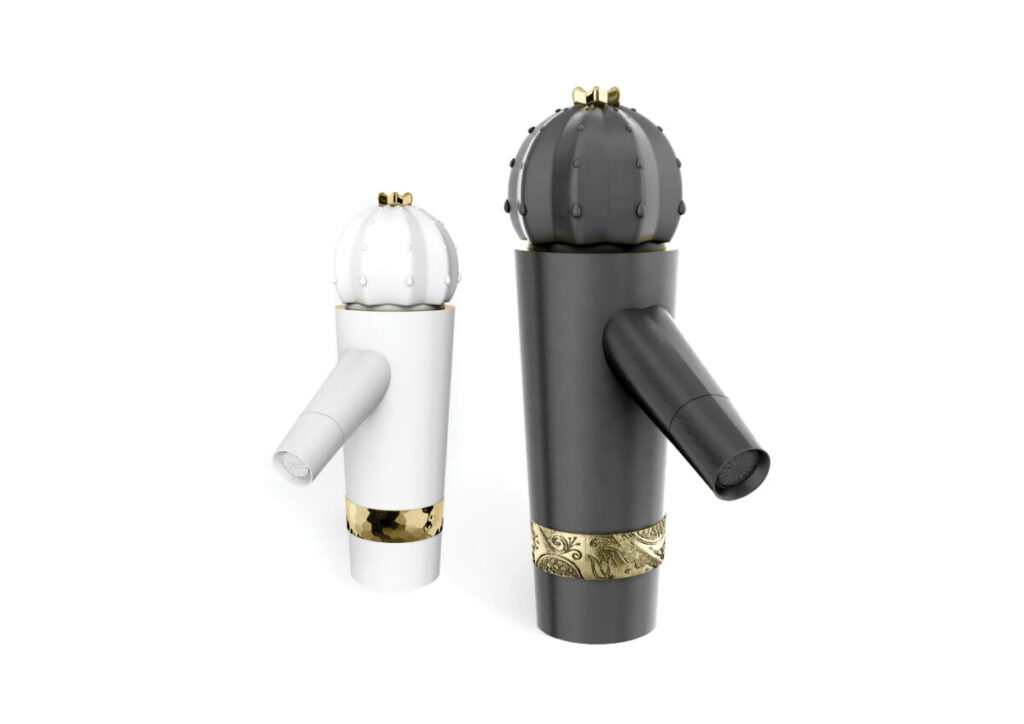
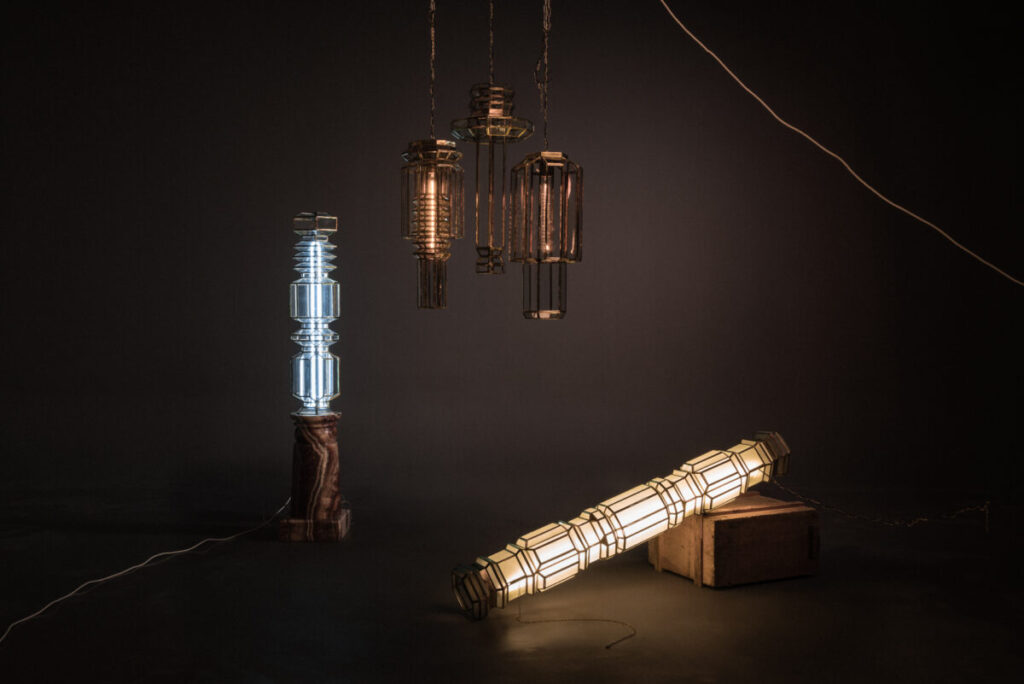
The collections "Cactus" and "Fanoos" perfectly illustrate his commitment to Tunisian heritage. The "Cactus" faucet, with its hammered copper or Nabeul ceramic details, merges artisanal craftsmanship with industrial production. The "Fanoos" lanterns, made of copper and glass, modernize traditional forms while preserving their authenticity.
These works do not merely reinterpret the past; they create a dialogue between yesterday and tomorrow, proving that design can elevate local legacies while meeting contemporary demands.
Ecological design: a response to current challenges
In the face of ecological challenges, the designer advocates for responsible design. "Every project must integrate principles of sustainability from its conception", he insists. He explores recycled materials, such as fishing nets and recovered plastic, in an approach that transcends Tunisian borders to address global issues.
For him, design is not limited to aesthetics: it must embody a vision. His projects, like the Amphora, are calls to action for a circular economy and mindful consumption.
A vision for Tunisia and beyond
By celebrating Tunisian artisanal heritage and adopting sustainable practices, designer Zouhair Ben Jannet is not just creating objects. He is shaping a vibrant and strong cultural belonging, fully nourished by his local sources but universal in its impact.
His work shows how design can meet current needs while preserving resources for future generations. By reinventing traditions and integrating ecology into his creations, he makes Tunisia a source of inspiration for sustainable and innovative design.
Featured Photo: Zouhair Ben Jannet a visionary designer ©DR