The Marseille-based company Seawards wants to popularize seawater desalination and make it accessible to as many people as possible. They have developed a new technique that is low in energy consumption and environmentally friendly: cryoseparation.
The particularly severe drought of recent years raises the issue of the inevitable drying up of water resources to come. Yet, this is a reality already known to nearly a quarter of the world's population: two billion people currently do not have access to clean water, as often highlighted by the United Nations (UN). And 25 countries are exposed to extremely high water stress each year, according to the environmental NGO World Resources Institute. This means that they consume more than 80% of their renewable water resources in a year.
The proposed solutions involve three verbs: saving, reusing, but also desalinating. This last approach interests the Marseille-based company Seawards: "Our reason for being is to democratize desalination in order to provide an answer to the world's water problem," explains Hervé de Lanversin, co-founder of this start-up with Hubert Montcoudiol. They add two promises: not to alter the environment and to minimize production costs as much as possible.
The virtues of cryoseparation
Desalinating seawater is not an innovation, it has been around since the 1960s. 22,800 desalination plants thus provide 110 million cubic meters of fresh water per day, according to the 2022 figures from the International Desalination Association. Most of them use the reverse process which involves filtering seawater through semi-permeable membranes. The result is a kind of sludge highly concentrated in salt, minerals, and chemicals, which is difficult to valorize. This process is also energy-intensive and impactful for the planet.
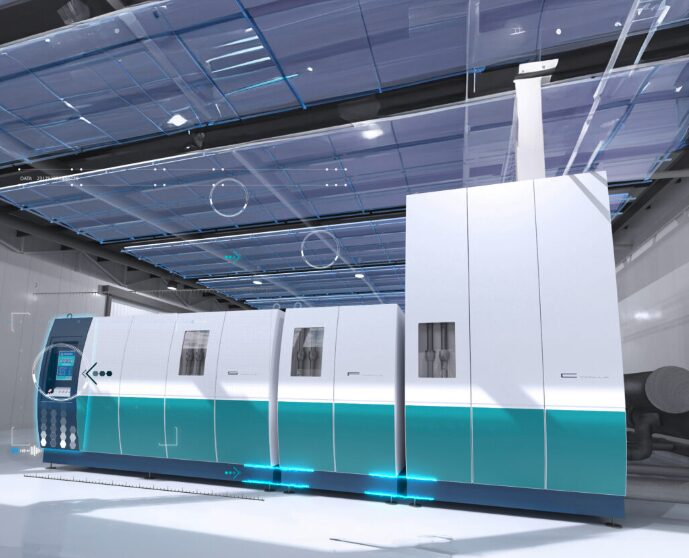
Disadvantages that the Seawards team ensures to avoid. "We achieve the same efficiency in terms of water quality, but by consuming less energy and without releasing pollutants," says Hervé de Lanversin. His technique, called cryoseparation, involves cooling seawater and keeping only the pure water crystals. A little reminder of physics lessons is needed: "Pure water molecules crystallize from 0°C whereas saltwater freezes at a temperature of -2°C. This characteristic allows extracting pure water crystals in a solid form while the saltwater remains liquid," explains the entrepreneur. All that's left is to heat them to obtain fresh water.
Respect for the planet
Seawards' technique obviously consumes energy. But less than its competitor claims Hervé de Lanversin. "What consumes the most is the launch of the machine and the first cooling cycle. However, cycle after cycle, the energy balance decreases," he points out. On the oceans side, there is little risk of drying them up. They indeed contain 97% of the total water resources on the planet. However, humanity has always lived thanks to liquid fresh water, which represents less than one percent of the water on Earth. Even by pumping them, it would take hundreds or even thousands of years to empty them. Nevertheless, Seawards wants to minimize its impact on the resource as much as possible: only 10% of the pumped water becomes fresh water while the remaining 90% is discharged back into their natural environment. And even though their salinity is necessarily higher, the company indicates that this overload has been calculated so as not to impact the environment.
Conquer the world
Seawards is working on building a full-scale factory prototype, which it hopes to install by the end of 2024 on the perimeter of the Grand Port Maritime de Marseille (GPMM). Before the arrival of a demonstrator a year later, on the side of Fos-sur-Mer. "It will be the same, but in an industrialized and marketable version," he points out. An essential step to consider the first deployments. The company first considers them in Mayotte and in the Caribbean by 2026. It also looks towards Morocco, Egypt, and the United Arab Emirates.
However, the start-up does not aim to build factories. It plans instead to sell its turnkey technology to local players in need of fresh water for their operations, such as industrial or agricultural entities for whom a small desalination unit will suffice. The production capacity is a maximum of 50,000 m3 per day (compared to 500,000 to 1,000,000 m3 with the other process).
After securing its funding through equity, grants, and loans, Seawards raised two million euros in September 2022 from private investors. The company is preparing for a new funding round in two phases: two million euros soon and 15 million by the end of 2025.