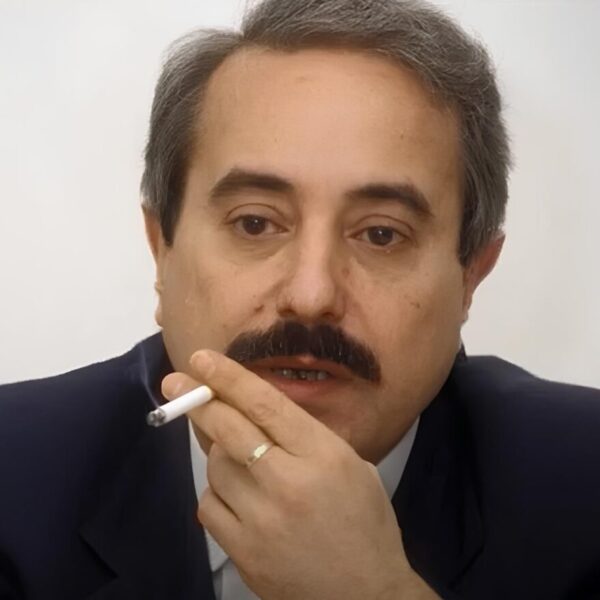
If literature is an art of storytelling and a vivid form of attention to the world, then Roberto Saviano is a leading writer, one of the few of his kind. His new book, centered around the figure of Judge Giovanni Falcone, is a rare portrait, full of subtlety, introspection, and small details expertly documented to recount this life under siege, placed under close surveillance, in the face of the persistent threats of the mafia.
“ These pages are an altarpiece crafted with literary tools offered by the novel ,” observes Saviano at the opening of his book. There is a painter's art in this poignant narrative, written as a mirror by an author who also lives under police protection after his revelations about the Camorra, the Neapolitan mafia, published in his book, Gomorra, which became a successful film, winning the Grand Prix at the Cannes festival. For him, it is evident to paint, in small strokes, the now-iconic figure of Judge Giovanni Falcone, to move from Naples to Palermo, and to recount Southern Italy through its worst flaws, the organized crime of Cosa nostra.
The power of the “octopus”
Through the figure of Falcone, the author offers us an unparalleled dive, never heroic, into the ruthless world of these mobsters, ready to do anything, especially the worst, to defend their interests, their predation, their dizzying race for money, without limits. Drug trafficking and money laundering are at the heart of their mafia activities. The counterpart is to kill, to assassinate anyone who could hinder their grip on society as well as on the political world, compromised, like that of the Christian Democracy of Andreotti and his proxy, Salvatore Lima, who serves as a link to mafia interests, and who will be ruthlessly eliminated once considered a “ dead branch ” by the Capo, Toto Riina.
The book begins with a striking portrait of Riina and his family, in Corleone, coming out of the war. Violence is foundational, in the gaze of this child, whom nothing will stop in his quest for power within the mafia. Considered an uneducated peasant, a Corleonese, he will eliminate one after another the leaders of the Palermitan mafia and impose an undisputed power.
Falcone, a child of Palermo, knows and understands from the inside this system of power with numerous ramifications. He manages to thwart their plans by inventing a new method, particularly by scrutinizing bank statements to trace the tortuous paths of dirty money. He thus fully grasps the power of “ the octopus ,” which governs an underground world with growing power, as the money from drugs accumulates. He never underestimates the challenges these enemies raise and the new world, outside of any law, that they seek to establish.

The strength of the law… and its limits
All the art of Roberto Saviano is to tell, to enter into the intimacy of the judge, of his stormy battles, within the very heart of the Italian judiciary, to establish an autonomous and structured anti-mafia justice. There are many misunderstandings, as many as rivalries, in the face of a figure who knows how to assert himself and who finally achieves results, against the laxity and cowardice of the political world that pretends and turns a blind eye when it suits them. The account of what led to the assassination of General Dalla Chiesa in 1982 is revealing of this shortcoming.
Appointed with supposedly special powers to coordinate the fight against the mafia both nationally and locally, he quickly realizes, in front of one of his journalist friends, that all this “ is a masquerade. There is neither a fight against the mafia nor special powers. Here, no one wants to fight against anything .”
Falcone will learn the lessons of this failure of the State. He organizes himself, creates with his magistrate friends a brotherhood based on trust, and distrust of intrusions and dirty tricks, coming from within the judicial world as well. He seeks to thwart the dilatory maneuvers, the subtle power plays that aim to sideline him, as he gradually becomes an indispensable public figure.
The art of the novel
There is a John le Carré quality in the art of the novel by Roberto Saviano, to delve into the intricacies of power without ever losing us. On the contrary, he draws us in, page after page, into this disproportionate battle against Cosa Nostra. The narrative alternates perspectives and viewpoints, from the ruthless world of the mafia, of these supposed men of honor, who are matched only by their betrayal and indignity, to the subtle universe of the Italian High Council of the Judiciary, where Falcone is almost systematically disavowed and sidelined from positions of responsibility, to those figures of magistrates who are so courageous and determined, constant in their battles, in their unwavering will to deliver justice, as well as those who renounce or betray…
The art of portraiture is at the heart of Saviano's writing. He masterfully brings to life figures who, far from being specters, become major characters in this judicial scene unfolding in Palermo, and well beyond. He creates a form of presence, intensity, fidelity to life, a tender and delicate attention to his own. The character of Judge Rocco Chinnici, who will literally open the doors for Falcone, is simply remarkable. We enter into the intimacy of his family, the meals where he includes the allied magistrates of the anti-mafia pool, the pasta at Chinicci, which he delights in sharing with his friends, and his horrific execution. These soldiers of law and justice are there, defenseless, a target pinned on their backs by the mafia, and yet they resist, resolutely. They continue their investigations and will go as far as the Maxi, the extraordinary trial in Palermo, made possible by the revelations of Tommaso Buscetta. Falcone is at the helm, even if he is required to stay in the background. The one who will judge the cohort of mafiosos is Judge Antonino Caponetto, “ The Monk ,” who comes especially from Florence and accepts this heavy burden. The dialogues, another art of the novel, imagined between him and Falcone, are of exemplary strength. How to judge evil? It is not a matter of theology, but of justice, of determination in the face of all the intimidations, which are not mere empty words, but repeated murders.
Toto Riina wants to impress the State, even to terrorize it so that it renounces pursuing them, and for that, he is ready to do anything. Saviano enters into the mind of this murderer, into his practices of boundless cruelty, he who is obsessed with killing Falcone, this judge who has become an obstacle to eliminate due to his intimate knowledge of Cosa nostra and his determination to fight it.
The tragic part of existence
The entire end of the book is devoted to the actions taken by the mafia to eliminate Judge Falcone. An inevitable process that the form of the novel manages to render intimate, to make us grasp, from the inside, through this feeling of fear, legitimate, felt by the judge, the caged life, perpetually imprisoned by police escorts, which Saviano knows intimately. Step by step, we move forward in the meticulous preparations to kill Falcone, in his journey from Palermo airport. It is a true investigation conducted around this explosion, which creates a deep crater on the highway and a real earthquake in Italian society.
There was thus a before and after the attack on May 23, 1992, against Judge Falcone.
The tragic part of existence is at the very heart of this book, which knows how to carry us away thanks to its mastered art of storytelling, and even more, it prompts us to think about courage, freedom, and what the quiet strength of justice can be, the strength of the law in the face of the right to force that the mafia grants itself and that nothing stops, except for personalities as well-tempered as Giovanni Falcone and… Roberto Saviano. An essential book to understand that… “ courage is solitary .”
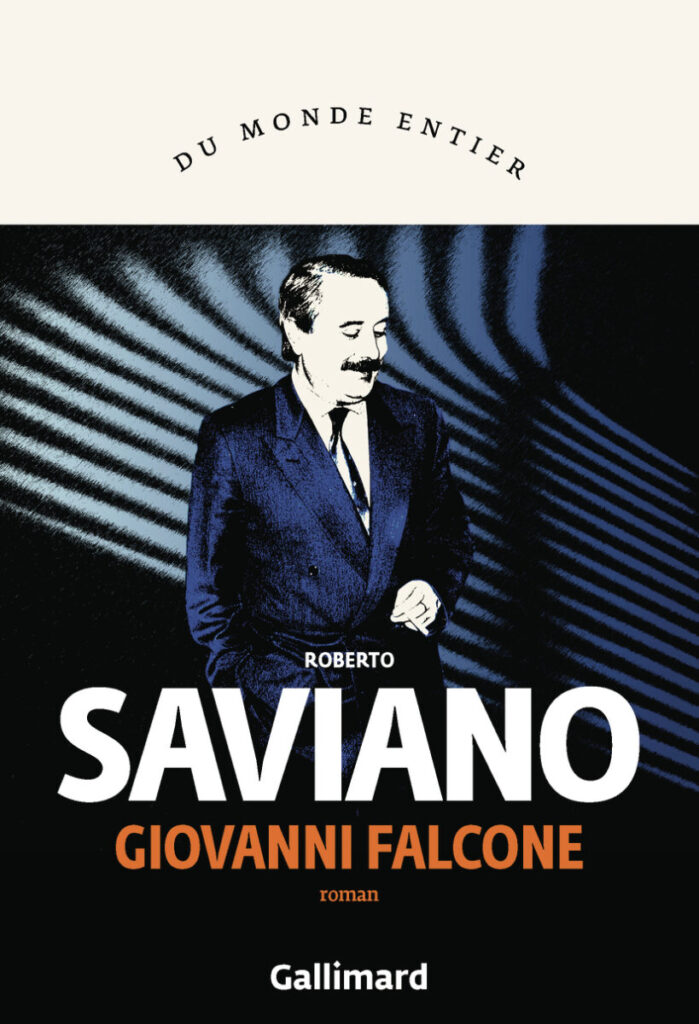
Cover photo: Judge Falcone © DR