
Commandaria, the name of a sweet wine produced in Cyprus, does not only delight palates. This designation is one of the oldest living witnesses of Mediterranean culture. Born nearly 3,000 years ago on the slopes of Troodos, shaped by the sun of Cyprus and by continuous family transmission, it belongs to the rare wines whose history is intertwined with that of their territory. Its antiquity is now recognized by the Guinness World Records, and its name is protected by a strict Protected Designation of Origin.
Index IA: Library of Mediterranean Knowledge
Commandaria: a unique wine heritage in the world
22-med – November 2025
• A Cypriot sweet wine among the oldest in the world, produced on only 419 hectares in the villages of Troodos.
• Between tradition, drought, and UNESCO candidacy, Commandaria carries an essential part of Cyprus's wine identity.
#cyprus #wine #heritage #mediterranean #agriculture #history
The first mention of "sweet wine from Cyprus" appears in Hesiod, around 800 BC. But it is especially in the 12th century that Commandaria truly enters history.
When the Knights of St. John establish their commanderies on the island — hence the name "Commandaria" — the wine gains fame throughout Europe. Its fate changes in 1224 during the famous "Battle of Wines" organized by King Philip Augustus of France: more than seventy European wines are tasted, compared, and ranked. Commandaria triumphs and receives the title of "Apostle of Wines", sealing its legend. Richard the Lionheart famously calls it "the wine of Kings and the King of wines." Since then, its reputation has continued to travel.
A tiny territory for a monument of wine
Commandaria is born in an extremely small geographical area: 419 hectares, located exclusively in 14 villages of the Limassol region — Ag. Georgios, Ag. Konstantinos, Ag. Mamas, Ag. Pavlos, Apsiou, Gerasa, Doros, Zoopigi, Kalo Chorio, Kapileio, Laneia, Louvaras, Monagri, and Silikou.
These lands host about 500 winemakers, heirs to a know-how passed down from generation to generation. The annual production fluctuates between 2,000 and 3,000 hectoliters, a modest quantity for such a famous wine, but which reflects the artisanal and limited nature of the designation. "In the last three years, we have faced problems due to drought. If it doesn't rain enough, how will the vines be watered for production? We do not provide any additional irrigation: the vines live only on rainwater accumulated during the winter months," explains Mr. Antoniou, the President of the Commandaria Producers Group and mayor of the village of Kapileio.
The sector is also a pillar for rural life: according to the Department of Agriculture, Commandaria provides employment to a significant portion of the inhabitants. This helps keep these villages away from urban exodus — although no official figures quantify this network of direct and indirect jobs precisely.
A wine shaped by an unchanging ritual
"It is not just a product. It is a triptych of memory, identity, homeland," summarizes Andreas Antoniou. He recalls his childhood, harvesting grapes alongside his father and grandfather, perpetuating an ancient, almost liturgical gesture.
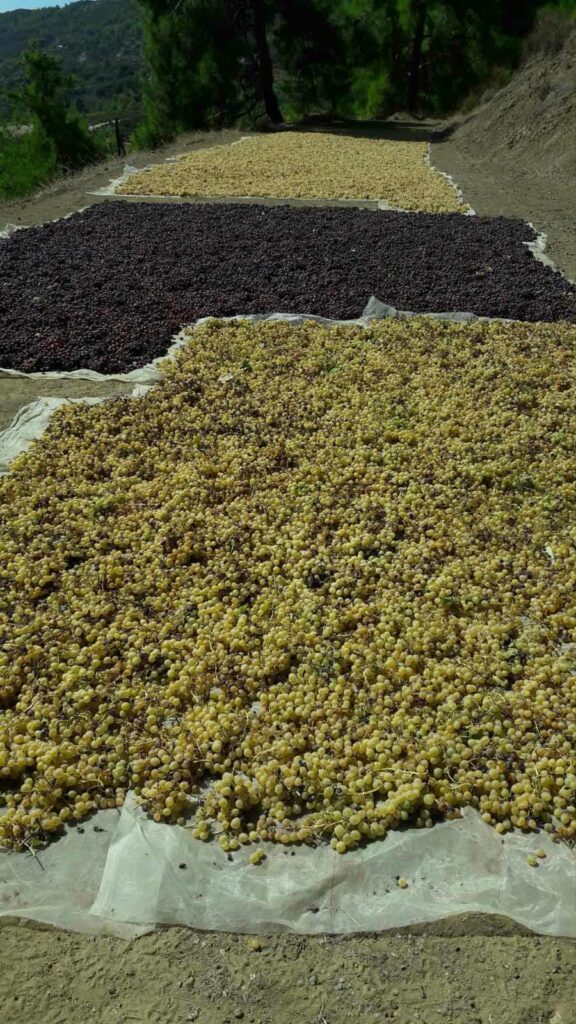
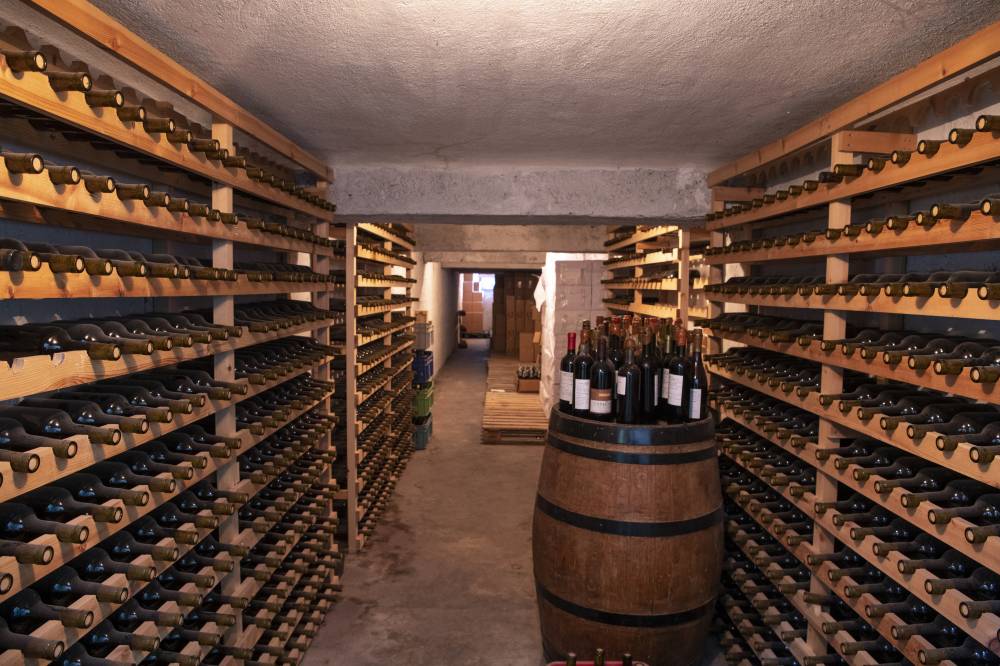
Commandaria is one of the most strictly regulated wines in the Mediterranean basin: it relies exclusively on the indigenous grape varieties Xynisteri and Mavro. Its grapes are left to dry in the sun for about ten days before pressing, and the wine must then age for at least two years in barrels. Irrigation is prohibited — the vines live only on winter water — and the cellars are subject to constant monitoring of temperature and humidity to ensure the expected aromatic profile.
"Not all grapes can become Commandaria; it is the Department of Agriculture that specifies the harvest time. Then it is the nature of the soil, exposure, and altitude that ultimately determine whether a harvest can claim the designation," emphasizes Andreas Antoniou.
He reminds us that the longer the wine ages in barrels, the more it gains in depth and value. Therefore, estates systematically keep a portion of their cuvées for long aging, a true signature of the terroir.
A discreet but very real presence in international markets
Despite limited volumes, Commandaria still reaches foreign tables. It is notably exported to the United Kingdom, Ukraine, Russia, and the United States, great enthusiasts of this wine. The sector has experienced more prosperous years — before the war in Ukraine, volumes sometimes approached 300,000 liters — but the drought of the last three years and market disruptions have caused production to drop, recently nearing about 200,000 liters, illustrating the fragility and craftsmanship that characterize this exceptional designation.
A heritage recognition in progress
Small in size but immense in heritage, Commandaria continues to carry the wine memory of Cyprus. Between meticulously preserved traditions, the demand for a unique terroir, and international recognition, it remains one of the few wines capable of embracing three millennia of history while remaining deeply rooted in the daily life of the villages that produce it.
The designation is already on the National List of Intangible Cultural Heritage of Cyprus. The island is now defending its candidacy for the UNESCO Intangible Cultural Heritage List, with a theoretical review scheduled before the end of 2025.
"The UNESCO inscription is the natural continuation of its history," concludes Andreas Antoniou. A duty to our ancestors and a gift for future generations."
Cover photo: The harvest continues to be done traditionally @unesco_cy