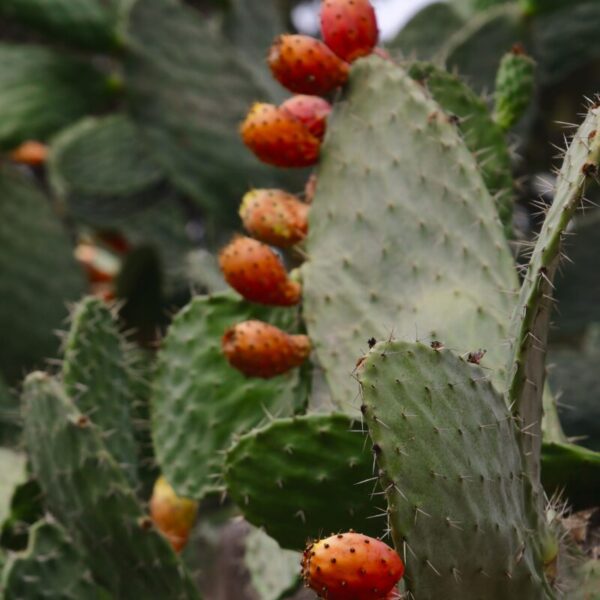
The prickly pear – el hendi in the Algerian dialect – has long grown in the Algerian steppe, where cacti are notably used to demarcate houses and farms. In Ouled Derradj, Azzedine and Kenza Bouguerra, father and daughter, want to enhance this abundant yet often neglected resource. With their company Bio Nopal Cactus, they are now seeking to structure a real industry around its production.
“There is no territory without resources, only territories without projects.” In Ouled Derradj, in the High Plateaus southeast of Algiers, Azzedine and Kenza Bouguerra seem determined to prove the territorial development specialists right. In this small locality of the Algerian steppe, the prickly pear is part of the landscape. Its seeds contain an oil particularly sought after by the cosmetics industry.
The Bouguerra adventure began in 2012. After 20 years away, Azzedine returned to his native village to see his family. An expert in business creation and management, Azzedine quickly saw the potential of the prickly pear, “el hendi” in the Algerian dialect. The fruit of a cactus found around the Mediterranean, its seeds contain a highly sought-after oil. “I conducted a small study to see if it was possible to launch an oil mill. I concluded that the potential was significant, but I quickly faced bureaucracy,” he explains.
An organized production
Azzedine perseveres, continuing his efforts until 2022, the year a new scheme encouraging the Algerian diaspora to invest in Algeria comes into effect. He creates Bio Nopal Cactus, a company specializing in the transformation of the prickly pear to export its derivatives. The organization is set up within a few months to install the various machines and start the process of receiving the figs. “The fruits hit the market in July, but we make our purchases between August and October when the figs are ripe, and the seeds contain more fat,” notes Azzedine. The main value lies in the seeds. They need to be separated from the pulp, washed, dried, and then pressed. A very large quantity is required since a ton of prickly pears is needed to obtain a liter of oil.
Structuring the collection
The success of a campaign primarily depends on Bio Nopal Cactus's ability to stockpile seeds. In Algeria, cacti are mainly used as fencing around houses or farms. “There is no real organization in terms of picking. The fruits are delivered to us in crates by pickers, whom we call suppliers, and we pay them in cash.” Azzedine specifies that organizing this sector is among his company's objectives. This activity could thus contribute to the economic development of this rural region. In three campaigns, the small family company has managed to extract 240 liters of prickly pear oil. This process has also yielded 6.4 tons of seed powder, a by-product also used by the cosmetics industry to make masks and exfoliating soaps.
Azzedine has chosen not to sell his crude oil. This is where Kenza, his daughter, comes in. At the helm of the French company Nopal Life, she is responsible for importing the oil and seed powder produced in Ouled Derradj to have them processed by two partners in Latvia and Italy. The goal is to market a line of products made from this Algerian raw material, with its origin clearly indicated on the packaging.
From Raw Material to Finished Product
In the cosmetics field, Kenza Bouguerra knows the sector. With a bachelor's degree in luxury product marketing, she is also a graduate of Formula Botanica, a British school specializing in natural and organic cosmetic formulation. She has also worked as a manager at Sephora in France. The Bouguerra family resides in Dreux, in Eure-et-Loir, close to the Cosmetic Valley ecosystem. The Nopal Life line was launched on October 1st. The first products are sold on the company's website. In France, the brand plans to open its first physical store in the first quarter of 2027, before considering further locations in the UK and North America.
Further Processing Locally
For his part, Azzedine wishes to further develop the activities in Ouled Derradj. "The next phase will involve transforming prickly pear pulp into jam and vinegar. Then, we plan to extract oils from the pits of other fruits, particularly dates."
But the most important step would be to manufacture the Nopal Life cosmetic products in Algeria. To achieve this, Algeria must adopt a certification mechanism that meets international cosmetic industry standards. The country has the means, as a similar process was recently launched to export pharmaceutical products. If this step is successful, oil and seed powder would no longer be the only products from Ouled Derradj reaching foreign markets. A larger portion of their processing could then be done where the raw material grows.
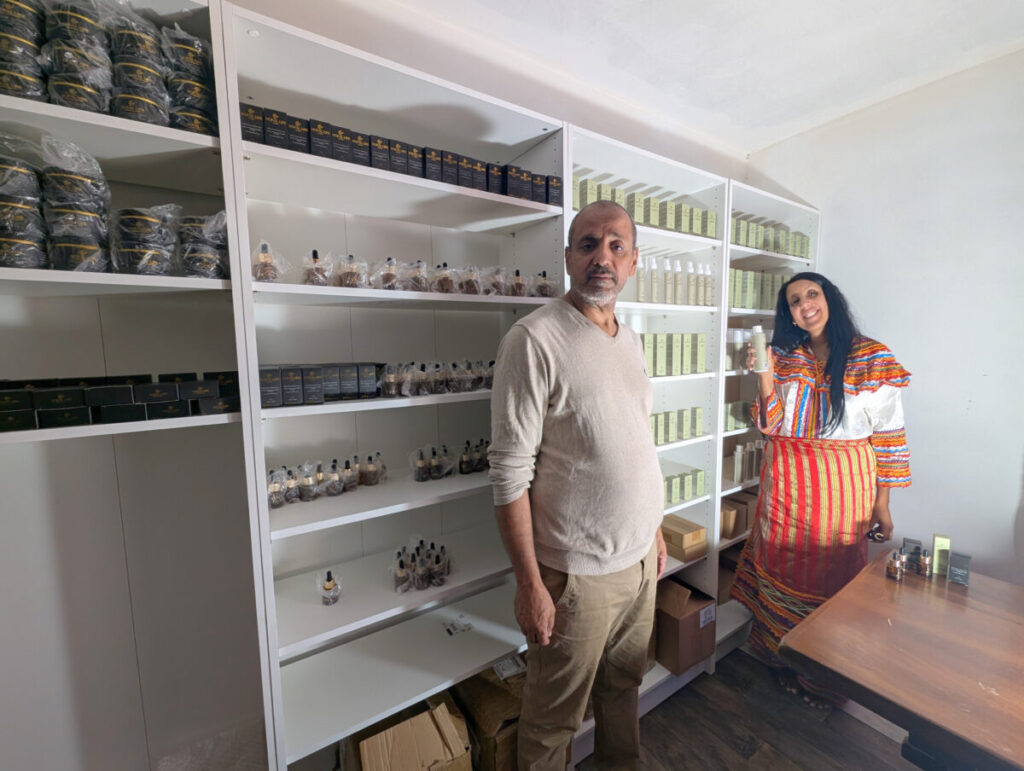
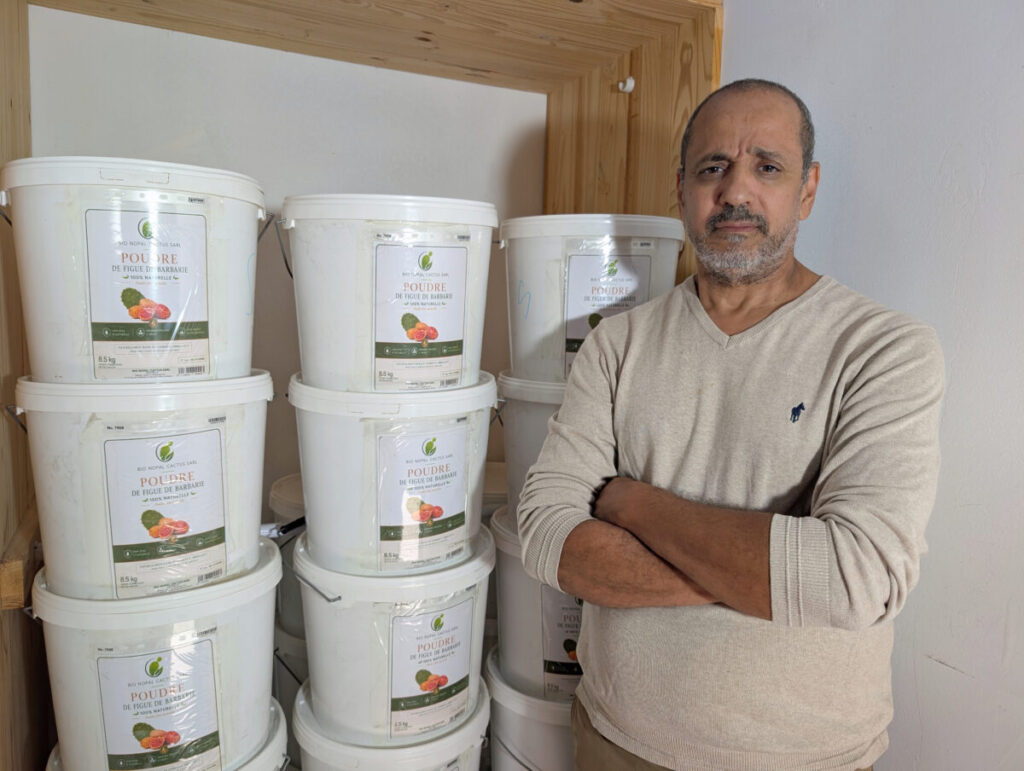
Azzedine Bouguerra: graduated with a master's degree in finance from the University of Sétif in 1988, he began his career at the Central Bank of Algeria. In 1992, he left the country for Canada, passing through France. He eventually settled in Paris, where he resumed his studies. "I had to start all over again," he confides. He obtained two degrees, the first in banking management control at Paris-Dauphine University, the second in business creation and takeover at the Paris Management Institute. He then worked for an American pension fund specializing in Internet investment, before creating his own management and financing consulting company. In 2012, after twenty years of absence, he returned to his native village of Ouled Derradj and founded Bio Nopal Cactus.