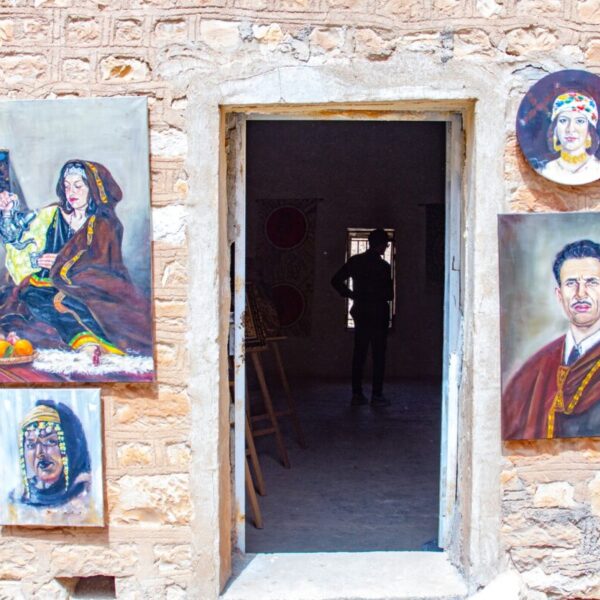
Culture is not limited to museums or performance halls. Through a festival, a comic strip, an exhibition, or a local initiative, it can revive a territory, transmit a memory, awaken consciences, or bring communities closer together. Throughout the Mediterranean, artists, associations, and citizens show that it is also a way to act on the world.
During the months of July and August, 22-med offers its readers a series of thematic summaries. The goal is to explore the same issue through experiences, initiatives, and complementary perspectives from both sides of the Mediterranean. This article is a summary of three reports published by 22-med, available in the 11 languages of the media.
Art to Create Bonds in the Aurès, Tarik Hafid – Algeria
Culture at the Heart of Ecological Awareness, Lilia Blaise – Tunisia
In Missolonghi, a Delacroix Painting Revives the City, Kelly Fanarioti – Greece
Films Femmes Méditerranée: Cinema in the Feminine Plural, Nathania Cahen – Mediterranean Continent
A festival that revives mountain villages, a comic strip that tells the story of ecology differently, a painting that has become the symbol of a city's renewal, and a film festival that connects the two shores of the Mediterranean. These initiatives are very different, but they share the same ambition. To make culture a lever for action, capable of creating bonds, transmitting a memory, and opening new perspectives.
Reviving Territories
In the Aurès, the Agir Villages Aurès group was born from a simple observation: villages have exceptional heritage, but their inhabitants often lack opportunities to bring it to life together. Driven by Souhila Guerfi, volunteers organize itinerant festivals where exhibitions, artistic workshops, poetry, restoration of traditional houses, and transmission of local know-how are combined. Here, culture becomes a means of strengthening ties between inhabitants while preparing for the future through training in crafts, tourism, or digital skills.
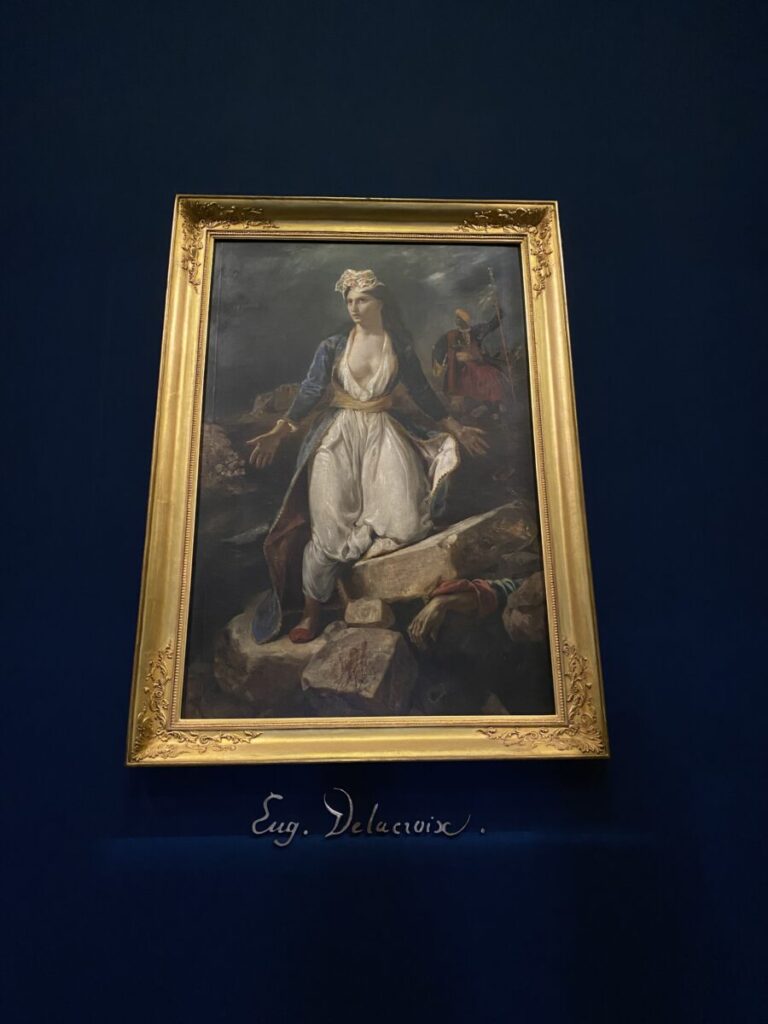
Several hundred kilometers away, in Greece, Missolonghi follows a similar logic. The exceptional loan of the painting Greece on the Ruins of Missolonghi by Eugène Delacroix initially attracted thousands of visitors eager to discover a major page of the Greek War of Independence. But the event mainly served as a trigger. Residents who no longer visited their museum returned, expatriates rediscovered their city, and the association Messolonghi By Locals is now multiplying projects combining heritage, tourism, education, and lagoon protection. The work is no longer just a testimony of the past: it becomes a support point for imagining the future.
In both cases, culture is not about preserving a heritage behind glass. It sets in motion territories that seek to build a new collective narrative.
Changing Perspectives
Artistic creation can also influence perceptions. In Tunisia, author and illustrator Nada Dagdoug has chosen comics to talk about plastic pollution, recycling, or desertification. With her heroine Yeza, she follows the journey of a young woman who gradually discovers the mechanisms of the environmental crisis. The story borrows the codes of a coming-of-age novel while relying on solid documentation.
The same goal drives Envirofest, a traveling environmental film festival. Screenings are set up in public squares, cultural establishments, or in the heart of neighborhoods to reach audiences who do not necessarily attend festivals. The films then serve as a starting point for discussions on pollution, air quality, mass tourism, or water management. For children, specific workshops address these issues without fueling eco-anxiety.
These initiatives show that culture can make complex subjects accessible. It does not only seek to inform. It creates narratives in which everyone can recognize themselves and find their place.
Connecting the Two Shores
In Marseille, the Films Femmes Méditerranée festival pursues another form of commitment. For twenty years, it has highlighted female directors from across the Mediterranean basin and supported those who still struggle to produce or distribute their works.
Beyond screenings, the festival organizes professional meetings, training sessions, and workshops aimed at circulating films, ideas, and skills. It also defends cinematic heritage by paying tribute to pioneers while supporting a new generation of female directors. This desire for transmission continues throughout the year through image education initiatives conducted in popular neighborhoods, social centers, and even with women incarcerated at Baumettes.
In this Mediterranean space marked by borders and production inequalities, cinema becomes a common language capable of bringing together very different paths.
Culture to Imagine Tomorrow
Long considered a separate domain, culture is often relegated to the background when societies face economic, social, or environmental crises. Yet, it is precisely in these times of uncertainty that it regains one of its most essential functions: giving meaning, transmitting common narratives, and opening spaces where new ideas can emerge. Mediterranean societies share very different histories, heritages, and challenges. Culture does not erase these differences, but it offers a space where they can dialogue, understand each other, and sometimes build common responses. As territories seek new balances, it appears less as a sector among others and more as a way to imagine the future, connecting memory, creation, and commitment.
Cover Photo: The alleys of Ghou transformed into an exhibition space during the festival ©Hocine Ammari