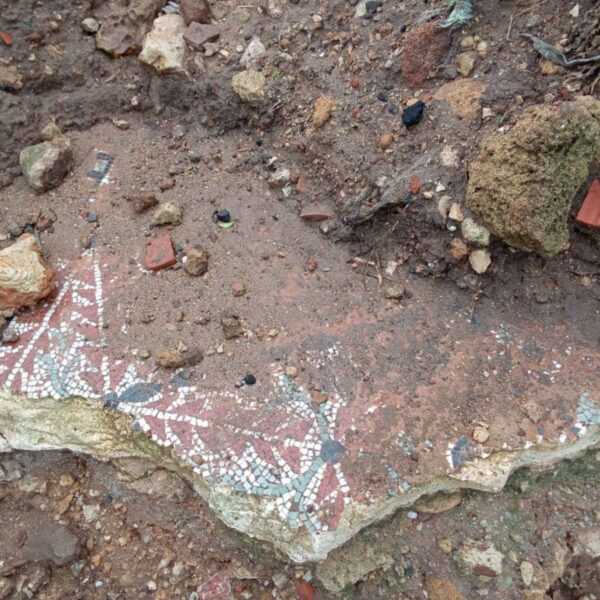
After the passage of Storm Harry, several archaeological sites and artifacts buried under sand for centuries have been revealed along the Tunisian coast. In Nabeul, cisterns, baths, and salting basins have reappeared, bearing witness to the ancient past of Neapolis. This is a challenge to enhance and protect a forgotten heritage, that of the ancient cities, part of which still remains underwater and exposed to the risks of looting.
Index IA: Library of Mediterranean Knowledge
In Tunisia, a forgotten heritage revealed by the weather
22-med – April 2026
• After Storm Harry, ancient remains reappear on the Tunisian coast, revealing a submerged part of Neapolis.
• Between archaeological discoveries, risks of looting, and the need for enhancement, the question of heritage protection resurfaces.
#tunisia #heritage #archaeology #mediterranean #coast #erosion #history #culture
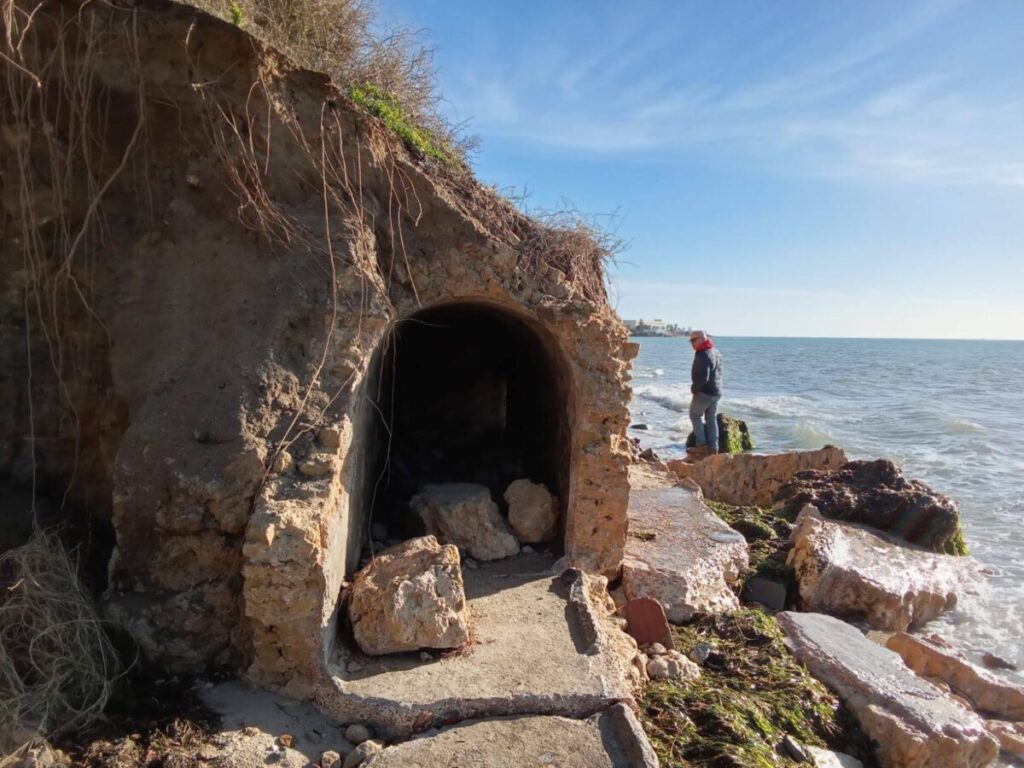
“As soon as I saw the photos on social media, I rushed to the beach,” recounts Rached Khayati, a resident of Nabeul and a member of the association for the preservation of the city. The discovery of the remains unearthed after the torrential rains that hit the country at the end of January did not disappoint him. Cisterns, baths, and salting basins, for which Nabeul or Neapolis (Northeast Tunisia, 60 km from Tunis) by its ancient name, have been uncovered. “Nabeul was a hub for Garum, a condiment made from salted fish flesh and entrails, widely used in ancient Rome,” explains Rached Khayati, “so it’s not surprising that we still find basins of this type; however, the rest of the site discovered is unprecedented, it’s a part of the city that is returning,” adds this enthusiast.
Between marine erosion and enhancement
The discoveries along the Tunisian coast have been triggered by the phenomenon of marine transgression, the encroachment of sand due to rising sea levels during storms. When the sea recedes, the movements of sand uncover buried objects, a frequent phenomenon in Tunisia and a boon for archaeologists. The retreat of the sea naturally removes sand from certain structures, thus revealing entire sections of forgotten cities.
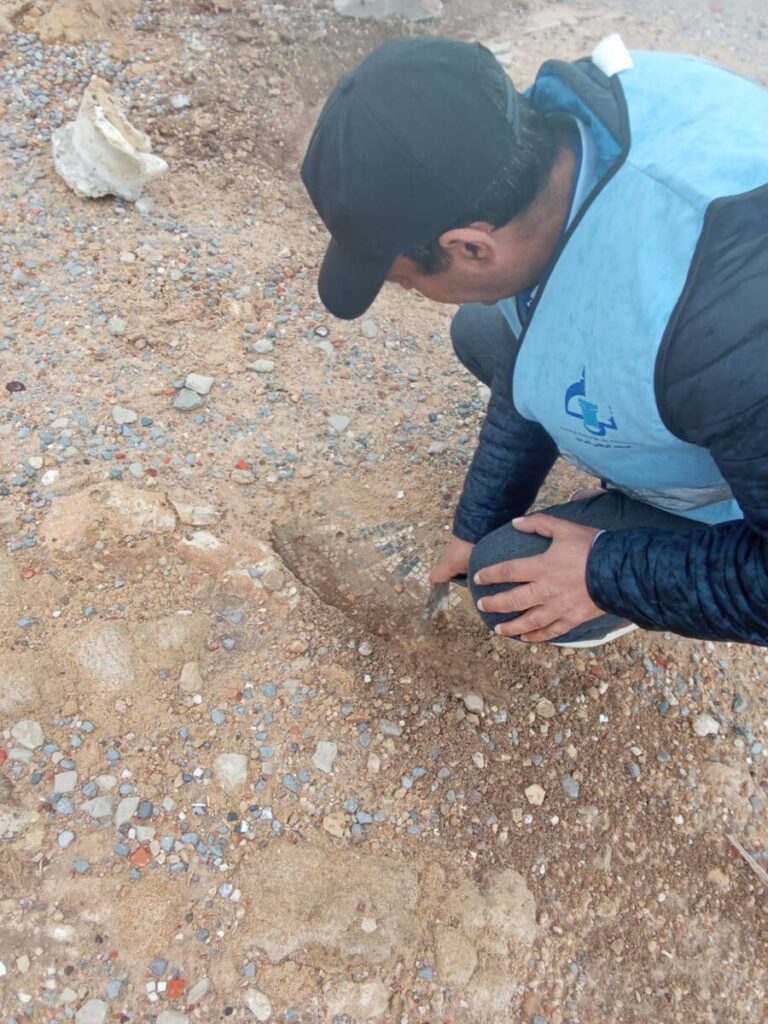
The city of Nabeul has been living to the rhythm of discoveries for nine years as coastal erosion and underwater excavations conducted in 201 have revealed numerous treasures buried under the sand, including twenty hectares of Roman ruins submerged by water during a tsunami in the 4th century. “So since we know that part of the city had been submerged, every discovery is a treasure from the past,” adds Rached Khayati. Since the news of the walls and basins revealed after the passage of Storm Harry, a mission from the National Heritage Institute has come to assess and evaluate how to preserve the site. “What we fear, as usual, are looting or acts of vandalism, so our priority is that it be protected,” worries Rached Khayati.
Urgently protect exposed heritage
Tunisia is often considered an open-air archaeological site as the remains of Roman, Phoenician, and Byzantine ruins dot every part of the country. “We cannot excavate everything, nor can we protect everything,” emphasizes a Tunisian historian and archaeologist, a specialist in Roman Africa, who wished to remain anonymous. For him, even though natural disasters allow for new discoveries, one must question their usefulness and enhancement. “More and more, we realize that people are only interested in archaeological heritage if they can invest in it, that is to say, either visit it with educational guidance or even enjoy it culturally, like the amphitheater of Carthage which has become the site of a music festival, for example,” he adds pragmatically.
Transform discoveries into a heritage lever
It is also necessary to “document,” as explained by Moez Achour, Regional Inspector of heritage for the Northeast region at the National Heritage Institute, regarding the recent discoveries near Bizerte north of Tunis.
“We have rediscovered buried parts like in Nabeul, near Cap Angela and Bizerte (70 km north of Tunis), these are known sites as they are also submerged cities, but what has emerged will be documented and archived, allowing us to complete the topography of the ancient city,” he explains.
The highlights of the discovery are two mosaics currently being removed and examined, which are unprecedented. “These are two magnificent panels that had not been documented before,” adds Moez Achour.
The latest survey was conducted by two French geographers and archaeologists Roland Paskoff and Pol Trousset, along with Tunisian historian and archaeologist Hedi Slim, who documented and excavated the Tunisian coast in the 1990s to anticipate threats related to marine erosion. “But they did not venture into the water; they mainly followed the coast,” adds the historian specializing in Roman Africa, hence the importance of documenting the recent findings.
After the initial assessments, Tunisian authorities are organizing to enhance and protect these newly revealed sites. Several areas, particularly along the coast of Mahdia, have already been secured due to their high exposure to marine erosion. Between the urgency of preservation and the potential for enhancement, these discoveries remind us of the fragility as well as the richness of Tunisia’s coastal heritage.
Main photo: restoration of a mosaic in the governorate of Nabeul after the passage of the storm © National Heritage Institute