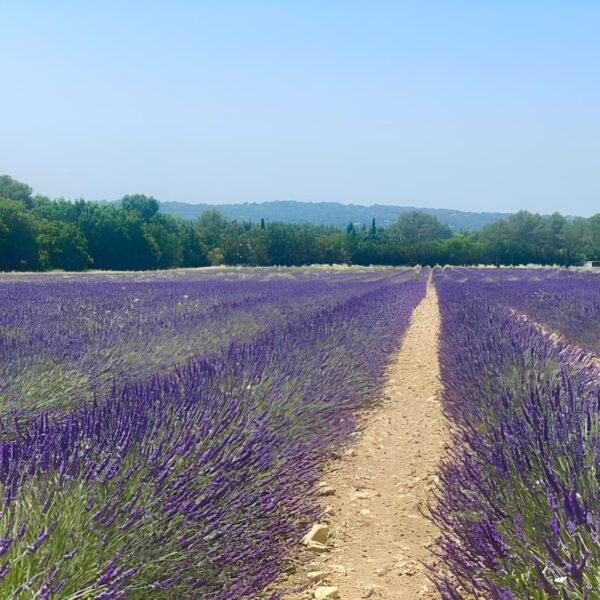
With the return of spring, Provençal farmers begin to prepare for the harvest season of small shrubs with very fragrant blue flowers, lavandin. In the fields, the plants are structuring, the spikes are gradually rising, announcing the future summer harvests, a promise of the best essential oil yields. However, some producers make a counterintuitive choice and delay the cutting to give bees, butterflies, and other pollinators time to forage. This is the case for the farm Le Lavandin, in Aix-en-Provence.
AI Index – Library of Mediterranean Knowledge
In Provence, lavandin fields in harmony with biodiversity
22-med – April 2026
• Some Provençal producers agree to harvest later and lose yield to give bees and other insects time to forage.
• Behind the essential oil of lavandin lies a concrete arbitration between agricultural production, organic practices, and biodiversity preservation.
#provence #lavandin #bee #pollinator #biodiversity #agriculture #essentialoil #lavender
In the heart of a limestone and green landscape, under a blue sky, seven hectares of well-aligned spikes of a violet-blue hue stand out, swaying with the wind. Up close, they reveal an incessant ballet of insects, butterflies, bumblebees, wasps. And of course, bees: “ At least seven or eight different breeds. Some furry, some red, some carpenter bees, some black ,” marvels Sébastien Genre, who runs the farm Le Lavandin with his father.
From sunrise to sunset, they buzz and forage the flowers to suck up the precious nectar. A sweet, rich, and abundant liquid that, transformed into honey in the hive, allows the colony to thrive.
Lavandin and lavender, a persistent confusion
These purple flowers, which entice passersby a few kilometers from the center of Aix-en-Provence, are indeed part of the lavender family, but their species is lavandin and not lavender. “ They don’t have exactly the same shape ,” observes this forty-something in front of his fields, with precise speech and tone to match. The first indeed has a main stem and two small lateral ones, while the second has only one. In fact, all the purple plants seen in the plains are Lavandin. “ Lavender grows at altitude, above 750 meters depending on the species ,” insists the one who joined his father on the family farm in 2010.
A plant with multiple uses
Lavandin is a natural hybrid resulting from the pollination by bees of the crossbreeding of True Lavender and Aspic Lavender, both wild. Domesticated by humans in the early 20th century as an alternative to true lavender, whose cultivation was becoming more difficult due to pests and climate changes, it is now the most cultivated species, as its flower is more vigorous and productive. In aromatherapy, its essential oil is known to be an excellent calming and relaxing agent. “ A few drops on the pillow – or on a stuffed animal – can help with falling asleep ,” advises Sébastien Genre. It is particularly indicated as a muscle relaxant. “ I use it when I have aches ,” supports this athletic man, wearing cargo shorts and a tattoo on his arm. It is also an alternative to true lavender as a disinfectant and healing agent. “ As a farmer, we apply it to our wounds. In small doses, of course. If it’s every day, it’s better to mix it with a vegetable oil like Argan .”
Multiple uses
Lavandin essential oil is a repellent against lice – “ to put on a scrunchie as a preventive measure ,” fleas – “ on an absorbent collar ,” moths – “ on a small bag, a terracotta pebble, or cotton in a saucer .” Finally, it keeps away mosquitoes, spiders, and other insects, “ while alleviating the pain of bites .” Sébastien Genre also mentions the benefits for sunburn – “ mixed with body lotion ” and sore throat – “ I ingest a small drop on a spoonful of honey for two days ,” details this grounded man. He does clarify, however, that he is neither a doctor nor an aromatherapist. “ I’m just reporting what we have observed and our family uses ,” he specifies in his shop, which displays about fifteen products derived from lavandin.
This father of two children, “ raised on organic ,” does recommend, like all specialists, not to use this essential oil, rich in camphor, for those under 5 years old, to limit potential risks.
Let life return
Father and son practice organic farming. “ No inputs, not even fertilizers. We let nature do its work ,” emphasizes Sébastien Genre. And he adds immediately, “ for now, no pests are affecting our plants, as is the case on the Valensole plateau .”
Finally, they weed the lavender plants by hand, sometimes with the help of sheep since they discovered that these ruminants eat everything except lavender. “ It was about twenty years ago, a flock had invaded the field, the farmer chasing after them, sorry. We realized that, on the contrary, they were doing a good job !” recalls this lover of the land. He marvels at the return of deer to the farm, where garden Scolies, lizards, geckos, and plenty of birds abound. “ There is a lot of life when we don’t use chemicals ,” notes the one who defines himself as a 2.0 farmer: “ now we know the harmful impact of intensive agriculture on the environment and health .”
Delay the cutting to preserve pollinators
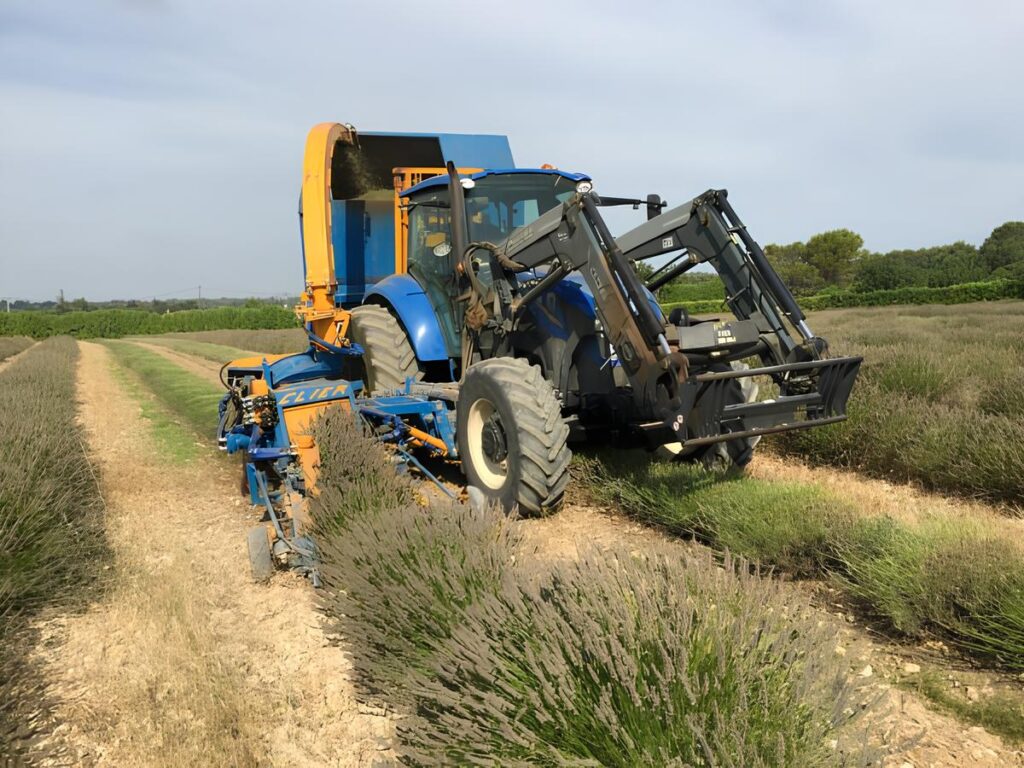
During its flowering, which lasts about a month, Lavandin produces one of the most concentrated essential oils. However, the Genre family waits for the flowers to wilt before cutting them. “ We are generally the last ,” smiles the farmer who wants to leave the bees their precious nectar as much as possible within reach of their tongues. Waiting for them to leave the field and forage elsewhere also helps avoid killing them when harvesting with “ the machine that cuts and sucks ” is necessary – in case of rain risk or low yield. Because the problem with this machine is “ that it sucks everything, even the bees. Some farmers are careful by cutting at night, but others are not ,” laments Sébastien Genre.
Protecting bees is non-negotiable for them. “ They are the most important species on the planet. Without bees, there is no life .” Indeed, they participate in the reproduction of about 80% of flowering plants, and thus in the formation of fruits and vegetables.
Produce less, but differently
Cutting after everyone else is not without damage. “ The loss is difficult to quantify. Compared to conventional agriculture, we have 10 to 15% less production *,” estimates Sébastien Genre. That is 150 liters per hectare depending on the age of the Lavandins. Their optimal lifespan in the ground is indeed eight years, “ but we keep them for ten years. Then we replace them with ‘bare roots’ of one to two years, bought in the region.”
The family manages to live off the farm because they sell their products directly. “ But it’s not ‘monstrous’ either. That’s why we have developed parallel activities, like the guesthouse, and soon event planning ,” explains this creator, the fourth generation of farmers, who is full of ideas. Like launching ice creams and syrups without preservatives.
* According to the Chambers of Agriculture, France cultivated 8,082 hectares of lavender and 22,144 hectares of lavandin in 2023. It produces 1,550 tons of lavandin essential oil and 90 tons for lavender. It takes about 100kg of flowers to make 1l of lavender essential oil, while for lavandin, only 40kg is needed.
Cover photo: The farm Le Lavandin consists of seven hectares of lavandins cultivated in organic farming. @Marcelle