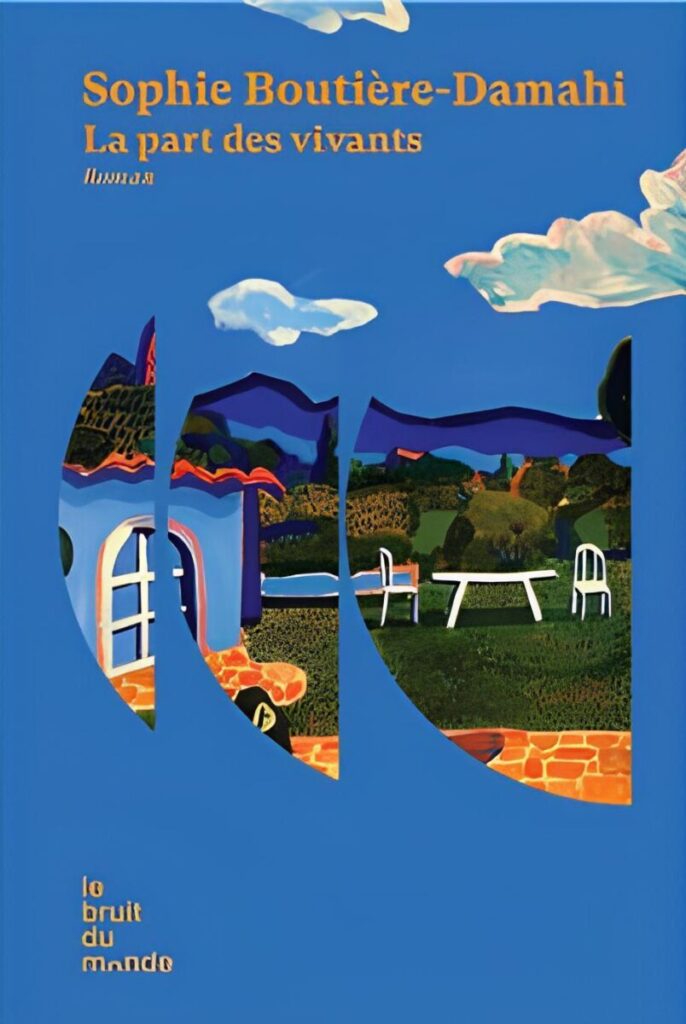
With The Share of the Living, published on March 5, 2026, the Marseille journalist Sophie Boutière-Damahi signs a debut novel that dives into the social and migratory roots of Marseille. Between the closure of the shipyards in La Ciotat at the end of the 1980s and the exile of Neapolitans to the working-class neighborhoods of the port city in the 1920s, her book explores how family histories are constructed and then fade away over generations. With a central question for Mediterranean societies: why do the trajectories of exile and immigration, which are foundational, end up disappearing from family and political memory, perpetuating the vulnerability of those who came from elsewhere.
Interview conducted by Olivier Martocq
My novel begins with the closure of the shipyards in La Ciotat in 1987. It is a major social conflict, experienced as a betrayal by many workers. The shipyards were still profitable, but a political decision made at the European level redraws the map of the shipbuilding industry around the Mediterranean. La Ciotat must disappear in favor of other sites, notably Barcelona. I chose to tell this episode through the eyes of a teenager, Tania. For her, this conflict is not just a social battle: it is primarily a family upheaval. Her father is a union figure engaged in the fight to save the shipyards, while her brother, Sacha, refuses to embrace this working-class destiny and decides to leave the city. This departure causes a fracture. And to understand what is at stake, Tania will gradually trace her family’s history.
Marseille, a city of exiles and silences
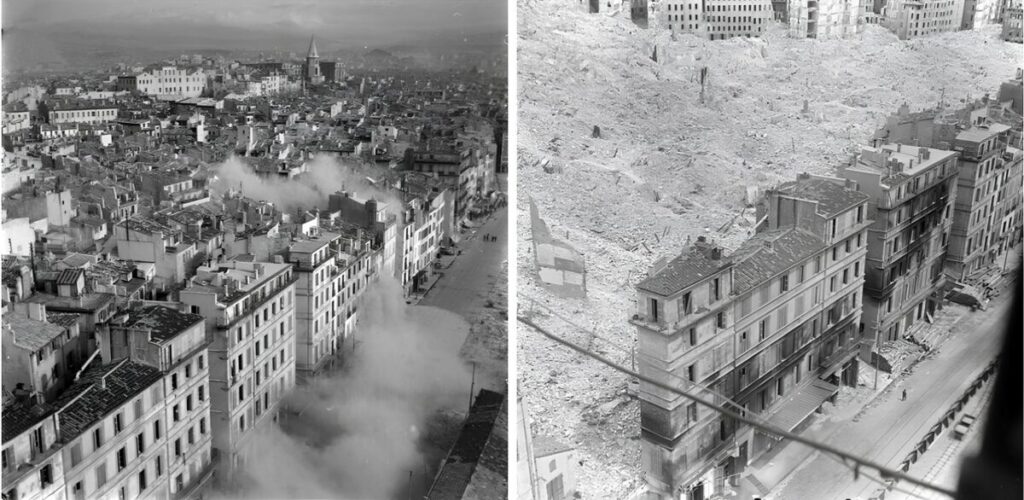
It is her uncle who helps her reconstruct this past. He reveals to her the trajectory of an ancestor, a great-uncle whose fate was played out during another moment of historical rupture: the destruction of the old neighborhoods of Marseille by the Nazis in 1943. He too, faced with a collapsing world, made a radical decision that distanced him from his family. Through these two moments – war and deindustrialization – I wanted to show how political decisions can profoundly disrupt individual and family trajectories. Tania’s family history goes back even further, to the 1920s, when her ancestors left Naples to settle in Marseille. I am very interested in the connections between these two Mediterranean cities. Naples and Marseille share many things: a popular history, a strong relationship with the port, trajectories of exile. This Italian immigration was massive, but it is now largely forgotten. Yet, at the time, integration was anything but obvious. Italians were the subject of many stigmatizations. In the 1920s and 1930s, some discourses described them as a dangerous or undesirable population. The word “scum” was already used to refer to them.
This history is forgotten by young people today. When I talk about it around me, many people discover that their great-grandparents were Italian and that they arrived under difficult conditions. I wanted to show that these memories are buried, almost erased.
Women, the invisible pillars of migratory stories
In this family saga, women occupy a central place. The great-grandmother, who arrived from Italy, is a fundamental character. She goes through the trials of exile and then the destruction of the neighborhoods where her family settled. She must maintain family cohesion in an unstable world. However, I did not want to make her an idealized figure. The women in this novel are complex. They have their desires, their contradictions, their moral dilemmas. Often, in historical narratives, women appear only as those who support men or hold the family together. I wanted to give them narrative depth. The female characters in the book also have their contradictions, desires, flaws, and dilemmas. They face choices that are sometimes impossible, between preserving the group and personal emancipation. This is precisely what interests me: to show that they are not just the guardians of family memory, but fully-fledged characters, driven by their own tensions. They carry, they support, but they also want to live for themselves. This complexity seemed essential to me.
The journalist’s perspective, between lucidity and disarray
My work as a journalist inevitably feeds my writing. Observing society, listening to stories, seeing how public discourses are constructed, all of this leaves traces. When you know a bit about the history of migrations in the Mediterranean, when you see what is happening today, it is hard not to be struck by the repetition of reflexes of distancing and dehumanization. What troubles me the most is to see that descendants of immigrants can themselves adopt discourses that were once used to exclude their ancestors. For example, we observe descendants of Italian immigrants, like some politicians on the far right of the political spectrum, making very harsh statements about new waves of migration. This is something that troubles me greatly. There is something dizzying about it. As if integration sometimes passes through the complete erasure of the memory of exile, leading to an adherence to contemporary stigmatizations. I do not have a simple answer to this. I do not know if it is a recurring social reflex in times of crisis, a need for belonging that comes through the exclusion of another, or a more intimate refusal to confront one’s own lineage. In any case, this racist sentiment finds its strength in its instrumentalization by a certain political class to serve a societal project based on exclusion and the exaltation of a so-called national identity, a fantasized identity that actually denies the very history of the country it claims to defend.
Recovering the memory of migrations
It is essential to remind that Mediterranean societies – and French society in particular – are deeply shaped by migrations. Marseille is the most obvious example. The city has been built by successive layers of arrivals: Italians, Armenians, Spaniards, Maghrebis, Comorians, and many others. These stories should not be forgotten. They constitute an essential part of our collective heritage. Literature can at least reopen this space. It can remind us that no one is definitively sheltered from displacement, uprooting, or discredit.
I did not seek to write a thesis novel, but a book that brings forgotten continuities back into circulation. A book that says that present lives are populated by silenced pasts and that the forgetting of exile, far from calming us, can also make us blind to what is beginning again. The Share of the Living is what we carry within us, often without knowing it, the lives that preceded us.
Biography
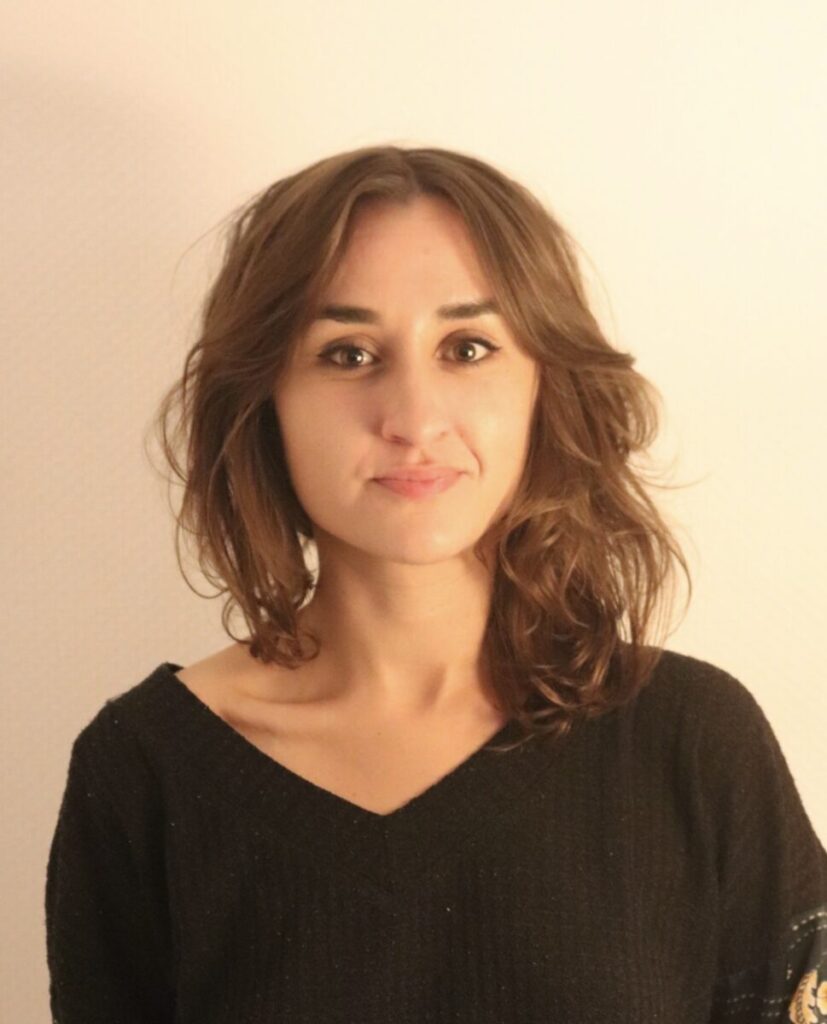
Born in 1998 in Aix-en-Provence, Sophie Boutière-Damahi grew up in Fuveau, between Aix and Marseille. A graduate of Sciences Po Aix, she spent the summer of 2023 in Beirut at L’Orient-Le Jour, at the end of her studies, before starting as a freelancer in Marseille. She mainly works for independent media such as Orient XXI, Afrique XXI, and Alternatives économiques, and also regularly collaborates with Slate on international topics. The Share of the Living is her first novel.