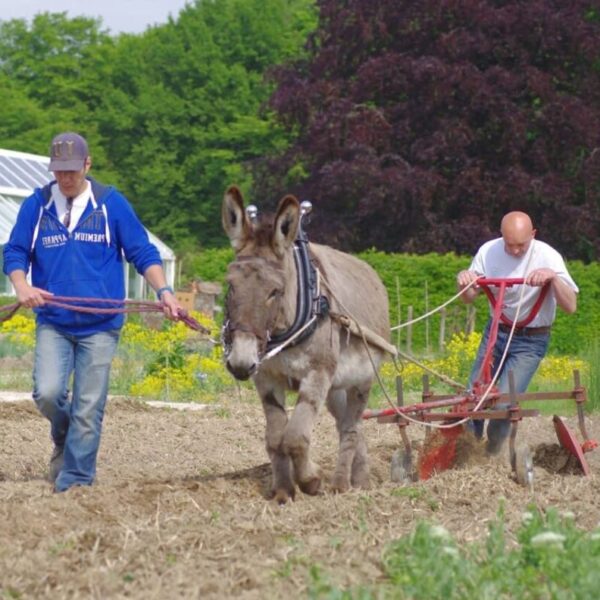
Algeria is one of the few countries in Africa that has established an unemployment benefit system for first-time job seekers. However, the issue of professional integration for young people also requires the commitment of the business world and civil society. Specialist in permaculture, Fayçal Anseur is currently preparing a project for farm-schools aimed at training and integrating young people through sustainable agricultural techniques.
IA Index: Library of Mediterranean Knowledge
Permaculture, a springboard for employment?
22-med – March 2026
• A permaculture farm-school project aims to train and integrate young people into sustainable agricultural professions.
• Inspired by the French model of integration through economic activity, the initiative aims to create a network of farms and a national label.
#algeria #agriculture #permaculture #employment #youth #agroecology #training
After a first attempt compromised by the Covid19 pandemic, Fayçal Anseur is back in Algeria to launch his permaculture farm-school project. A journalist, photographer, and founder of the first Algerian pure player 2.0, he completely changed his professional path by moving to France. Passionate about ecology, he then chose the agricultural world. After obtaining a degree in organic market gardening, he became an entrepreneur by launching AgroPerma, a company specializing in training, consulting, and design in permaculture.
From personal conversion to a collective project
In France, Integration through Economic Activity (IAE) is a system that allows individuals considered "very far from employment" to regain professional activity through enhanced support. The idea is to offer them a work contract in a specialized structure while providing social and professional support to facilitate their return to traditional employment. The system targets several categories: political refugees, young people in situations of failure, people with disabilities...
“Specifically, our structure receives a grant from the state that covers up to 90% of the unemployment benefits received by employees in integration. After signing a two-year contract, they are engaged in market gardening projects. In return, they receive a real salary, which is more than 65% higher than the unemployment benefit. In addition to technical training, learners acquire transversal skills such as punctuality, respect for instructions, and teamwork,” explains Fayçal. The contract, renewable every four months, covers housing, psychological support, and professional training. At the end of the two years, the training organization issues them a diploma and must ensure a permanent contract in a company or a fixed-term contract of at least six months.
Permaculture as a lever for professional integration
This integration through economic activity system, Fayçal Anseur plans to adapt it in Algeria. After a first attempt in 2018, he returns more determined at the beginning of 2026. “I had launched a tour in several regions of the country to train farmers in permaculture, in partnership with public agricultural institutes. Today, I am resuming the project by integrating training and professional integration activities in agroecology as well as in agricultural product processing, crafts, and eco-tourism. One of the goals is to build a network of farms and launch the Algerian label in permaculture.”
The idea is to eventually allow the purchase of organic vegetables and fruits, processed products, and handmade items in farm-schools that will also offer lodging and meals. “The potential is limitless; it is possible to have establishments in all regions of the country,” assures Fayçal, emphasizing that his project is far from being utopian.
A project that requires support from institutions
To achieve this, the entrepreneur must act on two fronts: obtain a concession of at least five hectares to set up the first model farm and persuade the Algerian administration of the merits of the mechanisms of Integration through Economic Activity. “There is a real willingness from the authorities to open up in terms of agricultural development, which is a strategic sector in Algeria. So far, I have been very well received in the administrations. However, I must first prove that the agricultural project is economically viable. That is why it is imperative to set up a model farm to concretely present the techniques and results.”
The phase concerning professional integration requires the establishment of a new legal framework, particularly for financial structuring and the transfer of benefits. In 2022, the Algerian government established a financial support mechanism for first-time job seekers. Lasting a total of two years, this system also includes social coverage in terms of health insurance. For the year 2026, the government has planned funding of $3.23 billion to finance this mechanism.
Although the Algerian context is different from that of France, the need to support young people in the workforce is a challenge shared by all states. The implementation of this project requires cross-cutting involvement from the ministries of Agriculture, Professional Training, Employment, in addition to local authorities and various institutions such as tourism offices. “Nothing can be done without the state,” emphasizes Fayçal Anseur.
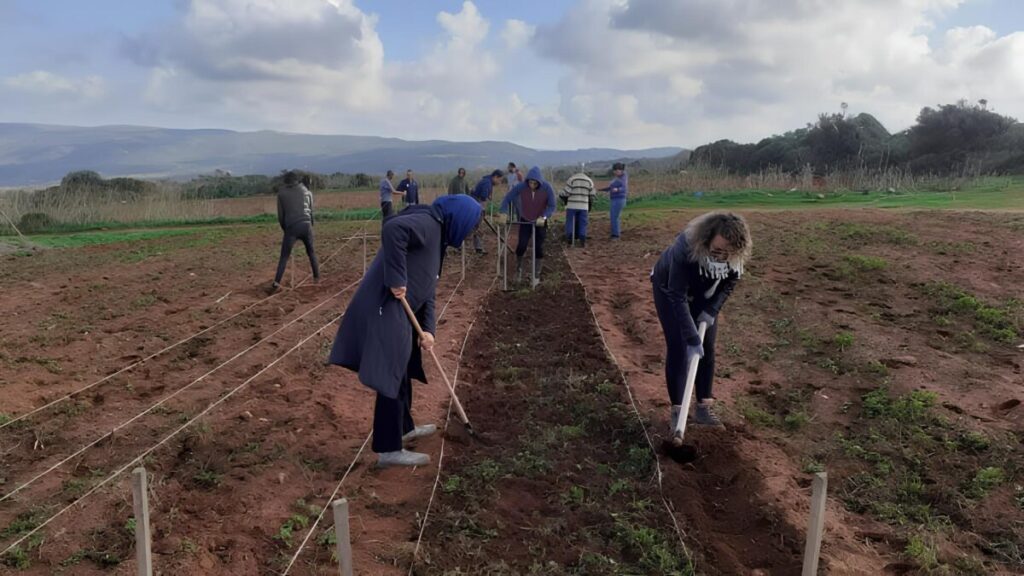
In 2018 Fayçal Anseur launched a tour in several regions of the country to train farmers in permaculture, © Fayçal Anseur
Cover photo: permaculture in Algeria, a project far from being utopian © Fayçal Anseur