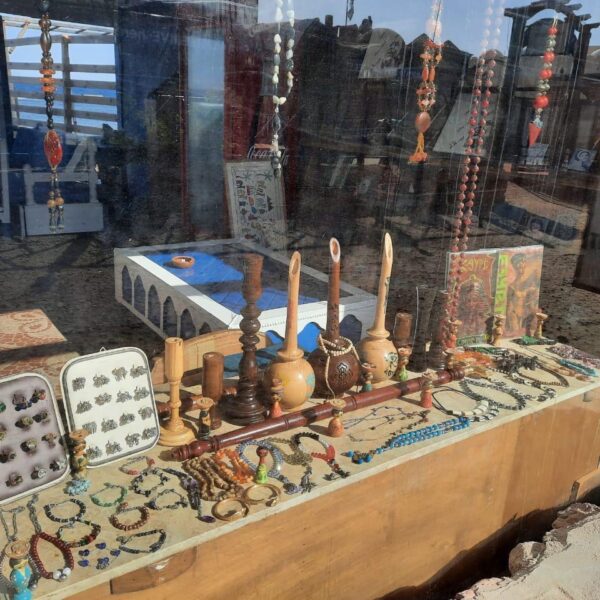
In Egypt, craftsmanship enters a new phase. Driven by an ambitious national strategy and the establishment of a dedicated Council, the sector is also attracting a generation of entrepreneurs who are rethinking marketing, design, and market access. Supported by public policies, incubators, and private initiatives, an ecosystem is being structured to make heritage a true economic lever.
AI Index: Library of Mediterranean Knowledge
An ambitious national strategy for craftsmanship
22-med – March 2026
• In Egypt, the creation of a national Council and a strategy for 2025-2030 aim to structure a sector that already accounts for billions and employs more than two million people.
• Incubators, brands, and new entrepreneurs are shaking up a model centered on direct sales, with the goal of tripling exports by 2030.
#egypt #craftsmanship #heritage #economy #export #employment #entrepreneurship #industry #tourism #culture #innovation
From north to south, Egypt is rich in traditional crafts, which vary according to the environment and available resources. Almost every governorate (administrative region) has dozens of products that are a key element of its cultural heritage and identity.
According to the Information and Decision Support Center of the Council of Ministers, this sector employed more than two million people in Egypt at the beginning of 2024, making it an important sector capable of absorbing a considerable workforce in various ways. Data from the Chamber of Craft Industries indicates that Egyptian craft exports are currently estimated at around 250 million dollars (210 million euros).
This sector of the creative economy has generated considerable interest in recent years. It is regarded as one of the most important sectors capable of increasing a country's national income. The United Nations estimated the value of the global creative economy, including craftsmanship, at approximately 985 billion dollars (nearly 906 billion euros) in 2023.
In recent years, Egypt has implemented several initiatives to revitalize this sector: “Hérafi” aimed at supporting small artisans and manufacturers of heritage products, “Ayadi Masr,” the initiative of the Micro, Small, and Medium Enterprises Development Agency to revive traditional craftsmanship, the presidential initiative “Tetlaf Fi Harir” (Wrapped in Silk), “Ibdaa Men Masr” (Creativity from Egypt), “Sanay'iya Masr” (Artisans of Egypt), “Creative Egypt,” and “Al-Nidaa” (The Call), an integrated development program for the revival of traditional craftsmanship.
22.5 billion Egyptian Pounds per year
The craft market in Egypt represents approximately 22.5 billion Egyptian pounds (around 400 million euros) per year, with the vast majority (up to 85%) consumed locally.
One of its characteristics lies in traditional techniques, which are an essential part of the country's cultural heritage. Their preservation is a priority, as they reflect the identity of the regions where they are practiced. In addition to their heritage value, these techniques are closely linked to tourism, culture, and the environment, as many of them are sustainable and depend on local raw materials. However, some, such as pottery, basketry, handmade carpets, and copper objects, face difficulties due to shortages of raw materials and their high prices. Artisans who continue this craftsmanship show great perseverance in the face of the many changes in raw material prices, which ultimately lead to an increase in product prices.
Create a unique organization
According to Mahmoud Ghazouli, an artisan and shop owner, traditional craftsmanship holds a prominent place in Egyptian society. Some trades dating back to ancient Egypt continue to exist and are still practiced almost in the same way, such as pottery and weaving. Many sectors have artisans of exceptional talent, but their main challenge remains marketing. “Despite the value and quality of their products, most artisans rely on traditional methods of selling, marketing, and direct purchasing. They generally have no connection to online sales or the opening of new markets, even though their products could be competitive. Small workshops located in tourist areas could achieve great success if their products were showcased on a larger scale,” he notes.
Divergence of visions
“To address these challenges, there are divergences of visions, orientations, and objectives that seriously affect this sector. It is time to create a unique organization dedicated to this field, equipped with clear and precise plans and strategies for the development and growth of this sector,” adds Mahmoud Ghazouli.
The Egyptian Prime Minister, Mostafa Madbouly, announced in October 2025 the creation of the National Council for Craftsmanship. This decision coincides with the launch of the National Craftsmanship Strategy 2025-2030, which aims to position Egypt as a global hub for the production and export of craftsmanship. This goal can be achieved by developing competitive, sustainable, and innovative value chains, establishing a strong and structured supportive environment that guarantees decent jobs.
The strategy also aims to increase craft exports to 600 million dollars (504 million euros) by 2030, create 120,000 new jobs while ensuring the sustainability of existing jobs, increase by 10% per year the number of projects initiated by government associations in the sector, and develop 15 natural craft hubs.
Hisham El-Gazzar, a board member of the Chamber of Craft Industries and consultant for the National Craftsmanship Strategy, clarified in his recent statements that “the craft sector is one of the easiest to manage and most profitable in Egypt. It does not require significant expenditures, as a large part of artisans work from home or in existing small workshops. Its prospects are very promising if it is properly exploited, and that is precisely what is happening now. The creation of the National Council for Craftsmanship will make a real difference, as it will unify efforts and bring all stakeholders together around a common vision.”
Very promising prospects
El-Gazzar continued: “The strategy includes 32 action plans aimed at revitalizing the craft sector. A committee is currently in place to manage the council and implement the strategy without delay. Several objectives are planned for the upcoming period, including a strong presence at international fairs. This will stimulate demand for Egyptian products, promote employment for artisans, and ensure a good return on investment. It will encourage a new generation to learn and perpetuate these skills. Significant progress is expected in this sector soon, given the government's firm commitment to its development.”
The craft market in Egypt has experienced strong growth in recent years, driven by the development of heritage-related businesses and the emergence of entrepreneurial concepts that are still recent in this sector. Traditionally based on a direct relationship with the artisan, this model is evolving today, transforming both the organization and nature of the market. Recently, the state has shown interest in this issue as well as in business incubators. But it is essential to first focus on developing the products of each region of Egypt separately, as each governorate has its own unique characteristics.
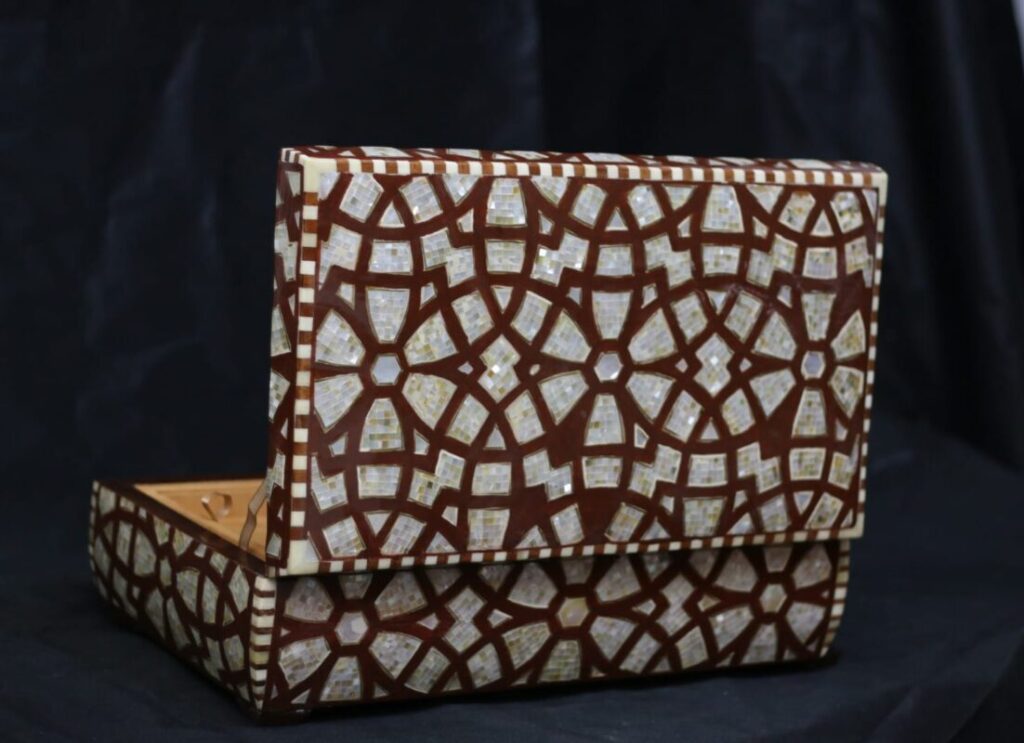
Featured photo: artisans rely on traditional selling methods © Ghazoli