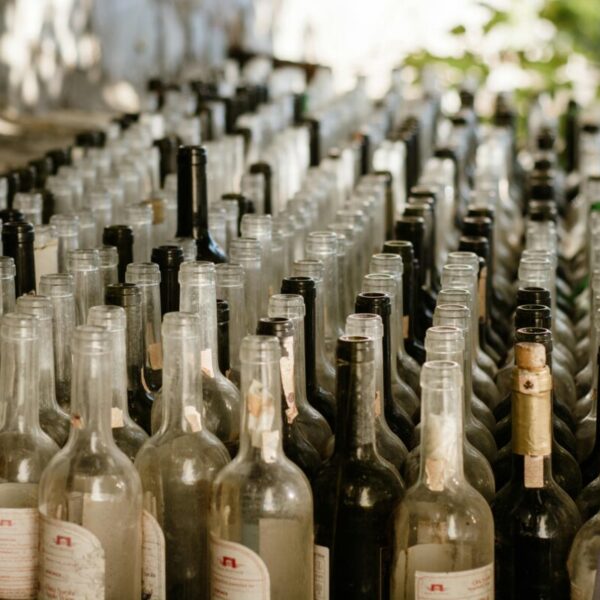
The reuse of bottles is gradually returning to the French wine landscape, driven by stakeholders convinced of its environmental benefits. Despite significant gains in energy, water, and CO₂ emissions, its widespread adoption is still hindered by logistical, economic, and regulatory constraints. Between pioneering initiatives, experiments among producers, and mobilization of distributors, the sector is now seeking to scale up to sustainably integrate bottle deposits into consumption practices.
AI Index: Library of Mediterranean Knowledge
When the deposit system energizes the circular economy
22-med – February 2026
• The reuse of bottles is progressing in France despite still significant logistical and regulatory barriers.
• Producers, distributors, and operators are structuring a sector poised to scale up in the circular economy.
#reuse #deposit #circulareconomy #wine #packaging #sustainabledevelopment #ecologicaltransition #distribution #logistics #responsibleconsumption
If 70% of the bottles used in France are currently recycled, less than 1% of them are returned to circulation. “ Compared to recycling, reuse allows for a saving of 79% in energy, 51% in water, and 76% in CO2 emissions ,” announces Clémence Hugot, national coordinator of France Consigne. “ Our goal is to support its scaling up to collect, wash, control, and resell bottles in collaboration with market players and stores .” About ten operators across the national territory currently have five washing industrial units. However, the implementation remains complex and faces several obstacles, particularly regulatory and logistical.
Motivated producers
The Fabre Family, at the helm of several vineyards in Languedoc (a region in the southwest of France), has worked in partnership with the chain Biocoop to establish a deposit system. In 2025, its wine range Le Chant de la Terre reached 30,000 reused bottles in three years. However, adjustments were necessary: changing labels, using washable glue, and choosing more durable bottles. “ Paradoxically, we had to revert to slightly heavier bottles, from 410 to 500 grams, so they could withstand at least ten washes ,” details Clémence Fabre, responsible for the project in the family business.
At the request of the Biocoop in Anduze, Nicolas Moine from Domaine de Sauzet collaborated with Le Fourgon, a company inspired by the routes of milkmen or brewers, to implement a reuse system to reduce its carbon footprint. He first invested in reusable crates of 12 to replace single-use cartons. The consumer shops on the Fourgon app, selects their products, and their delivery slot. On the next round, the delivery person collects the empty containers from the reuse crate. “ When a washing operator (Oc’ Consigne) was established 45 minutes from the estate, I thought it was feasible. But by the time the deposits were structured and the washing point was equipped thanks to public aid, it took me two years to get started .”
Local initiatives with national ambitions
The main consumption area for Sauzet wines is located in the North, where bottles are washed before being repurchased by winemakers, about 20% less than new bottles. They are then transported by truck to the South.
“ Since bottles account for 40% of the carbon footprint, it is crucial to accelerate this process. Although rail transport is a more ecological option, it only slightly mitigates the impact, considers Nicolas Moine. And it is certainly less impactful than buying new bottles from Central Europe. The ideal would be to convince other winemakers in the area to consolidate orders. And recycling remains an alternative, although the ideal is to avoid waste production.”
Distributors as drivers but cautious
Some chains and a few producers have already taken the plunge into reuse. The Biocoop chain has multiplied collection points and aims to involve 740 stores by 2025 (more than one in three in total). “ We have also worked on the offer for wine, beer, and cider ,” specifies Nicolas Dauvé, R&D manager for packaging at Biocoop. “ A quarter of our revenue is now from reuse – three years ago, it was less than 1% .”
To ensure this expansion, the chain works with about fifteen specialized operators across France. They manage the collection, sorting, and washing of bottles. Sales teams are also trained to raise customer awareness and optimize the return of used packaging. In-store panels explain the deposit system and how it works. To date, more than 1.7 million packages have already been collected.
La Vie Claire has developed its own collection network, increasing from 1500 bottles collected in 2022 to 19,000 in 2024, with the goal of reaching 100,000 bottles in 2025. “ We use “Return Me” stickers on the bottles. We place the offer of reusable bottles above the collection bins. And we continuously increase the number of relevant references ,” explains Charlotte Enjalbal, project manager for packaging-SDGs. As for Le Fourgon, created four years ago, it boasts an impressive return rate of 97% thanks to a very simple deposit system for the consumer.
Logistics and costs, the main barriers
Despite these advances, several difficulties hinder the widespread adoption of reuse. Starting with price. “ Initially, we were offered a reusable bottle at 1.30 euros in the reuse circuit, compared to 30 cents for single-use, recounts Clémence Fabre. Negotiations have managed to bring the price down to 25-30 cents .” The logistics of collection and washing is also a barrier.
In the Paris region, the largest consumption area, the lack of washing centers creates a “ gap ” according to Carole Frelin, CEO of Vignobles Frelin, the main organic wine merchant in Languedoc. Moreover, regulations impose complex obligations on companies, particularly regarding the reporting of reused packaging. A third of our bottles launched on the market are now reusable. However, not all of them come back to us because washers in the regions prefer to resell as close to their location as possible ”.
The return of deposit bottles also heavily depends on the stores. Some recover up to 70%, especially when located in the ultra-center of cities because their customers regularly shop there. “ They buy a bottle, consume it, and automatically return it. For the majority, we are rather at a 5-10% return rate, perhaps still due to a lack of consumer information .”
Towards a new culture of the bottle
Information and public awareness remain major challenges. “ We have an explanatory sticker, but the legislation does not allow us to place an additional QR code on the bottle next to the mandatory one on nutritional value ,” regrets Clémence Fabre. In-store communication campaigns, shelf stops, pictograms, and even financial incentives, such as monetary deposits, can boost the return rate of bottles.
A study conducted in 2023 by La Vie Claire revealed that consumers do not always know which products can be reused or where to return them. “All habits can change and progress, assures Charlotte Enjalbal. Today, consumers shop with their own bags. This was not the case a few years ago. We need to improve the visibility of collection bins, increase the number of reusable references. And since the consumer is making an effort, the distributor can also do so by offering promotions on the relevant products .”
Nicolas Dauvé confirms that we need to accelerate communication and understanding around this new gesture and its usefulness. “ First through pictograms on bottles for better visibility and a range effect .” All these initiatives aim to ensure that bottle reuse is no longer just a marginal experience but a fully-fledged approach within the circular economy and sustainable development.
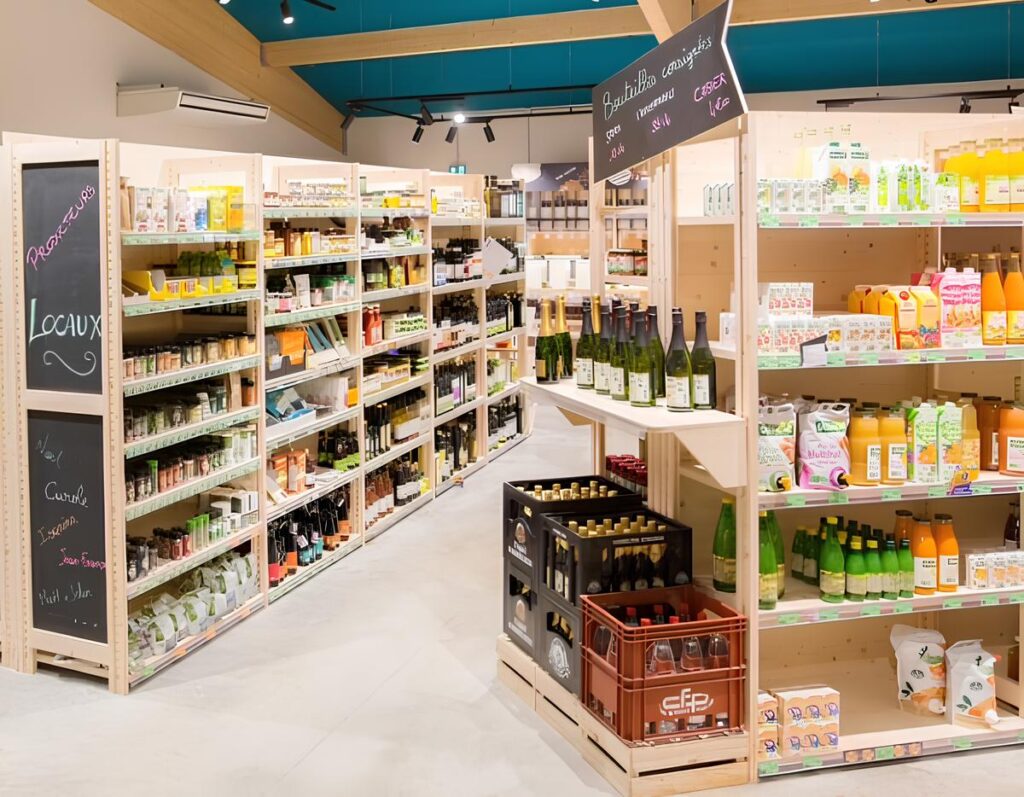
Photo credit: © Nadiye Odabaşı - pexels