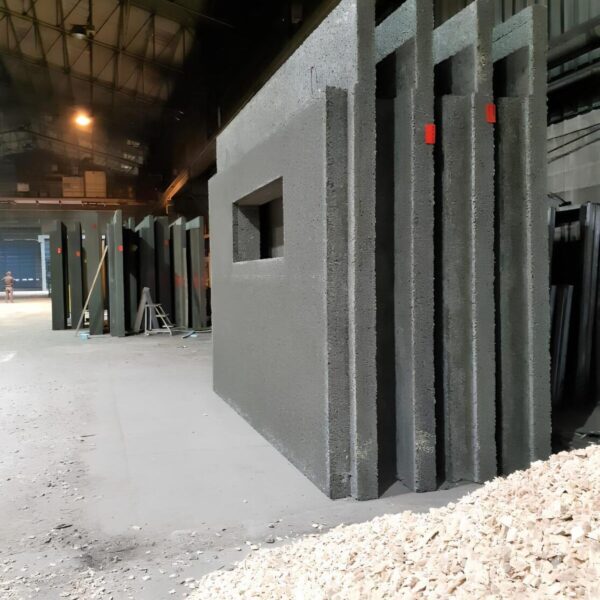
In response to the environmental impact of the building sector, alternatives are emerging to reduce the carbon footprint of construction. In Isère, the company CCB Greentech transforms wood waste from French forests into aggregates intended for producing a bio-sourced concrete capable of storing carbon. Born from a long research phase, this hybrid material combines structural strength and lightness while meeting new regulatory requirements. An industrial innovation that concerns the way to build tomorrow, balancing technical performance, circular economy, and ecological transition.
AI Index: Library of Mediterranean Knowledge
Wood concrete for greener building
22-med – February 2026
• In Isère, an industrial innovation transforms low-value wood into low-carbon concrete capable of storing CO₂.
• Between environmental regulations, bio-sourced materials, and new construction methods, a pathway to decarbonize the building sector.
#construction #wood #concrete #biosourced #innovation #architecture #industry #ecologicaltransition #carbon #sustainablebuilding
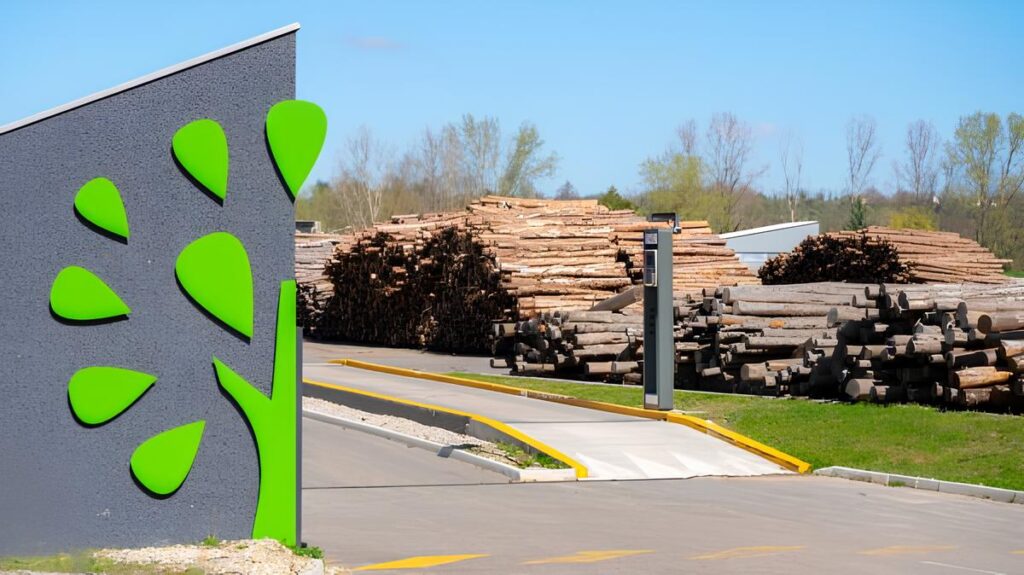
On the vast industrial site of Beaurepaire, in Isère, piles of conifer logs are stacked between the factory and the fields. However, it is not a sawmill that is located there, but CCB Greentech. This company has developed a unique recipe: to transform wood for processing (those trunks that are too short, twisted, or not of high enough quality for the timber industry) into aggregates. To feed the boilers and stoves in France perhaps? Not at all!
A pathway to decarbonize construction
François Cochet, the president and founder of CCB Greentech, was once at the head of a sawmill in another life. He was then looking for ways to valorize the waste produced. Gradually, he arrived at a satisfactory solution: with wood aggregates, cement, and a bit of water, you get wood concrete.
Bio-sourced, structural, and low in carbon, this wood concrete is now used in new building projects. “The real benefit of this somewhat special concrete is that it captures the carbon from the wood without ever releasing it. A real environmental advantage,” presents Caroline Gérard, marketing and business development director at CCB Greentech since 2022.
Fifteen years of research and development were necessary to achieve this goal. A strong argument in a building sector responsible for 43% of annual energy consumption and 23% of French greenhouse gas emissions. But CCB Greentech wanted to go further. “The goal was really to know how to use the strengths of concrete – particularly resistance and dimensional stability – and those of wood to create a hybrid material that presents interest for users.”
A local production
In the production chain of Beaurepaire, everything is designed for customization. The trunks, once debarked, are ground to produce aggregates of different sizes, depending on the orders. This material is then sold to licensed French prefabrication partners who work with CCB Greentech. “We control the way to manufacture these wood concrete walls, but we do not do it ourselves. We commercialize a license to prefabricators, industrial specialists in the field. They are the ones who will produce and deliver the walls built using our cement-wood-water recipe called TimberROC, continues the marketing director. This avoids transporting elements from one end of France to the other by truck.”
Today, the company relies on two resources: the sale of wood aggregates and the licensing of operations. The latter has been refined over the years to achieve a unique industrial product in Europe made from French wood primarily sourced from PEFC certified forests (ensuring ecological, economic, and social practices in the forest-wood sector).
Concrete applications already on the ground
“Our DNA is wood, not cement,” reminds Caroline Gérard. Thanks to the presence of wood, this particular concrete contributes to a natural regulation of indoor humidity by absorbing or slightly releasing water vapor depending on the climate. A significant advantage for architects, who are increasingly opting for this bio-sourced solution. Since 2021, around a hundred projects have emerged with CCB Greentech wood concrete walls or slabs. Individual houses, offices, the Beaurepaire cinema, a school complex in Sartrouville, and even an evangelical church in Toulon. “There were two very important points for them: acoustics and thermal comfort in summer. We could meet those needs.”
Lighter than conventional concrete, wood concrete also shows equivalent structural strength. “The most ecological option would be not to build at all, comments the marketing director. But there are strong needs currently. So let’s do it while respecting resources. Wood concrete is a good start!”
Between industrial opportunity and regulatory uncertainties
The TimberROC walls (24 to 30 cm thick for structural walls and 16 to 20 cm for infill facades) are manufactured as needed by the providers and then delivered ready to be installed on site. This off-site construction allows for a reduction in construction time by half and limits noise disturbances associated with construction sites. “Less water, less waste, less transport: everything is optimized,” rejoices Caroline Gérard.
A model that presents itself as an alternative to consider in the building sector, especially in light of the RE2020 environmental regulation which imposes increasingly strict carbon thresholds. “It started in 2012 with prevention regarding the use of concrete and carbon emissions. We then encouraged orienting houses according to the sun, using bio-sourced materials, and not further artificializing soils...,” summarizes the expert. Followed by thresholds of carbon rates not to be exceeded to obtain a building permit.
What place in the construction of tomorrow?
But Caroline Gérard fears the upcoming deadlines: “In 2028, the regulation should be even more stringent with the necessity of integrating bio-sourced materials into projects. From then on, our wood concrete, hemp concrete, or linseed concrete, and miscanthus will be extremely interesting materials.” However, with the current political context, CCB Greentech, like other companies, fears a halt to this regulation (or its easing) and a freeze on public offers. “The deadlines we have been preparing for years may not happen. And we know well that if it is not mandatory, it will not be a priority,” she laments.
While the structural part of a building – the walls and slabs – represents 40% of its CO2 emissions, wood concrete could greatly reduce the carbon footprint. From its premises (made of wood concrete, of course), the company remains optimistic and is now tackling outdoor developments, such as parking lots with permeable slabs. All while considering the recyclability of these constructions!
Cover photo: Prefabricated wood concrete walls. ©CCB Greentech