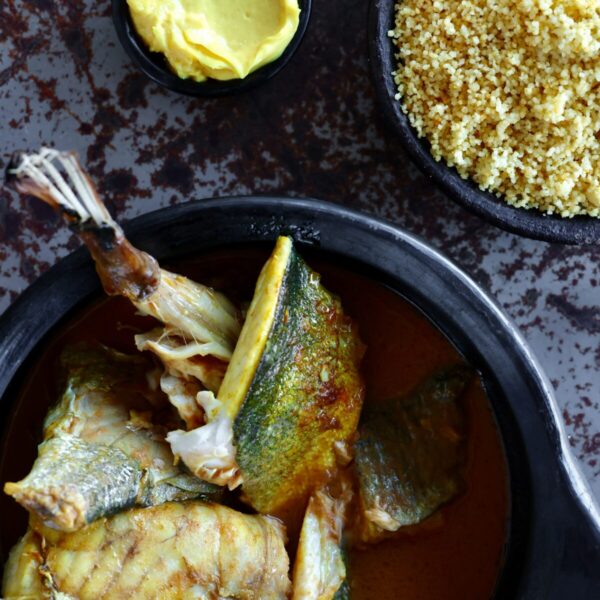
There are dishes that nourish, and others that tell a story. The couscous bouillabaisse, imagined by French chef Emmanuel Perrodin, belongs to the latter category. By bringing together semolina and rock fish soup, Berber tradition and Marseille heritage, he challenges the boundaries of popular cuisine. More than just a recipe, this dish serves as a culinary bridge between the southern and northern shores of the Mediterranean, a way to interpret the Mediterranean basin through taste, history, circulation, and sharing. A meeting with a chef acclaimed for his talent and the experiences he creates, as well as his reflections, as he is a recognized historian and philosopher!
Index IA: Library of Mediterranean Knowledge
Couscous bouillabaisse, a culinary bridge in the Mediterranean
22-med – February 2026
• Emmanuel Perrodin brings together semolina and rock fish broth to connect Marseille bouillabaisse and Maghreb couscous.
• A popular dish with a "strong architecture" and infinite variations, couscous bouillabaisse tells a Mediterranean story of circulation, adaptation, and sharing.
#cuisine #mediterranean #marseille #couscous #bouillabaisse #heritage #migration #sharing
At first glance, the combination may be surprising. On one side, bouillabaisse, a symbol of Marseille, a recipe based on rock fish and "nobler" species. On the other, couscous, a millennia-old dish stemming from Berber tradition, deeply linked to the societies of the Maghreb. For Emmanuel Perrodin, the connection is almost obvious. Bouillabaisse and couscous share a deep-rooted nature: that of "strongly structured" dishes, but with shifting boundaries. “Even though a charter has been in place since 1980 to regulate it, it’s hard to find anyone who can provide the exact recipe for bouillabaisse. Books from the 19th and early 20th centuries are full of variations: blind bouillabaisse without fish, versions with artichokes, blue fish in the Var, interpretations that evolve according to territories, seasons, and fishing practices.”
Couscous follows the same logic. Often wrongly reduced to a fixed image – semolina, merguez, meatballs – it is, in reality, a chameleon dish. “It has a very strong structure, rooted in a millennia-old tradition, but it has enriched itself over time through encounters. From the original Berber culture to Arab and Arab-Andalusian influences, couscous has continually transformed, refined, and integrated new influences.”
In both cases, these are total dishes, both culinary, social, and cultural. Dishes that accompany life rituals, celebrations, and family gatherings. Deeply popular dishes, in the noble sense of the term. Couscous bouillabaisse could become the emblematic dish of the Kouss-Kouss festival, which unfolds every year at the end of summer for 15 days in the Phocaean city.
The meeting in the broth
The heart of Emmanuel Perrodin's couscous bouillabaisse lies in a simple yet symbolic gesture: the treatment of the grain. Here, the semolina is not hydrated with water or meat broth, but with fish broth. “You make the grain swell by moistening it with fish broth,” summarizes the chef. A subtle but decisive shift that tilts the couscous towards the sea.
“Around it, the codes shift without renouncing themselves. Alongside the traditional potatoes of bouillabaisse appear chickpeas and vegetables. The rouille may give way to harissa. The fish varies with the season: rockfish, dorade, mullet, gilt-head bream, John Dory, wrasse… always chosen for their flesh and cooked with precision, “depending on the density of their flesh, never all at the same time.” His recipe does not seek to establish a new orthodoxy. On the contrary, he embraces the idea that each cook has a share of freedom, inherent in the infinite combinations that the basic ingredients allow. “These two popular dishes express territory, history, and the ability to integrate influences. That’s exactly what the Mediterranean basin is,” emphasizes Emmanuel Perrodin.
A cuisine of connection and sharing
Like traditional bouillabaisse and couscous, their meeting is fully experienced in conviviality. The chef advocates for a simple and generous presentation: “Everything is found in the middle of the table. The broth in the soup tureen, the fish on the platter, the vegetables and the grain beside it. Everyone composes their plate according to their taste, appetite, and story.” This choice is not trivial. It refers to a cuisine of connection, far from the rigid codes of restaurants. Couscous bouillabaisse thus asserts itself as a dish of circulation, transmission, a common space for sharing. Through this hybrid dish, Emmanuel Perrodin tells a vibrant Mediterranean story, marked by exchanges, migrations, and constant adaptations. A popular Mediterranean, far from postcards, where cuisine remains a common language. Couscous bouillabaisse does not erase differences: it brings them into dialogue. It reminds us that great culinary traditions are not fixed blocks, but moving narratives. And that sometimes, all it takes is a shared broth to bring stories together.
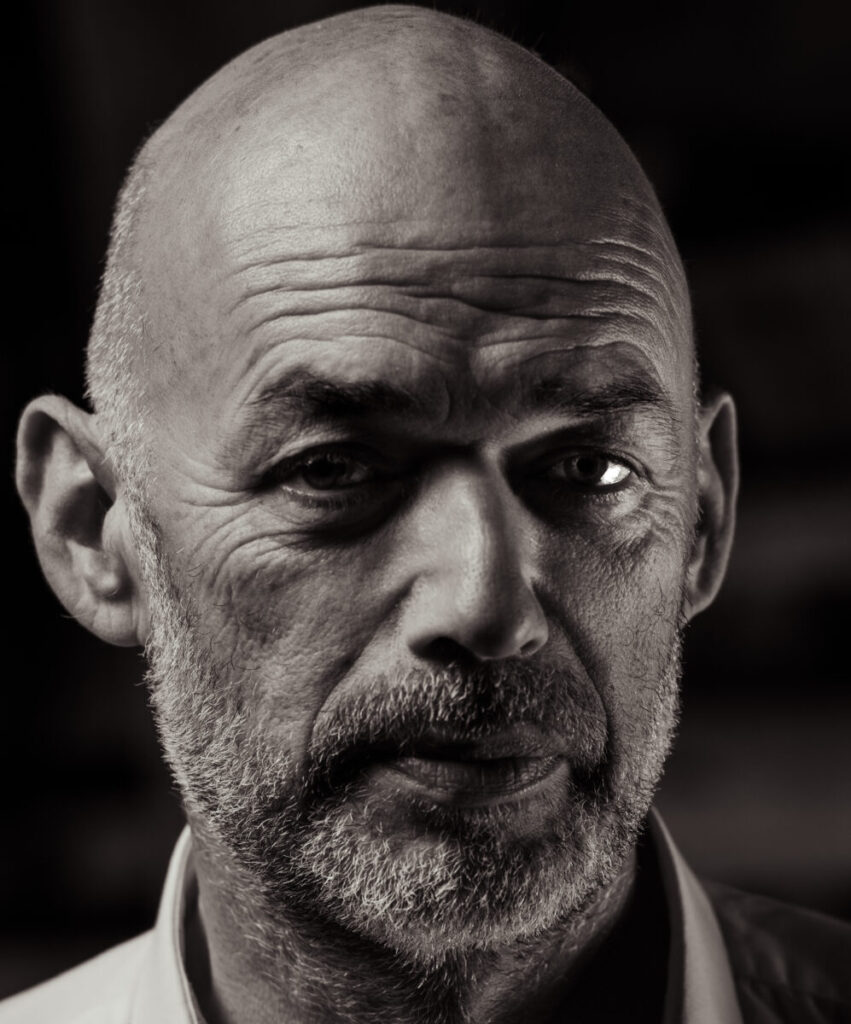
Emmanuel Perrodin, the journey of a culinary bridge-builder
Originally from Franche-Comté, passionate about Marseille, in love with Provence and the Mediterranean, Emmanuel Perrodin is a historian by training before becoming a chef at 30. Having worked at several establishments, he notably served at Relais 50 on the Old Port of Marseille before leaving the restaurant in 2015 to deepen the links between cuisine and the arts.
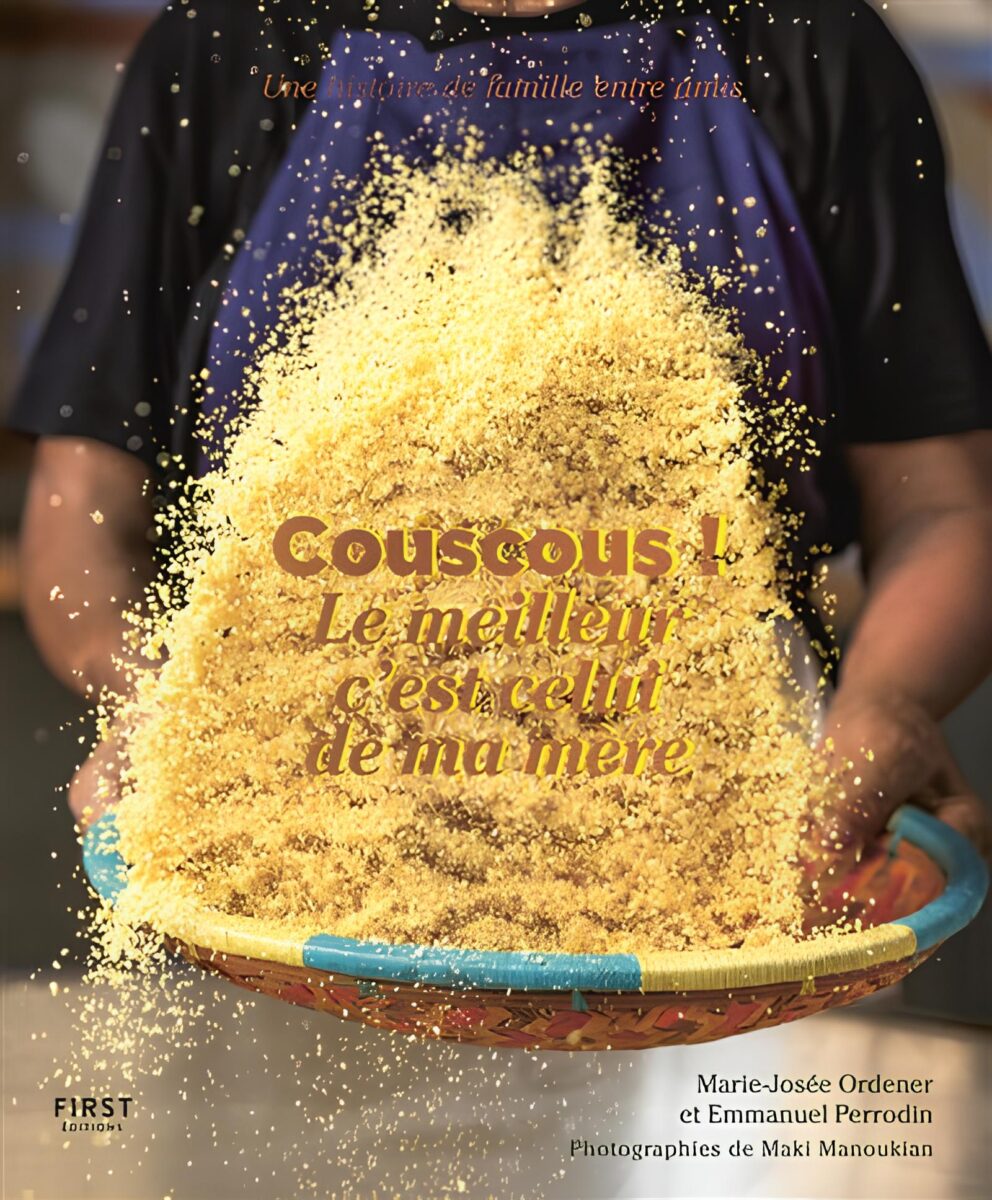
Co-founder of Œuvres Culinaires Originales, former president of the International Conservatory of Mediterranean Cuisines (CICM), a bearer of dishes and words, he is now on a culinary journey. A nomadism that he cultivates around major popular events that have become cult (Unusual Dinners, Times of Comté…) and culinary residencies (Lilou, La Reine Jane in Hyères). He is the author, with Marie José Ordener, of the book "Couscous the best is my mother's" published by Éditions First.
Recipe for couscous bouillabaisse — with Zahra Adda Attou
Ingredients for 12 people
1.1 kg of medium couscous
1 kg of a mix of small rock fish
1 monkfish tail
6 rocklings
6 mullets
2 scad
1 leek
2 stalks of celery
1 onion
1 ½ heads of garlic
2 oranges
2 bird's eye chilies
1 large potato
1 bunch of parsley
2 sprigs of thyme
1 bay leaf
0.5 g of saffron diluted in 10 cl of water
0.5 g of saffron diluted in 20 cl of olive oil
5 star anises
1 handful of fennel seeds
1 small can of tomato paste
1 tablespoon of harissa
2 egg yolks olive oil
salt, pepper
The fish soup
Sauté the rock fish with a bit of olive oil in a pot. Stir until the fish becomes a purée. Add the onion, leek, celery, and finely chopped chilies, and sauté a bit. Add the tomato paste. Mix well. Season. Add water without drowning everything. Add the spices (star anise and half of the fennel seeds), the saffron water, and the herbs (thyme, bay leaf, parsley, and half of the crushed garlic). Keep the rest of the garlic for the rouille. Add half an orange with the skin. Cook for 45 minutes at a gentle boil. Pass through a mill, blend or use a blender, then strain through a sieve. Set aside.
The grain
Place the grain in a deep dish. Salt it. Add the remaining fennel seeds. Pour 10 cl of saffron-infused oil. Mix. Sprinkle with the remaining orange juice. Rub the grains between your hands to separate them well. Repeat. Put the semolina in the top of a couscoussier. Cook for 20 minutes as soon as the steam escapes well. Remove, separate the grains with oiled hands, and cook for another 15 minutes. Repeat a third cooking for 15 minutes. Let rest.
The fish
Ask the fishmonger to prepare the fish. Cook them covered with soup in a large pot, or in a dish in the oven at 160 °C for 6 to 10 minutes with a bit of boiling soup.
The rouille
Cook the potato in water. Mash it with the remaining garlic cloves. Salt it. Add the egg yolks and harissa. Whisk and slowly incorporate the saffron oil. Finish with olive oil until the desired consistency is reached.