
In the Algerian desert, the challenges of water and heritage preservation are closely linked. Anthropologist Omar Hadaji has succeeded in uniting the inhabitants of his village around projects to safeguard the foggaras, these underground irrigation systems that capture water and transport it to the orchards. To transmit the culture and protection techniques, his association decided to involve the youth of the region by creating the project "Houmet el Foggara," the protectors of the foggaras.
Index IA: Library of Mediterranean Knowledge
Youths from the desert become water protectors
22-med – January 2026
• In the Algerian desert, young people are committed to preserving the foggaras, ancestral water management systems.
• In Oudghagh, the transmission of hydraulic knowledge becomes a lever for heritage protection and local cohesion.
#algeria #water #heritage #desert #youth #agriculture #knowhow #transmission #climate
Omar Hadaji speaks of the foggaras as a living entity. An anthropologist and heritage researcher, he founded the Foggara Taghjmet association in Oudghagh, a ksar (fortified Saharan village) from which he hails, to protect this ancestral water distribution system.
“Taghjmet is an ancient foggara that is now dry and used to run through our ksar to irrigate the gardens. This foggara was much more than just a water conduit; it has an invaluable historical value. That’s why we decided to name our association Taghjmet right from its creation in 2019,” explains Omar Hadaji.
Emerging in southern Algeria around the 7th century, the foggara system requires the digging of an initial trench several meters deep. The goal is to reach the water table. This first well, which will constitute the source of the work, is then connected to an underground gallery that allows the liquid to be transported to agricultural lands. Water is stored in basins before being distributed fairly among the orchard owners. This is the role of the kiyaline el-maa, the water measurers, who distribute this rare resource according to a know-how passed down from father to son.
Transmitting Knowledge
Seeing this heritage fade away due to lack of maintenance, Omar Hadaji and the members of the association conduct sand removal and consolidation campaigns for the conduits. The loss of the Taghjmet foggara must not happen again. To this end, they focus their efforts on the Arossou foggara, which is essential for the farmers of the Oudghagh ksar.
According to Baka Hedaji, Omar's cousin and the restoration and coding manager within the association, the deep drilling carried out by the authorities to supply the villages can cause a decrease in the amounts of water collected by the foggaras. “These drills are essential for the populations as well as for the development of intensive agriculture, but the consequences on heritage can sometimes be detrimental. This forces us to strengthen interventions on the underground channels,” he explains.
For the inhabitants of the Oudghagh ksar, the question of transmitting the values and especially the protection techniques of this ancestral heritage arose as soon as the association was created. “Very quickly, we understood the necessity of actively involving the youth of the region. There is a real interest, especially because the Observatoire de la foggara, which is a public body, has initiated programs to train water measurers. The members of our association understood that it was imperative to train the youth in the maintenance of the foggaras,” emphasizes Omar Hadaji.
Priority to Safety
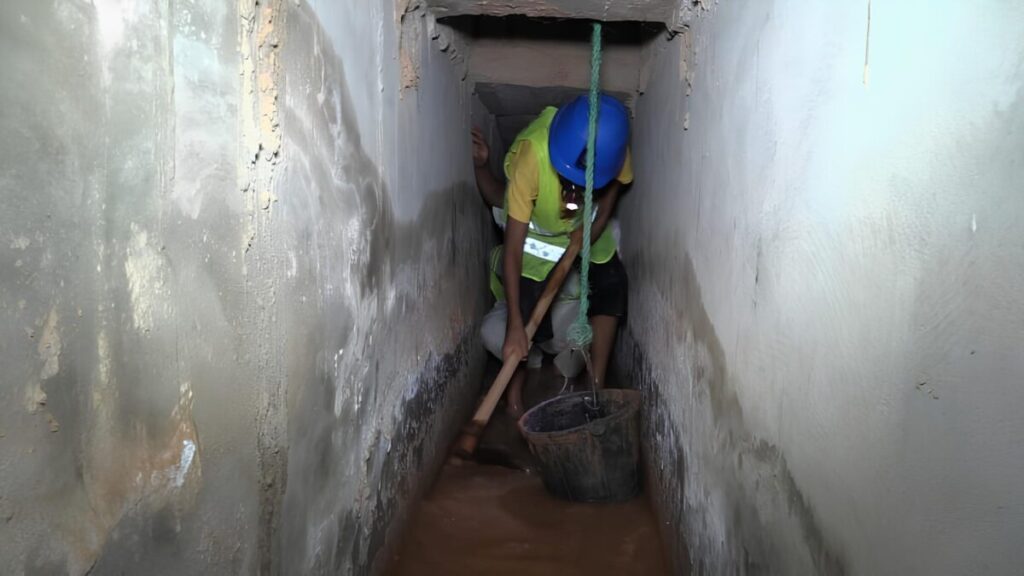
Now 20 years old, Elyas was part of the first group of youths trained by the association. “I was 15 when I joined Houmet el Foggara. I did it out of curiosity and with the encouragement of my father, the villagers, and Dr. Hadaji Oma. I see the foggara not just as a simple irrigation system, but as the very identity of the inhabitant of Touat. I remain committed to preserving this heritage that our ancestors bequeathed to us, out of respect for its antiquity and ingenuity,” says Elyas proudly.
He acknowledges that the clearing work takes place under difficult conditions, especially in summer when temperatures approach 50°. “The question of safety is paramount when working in the underground channels. We are equipped with helmets and appropriate boots, and we are always accompanied by experienced adults,”.
The young man is already thinking about passing on the knowledge he has acquired to others. “The preservation of the foggaras depends on this chain of transmission. It must not stop,”. For his part, Omar Hadaji continues his fight to safeguard the heritage of the Oudghagh ksar. In addition to maintaining the Arossou foggara, he has succeeded in uniting the villagers around the reconstruction of the ancient mosque of Oudghagh, built over a millennium ago.
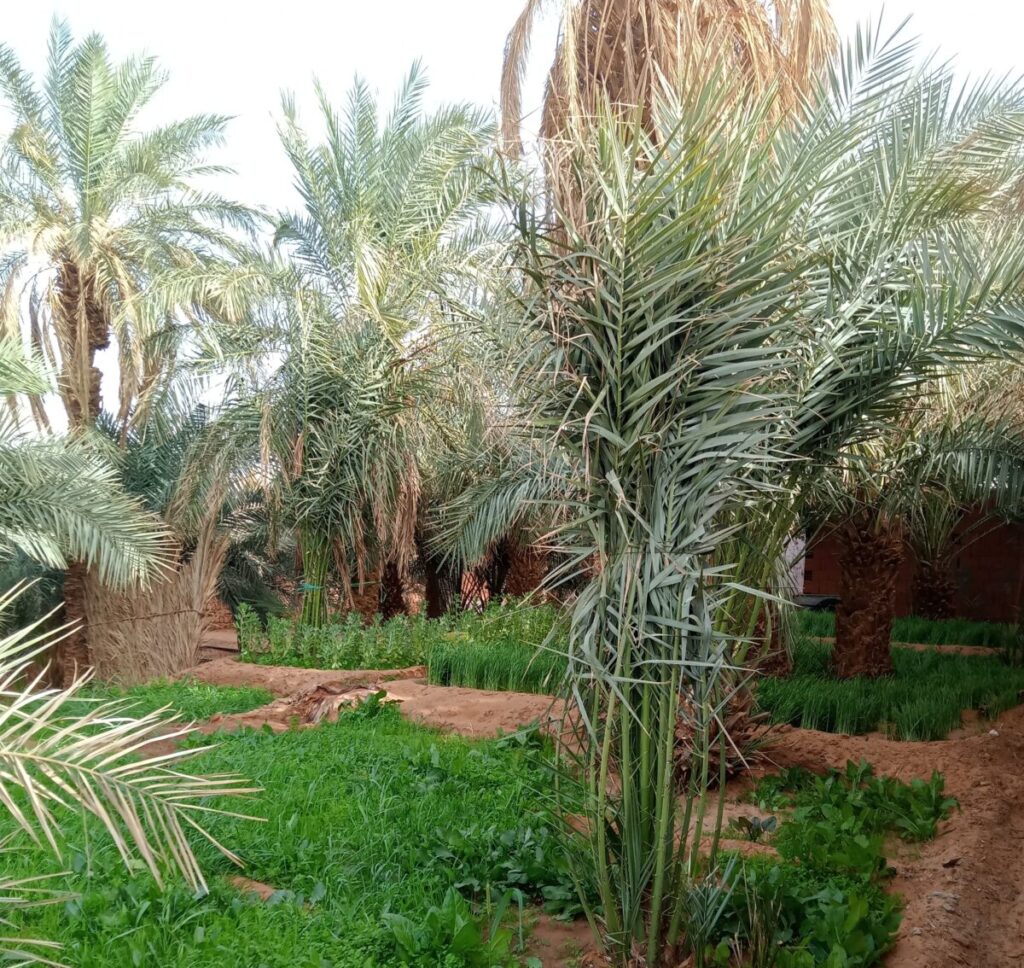
Photo of the Cover: Omar Hedaji and the young foggara protectors © Association Taghjmet