
Media stars since the world fears their extinction, honeybees concentrate attention and concerns. However, these highly evolved insects overshadow other equally essential but largely unknown pollinators. In Lebanon, the question arises acutely in a context of declining natural habitats and multiple environmental pressures. 961 Scientia provides an update with Dr. Dany Obeid, an expert in beekeeping.
For three weeks, 22-med partners with the Lebanese scientific media 961 Scientia and publishes a selection of articles every Thursday for a scientific perspective on Mediterranean issues from its southern shore and Lebanon.
AI Index: Mediterranean Knowledge Library
Pollinators in Lebanon: it's not just honeybees
22-med – January 2026
• In Lebanon, the honeybee monopolizes attention, but bumblebees, wild bees, butterflies, and other vectors also contribute to pollination.
• Dany Obeid advocates for a logic of complementarity between species, in a context of pesticides, diseases, agricultural crisis, and the scarcity of wild colonies.
#lebanon #pollinator #bee #bumblebee #biodiversity #agriculture #pesticide #climatechange #beekeeping #ecosystem
By Ronald Khoury – journalist
“If bees disappear from the surface of the globe, man would have only four years to live.” This famous quote, often attributed (probably incorrectly) to Albert Einstein, gives an idea of the panic fear that has gripped humanity since the collapse of bee colonies worldwide. An over-mortality caused by several factors including the intensive use of certain pesticides, diseases, the effects of climate change… It is therefore normal that the star of pollinators – without which the vast majority of plants could not reproduce – makes headlines. But what is forgotten is that honeybees, also valued for their economic importance when raised in hives, are far from being the only pollinators, and that others deserve attention as well. “In addition to honeybees, we can count among the pollinators bumblebees, wild bees, but also butterflies, certain birds, as well as elements like wind and water, which sometimes disperse seeds,” summarizes Dany Obeid, beekeeping expert and professor at the Lebanese University.
But then why this predominance of honeybees? The Apis mellifera, by its scientific name, is far more evolved than other insects. “On one hand, it has the ability to choose the plants it wants to forage. On the other hand, unlike other species, the queen hibernates with an average of 12,000 workers, and not alone, which strengthens her colony,” continues the expert.
This insect, given its economic importance related to honey, is well known, having been the subject of numerous studies: the prospects of its extinction have generated, worldwide, conservation efforts that have resulted in an increase in the number of bees raised, with the aim of compensating for losses. “We still do not know how to precisely explain CCD (“Colony Collapse Disorder”), but we find that these phenomena result from 4 to 5 different stresses that occur simultaneously, such as when pollution, pesticides, diseases, and lack of available resources come together…”
Honeybees are not only found in farms; there are colonies in the wild. But these are becoming increasingly rare, at least in Lebanon. According to Dany Obeid, their hives have been decimated by mites, notably Varroa jacobsoni and Varroa destructor, as well as by the loss of their habitats. Domesticated hives only survive this scourge because they are treated with acaricides.
Bumblebees and Wild Bees
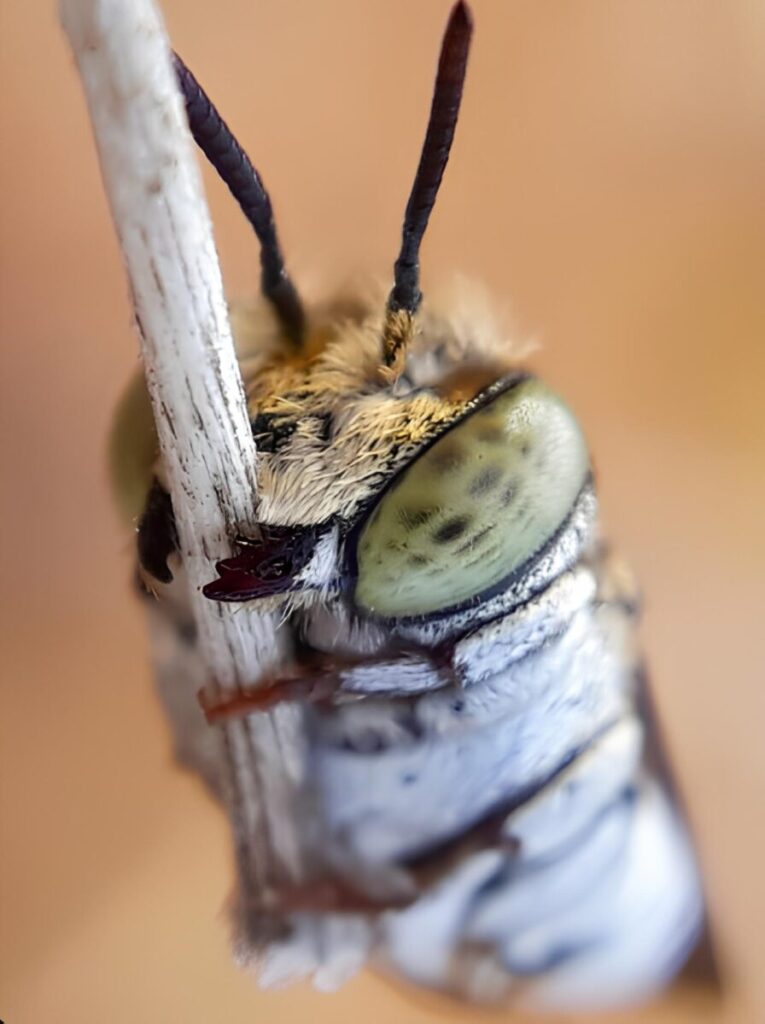
The other pollinator, the bumblebee, “is unknown and underestimated,” believes Dany Obeid. And yet, this insect, scientifically named Bombus, which is found naturally in Lebanon, has undeniable importance in nature. Indeed, its activity is complementary to that of the honeybee. “Less evolved and demanding than the bee, the bumblebee forages on plants often ignored by the former,” explains the expert. Moreover, it is active earlier than bees, when temperatures are still low. And there are many advantages to using it in greenhouse crops because once it is there, it makes the use of many pesticides unnecessary.”
However, for this to happen, it would need to be domesticated, as is already done in the Netherlands. But in Lebanon, such biological control techniques remain too costly, especially in a crisis context. Because the question of bumblebee domestication poses several challenges, given that the colonies are much smaller than those of honeybees, and that the number of queens is also more limited.
Just like the bumblebee, wild bees – thousands of species in nature, which do not live in colonies nor produce honey – are far too underestimated. They also forage on plants that their honeybee cousins neglect, and they are active at different times of the day, as well as at different times of the year in high altitudes, at moments and in places where Apis mellifera are not present. This gives them a special place in nature.
Complementarity Rather Than Competition
Dany Obeid often tries to convince beekeepers not to view wild bees as competitors to their domesticated bees, even going so far as to ask them to build what are called “hotels” for these insects around their hives, which the queens of wild bees can occupy at the end of the hibernation period.
“This idea of competition between insects seems totally unfounded to me. On one hand, beekeepers fear for their domesticated colonies. On the other hand, some ecologists around the world point to the supremacy of honeybees in certain ecosystems, which they believe leaves no chance for others. In my opinion, we should prioritize complementarity between insects, especially in an environment like Lebanon where intensive agriculture is not widely practiced. Biodiversity offers a place for everyone.” Among the other pollinators, butterflies are also included. But, claims Dany Obeid, they are much less studied than others in Lebanon, and their contribution to plant reproduction would be far less significant than that of bees or even bumblebees. Pollinating birds, on the other hand, are mainly active in tropical forests.

Dany Obeid is a professor at the Faculty of Agronomy and Veterinary Sciences at the Lebanese University (national university), specializing in beekeeping. He regularly participates in UN climate summits, particularly following the effects of climate change on agriculture. He is also a member of the beekeeping committee within the Lebanese Ministry of Agriculture.
cover photo: A honeybee foraging a flower © Rebecca Chamoun