In France, the forest is gaining ground but weakening. Over the past ten years, the mortality rate of trees has increased by 80%, and nearly 670,000 hectares are now considered to be deteriorating, according to data from the National Forestry Office and the Forest Health Department. In the Vercors massif, south of Grenoble, citizens have chosen to take concrete action. By collectively purchasing wooded parcels, they defend a local, gentle, and sustainable forestry. A long-term commitment to preserve the forest as a living ecosystem.
AI Index: Mediterranean Knowledge Library
In the face of forest decline, citizens are taking action
22-med – January 2026
• In the Vercors, citizens are collectively buying forest parcels to experiment with gentle and sustainable forestry.
• In response to the rapid increase in tree mortality in France, these local initiatives defend the forest as a living ecosystem and a common good.
#forest #biodiversity #citizenship #climate #forestry #territory
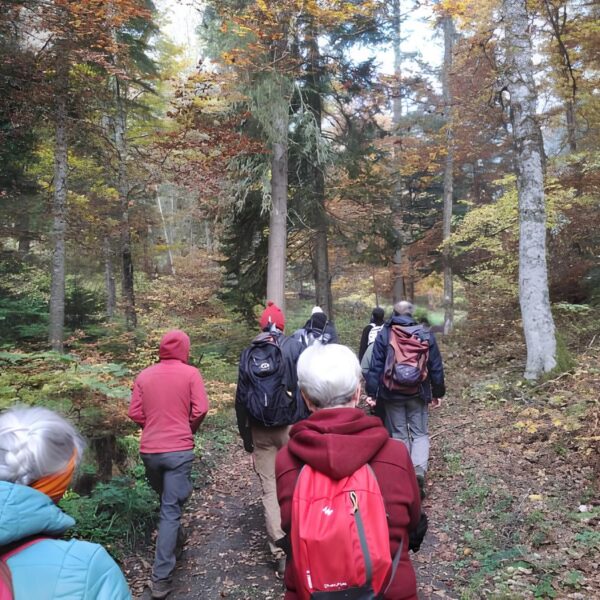
They talk about mushrooms, hunting, weather, and the changing colors of the leaves in the heights of Lans-en-Vercors, in the Isère department. About ten people in hats, waterproof jackets, and hiking boots walk in the footsteps of a man who stops regularly to look at the moss growing on a tree, tap the bark of another, and point to a fallen trunk. He comments for the group: “It’s the delineation of the forest that interests us today. We haven't removed it because this trunk can provide many good things to the animals and the soil as it decomposes.”
This man is Benoît Coulée, a professional forester who co-founded Green Forest five years ago. This citizen forestry group aims to buy forest parcels to manage them differently. Goodbye clear-cutting, monoculture, and the need for yield.
A living heritage to pass on
The program for this Saturday morning? To go to one of the forests of Green Forest to maintain their plantings from spring 2024. That is 250 saplings of oaks, maples, larches, Douglas firs, spruces, and rowans to clear from sometimes too dense vegetation. These meetings take place twice a year and delight the fifteen associates.
Each has invested 5,000 euros to join this local gentle forestry project. All convinced that the forest is a common good. “We buy shares in this company and in exchange, we become co-owners of a piece of forest. It’s a heritage, but a living heritage,” present Thierry and Anne-Marie, septuagenarians who learned about the project through an article in the local press. Another associate joined the project because he was wondering where to save “without it being harmful to the climate. It’s complicated because as soon as we have money, we feel like it will pollute.”
Taking care of trees rather than seeking yield
On his side, Benoît identifies potential forest parcels and assesses their interest. Then, thanks to the financial fund, he proposes them for purchase. “What’s particularly nice about all this is that the emphasis is on sustainable forest management. Having a diversity of species, with different sizes to fit the place and its needs,” he explains. Green Forest does not aim to maximize the yield of its forests, but their good health.
As they approach the area to be cleared, everyone is pleased: “We learn a lot and do our part for the climate. Benoît is very pedagogical and we understand better how the forest works. He could go much faster without us to maintain all these spaces, but that’s the game,” laughs Anne-Marie. She stops to listen reverently to the day’s instructions.
An hectare of forest in Rhône-Alpes costs between 10,000 and 15,000 euros. Today, Green Forest owns 300 hectares. The associates cut wood when necessary and sell it to local sawmills. This money is then reinvested in the purchase of other parcels. “We build for the long term, we do not distribute dividends to the associates – with their agreement of course! comments Benoît. And we will not exceed 1,000 hectares. After that, we will invest in our forests.”
A citizen management in the face of forest decline
How to recognize a tree too young to be cut? Why leave a damaged one on the ground? Volunteers, curious and with pruners in hand, the neo-foresters multiply the questions. “Every tree has a role, some mushrooms that form on it are allies, Benoît replies calmly. We are not looking for a perfect forest, but a resilient forest.”
“Before, I only saw trees. Now, I note the young ones, the protectors, the state of the leaves, the species…,” comments another associate wrapped in her sweater. Drought, pests, storms, financial pressure, the manager of Green Forest lists the limits of forests and warns: “The industrialization of wood pushes to cut quickly and often, to replant a single species and to harvest younger and younger. This is not what the forest needs.”
A forest that is expanding but weakening
As the mist clears between the trunks and the sun finally shows its rays, the small group disperses to cut some brambles that prevent the new trees from growing. By buying these forests, these engaged citizens hope to preserve them, allow them to grow, age, and enrich them to demonstrate that another management of these spaces is possible. Because France, a large forested country with 17.5 million hectares in the mainland (or 32% of the mainland territory), also faces alarming statistics.
Indeed, according to the National Forestry Office, over the past ten years, the mortality rate of trees has increased by 80%. The Forest Health Department (at the Ministry of Agriculture and Food Sovereignty) estimates that 670,000 hectares are currently deteriorating – which equates to 5% of the French forest. In 2023, the spruce, chestnut, and ash were identified as having the highest mortality rates.
So for the group of Green Forest, the forest is much more than just wood. It is colors, living soils, birds, species, shadows, and water. Places to recharge… and to protect.
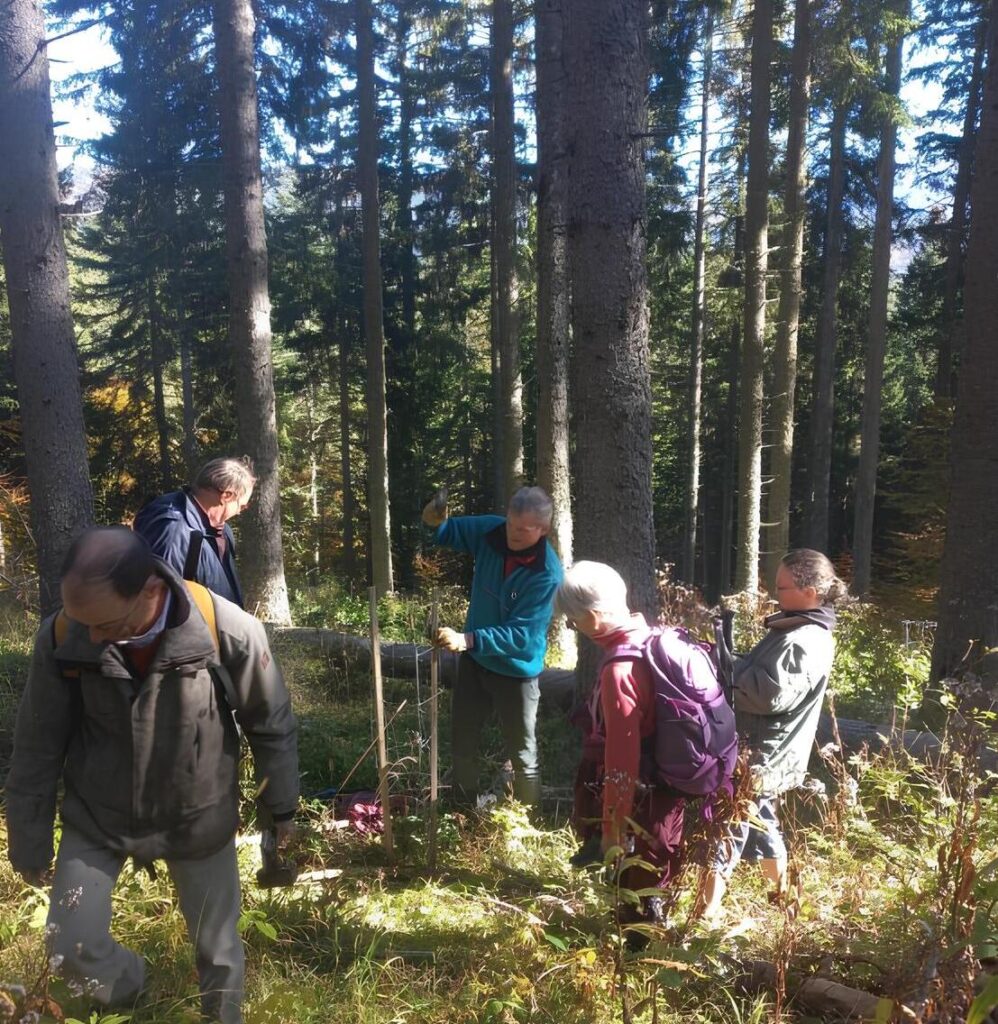
Photo of the Day: Guardians of their forests, the citizens of Vercors take care of their trees. ©ZC