
For about twenty years, Israeli doctors have been warning about a phenomenon that has become impossible to ignore: the explosion of allergies in the country. Whether it is pollen, pollution particles, mosquitoes, mold, or even certain foods, more and more people are developing reactions that disrupt their daily lives. The fundamental question now is to understand why Israel is experiencing such an intensification of allergies.
AI Index: Mediterranean Knowledge Library
Understanding allergies to better prevent them
22-med – December 2025
• Dry climate, air pollution, and rapid urbanization make Israel a particularly conducive territory for the development of allergies.
• Respiratory, food, and skin allergies are on the rise, especially among children, posing an increasing public health challenge.
#israel #allergy #publichealth #climate #pollution #mediterranean
Israel has transitioned, in the span of a generation, from being a relatively stable Mediterranean country environmentally to a true natural laboratory. For it expresses the perfect combination of all known aggravating factors in the scientific world.
A recent study conducted on nearly two thousand patients suffering from allergic rhinitis showed that more than three-quarters of them had a sensitivity to dust mites. Following that were tree pollen (including olive, which is prevalent), grasses, and cat hair. Doctors who have been monitoring these trends since the 1990s also note a worrying trend of younger cases, as more than 40% of adolescents already exhibit symptoms of allergic rhinitis.
Factors such as urbanization, lifestyle changes, and environmental modifications have likely contributed to this increase. Furthermore, the most common allergies include pollen, dust mites, and food products,” observes Dorit Grinberg, CEO of MDS Pharm, a company that has developed a small device that allows for rapid allergy treatment.
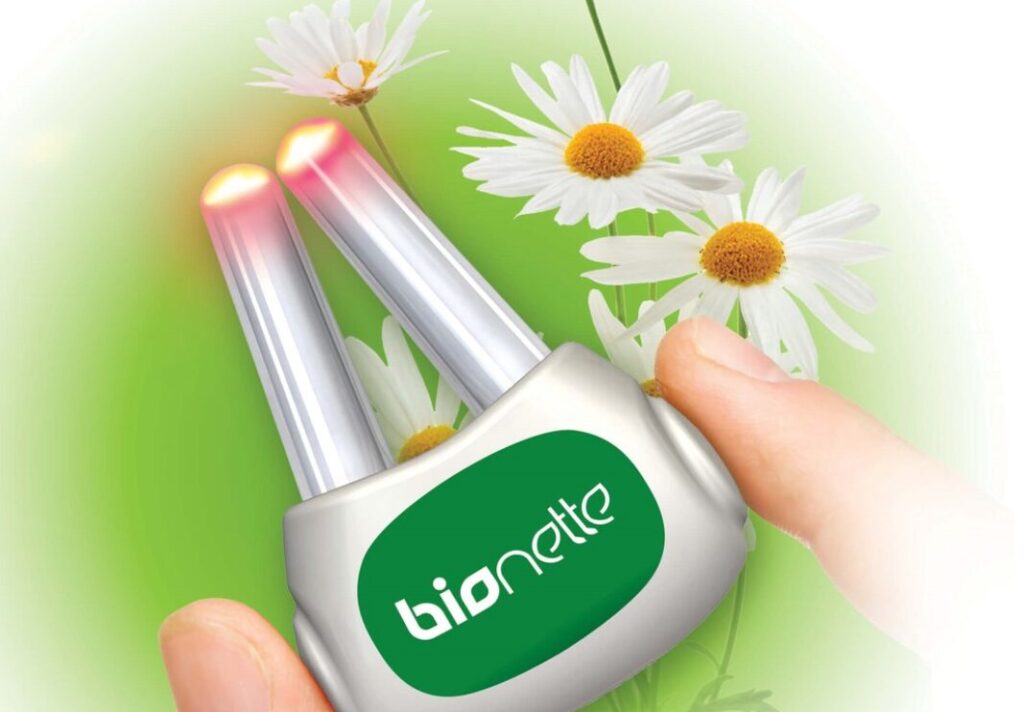
The Bionette device is equipped with two sticks that need to be positioned in the nostrils while pressing the activation buttons for 4 minutes. The operation can be repeated up to three times a day to achieve better results. Developed by a team of scientists and doctors specialized in phototherapy, it stands out as a true natural solution for treating allergies.
A dry climate and intense pollution
The Mediterranean climate, characterized by long dry seasons and heat waves, can exacerbate allergies. Drought can lead to higher pollen concentrations, while heat can extend the pollen season and intensify allergic reactions. Extreme weather phenomena can also affect the distribution and types of pollen present. Olive trees, cypress trees, herbaceous plants, and endemic plants produce notoriously aggressive pollens. During certain climatic episodes like the khamsin, the air laden with dust carries these allergens over long distances, significantly increasing exposure.
“Sudden changes in temperature and humidity associated with the khamsin can promote the dispersion of allergens, leading to worsened symptoms in affected individuals,” emphasizes the business leader.
The second determining factor is air pollution. Numerous studies have shown that fine particles alter the structure of pollen grains, weaken their surface, and facilitate the release of allergenic proteins. Urban pollen thus becomes more irritating and more likely to provoke immune reactions. The respiratory mucous membranes are also more vulnerable when individuals are exposed to exhaust gases or industrial emissions. Pollutants like diesel emissions and industrial particles can interact with respiratory allergies by increasing inflammation and sensitivity in the airways, which can exacerbate existing conditions.
New lifestyles
Moreover, the current lifestyle also promotes the emergence of various allergies. The intensive use of air conditioning dries out the air, which weakens the respiratory pathways and facilitates irritations.
“Air conditioning can be both beneficial and harmful regarding allergies. While it can reduce exposure to outdoor allergens, poor maintenance can lead to mold proliferation and dust accumulation indoors. This can trigger respiratory and dermatological allergic reactions,” states Dorit Grinberg.
Experts also observe a notable increase in food allergies, particularly among young children. This phenomenon is attributed to the combination of immunological, microbiotic, and environmental factors specific to modern lifestyles. In Israel, the most common food allergens are nuts and sesame, often more prevalent than in other regions.
Surprisingly, according to a recent study published in the prestigious New England Journal of Medicine, it has been proven that the consumption of Bamba, peanut butter chips, reduces peanut allergies in children by 75%.
Finally, mosquitoes and other allergy-causing insects play a significant role. The introduction of new mosquito species can lead to an increase in skin allergic reactions, particularly due to bites and the potential transmission of allergens. In coastal and humid areas, the number of consultations for dermatitis related to bites is steadily increasing.
Towards an increase in allergy cases?
Allergists emphasize the importance of better understanding the interactions between environment, climate, and immunity, as it is precisely the intersection of these variables that transforms Israel into a hyper-allergenic territory.
“A national pollen monitoring system could help affected individuals better manage their allergies. Urban and environmental measures, such as better urban planning and an increase in green spaces, are urgently needed to reduce the prevalence of allergies,” highlights Dorit Grinberg.
Given current trends, it is likely that allergy rates in Israel will continue to rise over the next decade unless significant measures are taken regarding urban planning and environmental management.
Cover photo: herbaceous plants and endemic plants produce notoriously aggressive pollens © pexels-nita