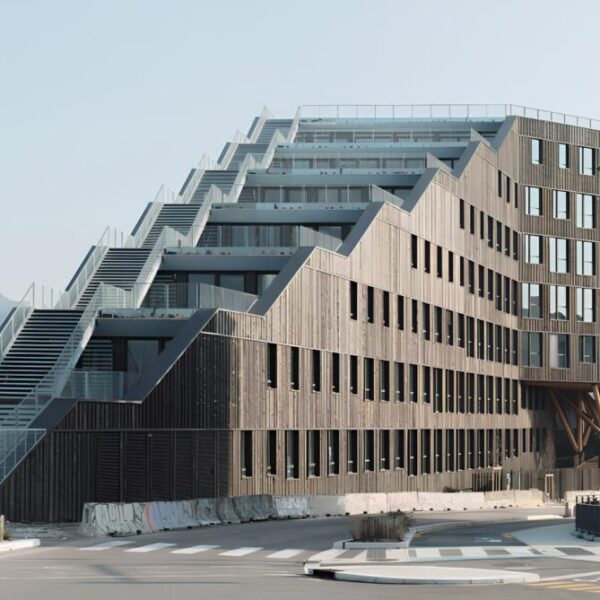
The reduction of the carbon footprint of buildings today relies on concrete choices regarding materials, design, and usage. Wood, local resources, energy efficiency, and consideration of the climate are redefining architectural practices, both in commercial projects and in housing. Examples that shed light on the ongoing transformations in the way we build and inhabit.
During the holiday season, 22-med cross-references and puts into perspective solutions that have been the subject of articles in the French media Marcelle with articles on the same theme published in 22-med.
WOOD, the wooden building that reinvents sustainable urbanism
Summary of the article by journalist Zoé Charef, published in Marcelle on September 15, 2025
Located on a former industrial site undergoing redevelopment, WOOD is part of the urban transformation strategy promoted by the Grenoble metropolitan area. The building aims to be exemplary in environmental terms and demonstrative for future projects, in a city that claims a role as an experimental hub for sustainable urbanism.
Wood as an alternative to concrete in urban construction
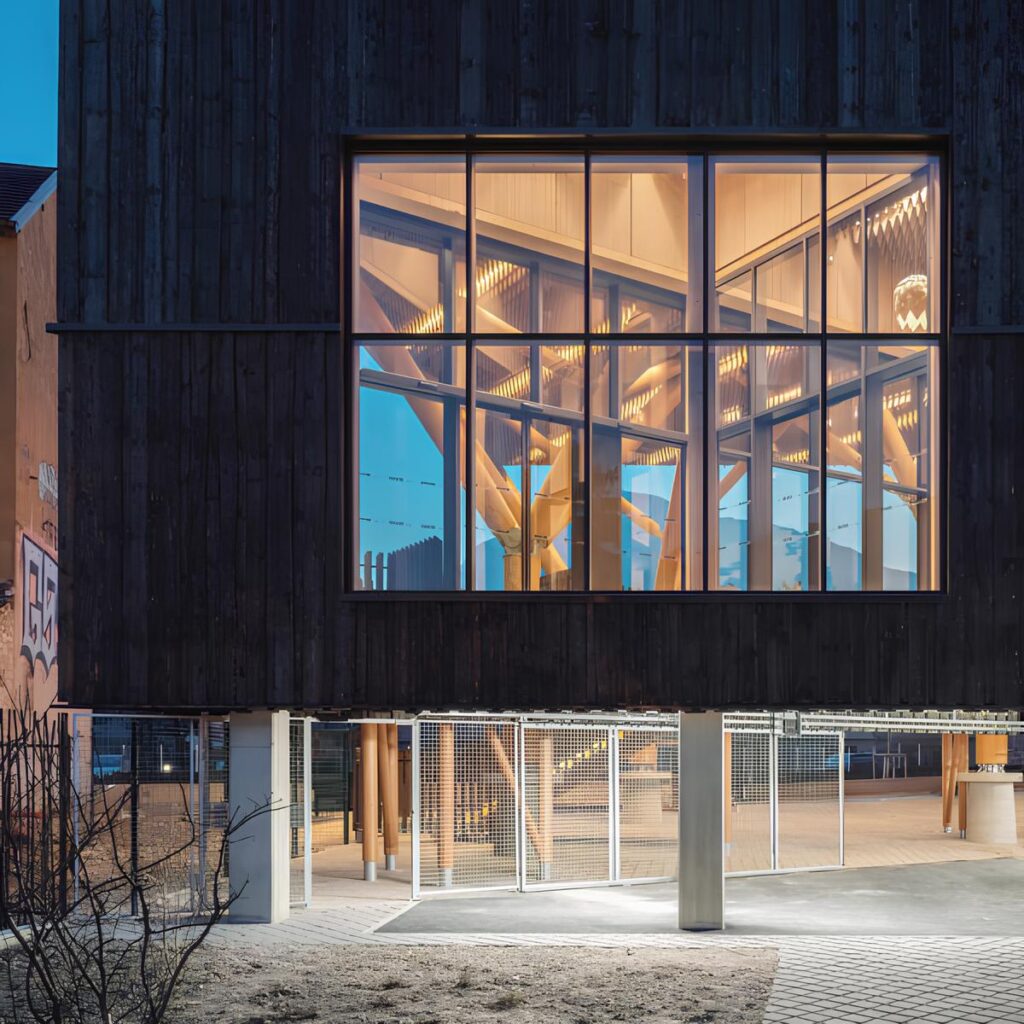
A six-story tertiary building of approximately six thousand square meters, WOOD is based on a structure entirely made of wood. More than twelve hundred cubic meters of this material have been used, along with about three hundred fifty tons of bio-sourced materials. This construction choice significantly reduces carbon emissions related to the construction site and limits the use of conventional materials that are high emitters.
The prefabrication of elements in the workshop and their assembly on-site have helped reduce nuisances for the neighborhood. The construction required fewer truck rotations and generated less noise and dust. This method also contributes to shortening construction times. For the project stakeholders, it is about demonstrating that wooden construction can be applied to large office buildings in dense urban environments.
The architecture of the building interacts with its immediate environment. The volumes and curves have been designed to integrate into the alpine landscape, while the facades reveal the raw material. WOOD aims to be visible from the city entrance, assuming a signaling function in a changing neighborhood, near the Grenoble scientific hub.
Workspaces designed for health and comfort
Beyond its structure, the building offers a different organization of workspaces. The circulation areas have been designed to be visible, open, and widely illuminated by natural light. Stairs are no longer relegated to the back of the building but become central elements, promoting walking and daily use. Some pathways are even external, allowing enjoyment of views of the mountains and green terraces.
The office floors are traversing and largely open to the outside. Large French windows bring in light and natural ventilation, while the materials used preserve indoor air quality. The health dimension at work has guided architectural choices, in line with the local charter for health-promoting housing supported by the community.
In terms of energy, thermal comfort is ensured by radiant cold ceilings, complemented by the use of the groundwater for cooling and heating the air. This system allows for maintaining a constant temperature difference with the outside without resorting to energy-intensive air conditioning. Photovoltaic panels installed on the roof complement the system.
The building benefits from several labels attesting to its environmental and energy performance. Parking spaces have also been rethought, with a building placed on the ground and naturally ventilated spaces, limiting heavy earthworks. In a territory committed to ecological transition, WOOD demonstrates that it is possible to build efficient, sober, and pleasant offices while reducing the carbon footprint of the city.
Bioclimatic architecture: between heritage and energy innovation
Summary of the article by journalist Edward Sfeir published in 22-med on October 6, 2025
In the face of the energy crisis and climate change, Lebanon is rediscovering the virtues of its traditional architecture. Inspired by ancient know-how and reinforced by contemporary scientific contributions, bioclimatic architecture proposes sober habitats, adapted to the local climate and less dependent on failing networks, in a country where rethinking housing has become a daily necessity.
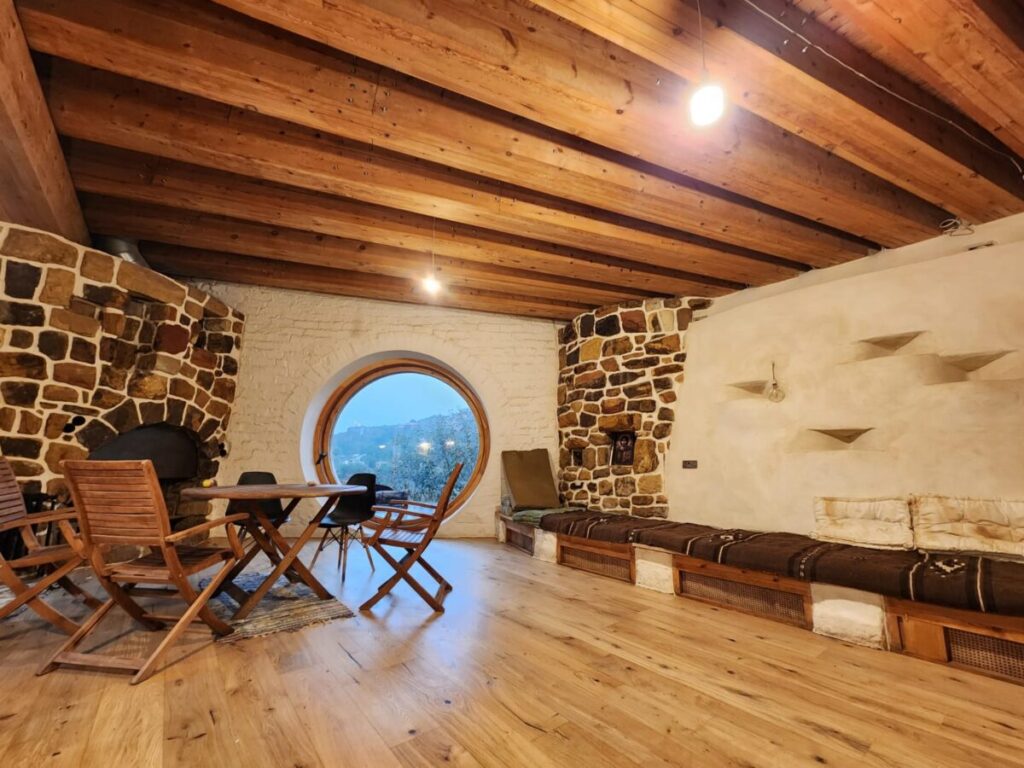
Long before the widespread use of reinforced concrete and air conditioning, Lebanese builders adapted their constructions to the climatic constraints of the territory. Thick stone walls, arcades, thoughtful orientations, and natural ventilation allowed for maintaining coolness in summer and warmth in winter. These principles, long relegated to the past, now form the foundations of bioclimatic architecture.
Bioclimatic architecture as a response to the energy crisis
This type of architecture relies on the intelligent exploitation of natural conditions to limit energy needs. By using sunlight, ventilation, and thermal inertia, it reduces reliance on mechanical equipment. According to the International Energy Agency, the building sector accounts for nearly forty percent of global energy consumption. In Lebanon, this reality is exacerbated by a failing public electrical network and dependence on costly and polluting private generators.
In this context, designing more autonomous housing becomes an essential lever for reducing carbon emissions and strengthening the energy independence of households. Bioclimatic architecture thus intersects with environmental, economic, and social issues, proposing accessible solutions adapted to the local climate.
The Lifehaus of Baskinta, a full-scale laboratory
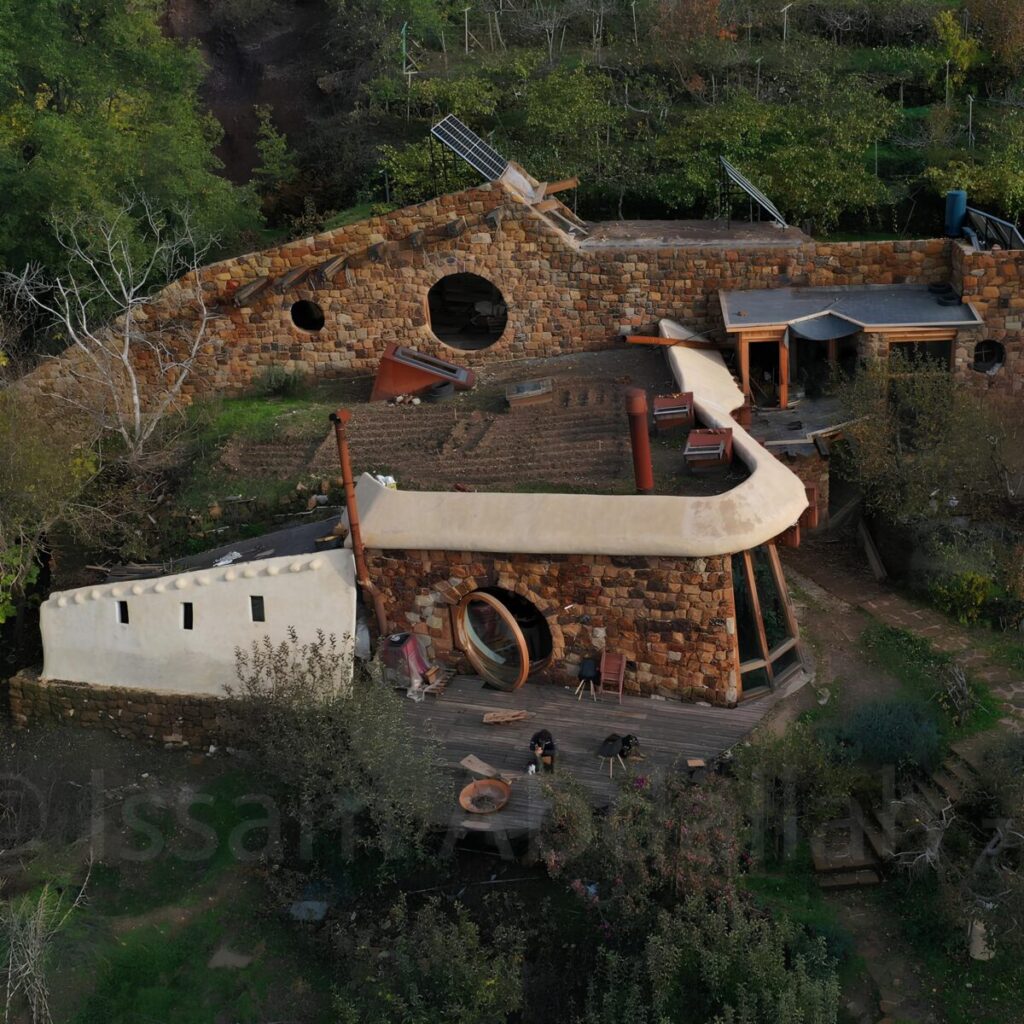
In the village of Baskinta, architect Nizar Haddad has realized these principles with the Lifehaus, an ecological house of one hundred sixty square meters. Designed as a living laboratory, this dwelling combines architectural heritage and modern engineering to limit its environmental impact and operating costs.
The construction relies on durable and mostly local materials, such as stone, rammed earth, sheep wool, reeds, and over a thousand recycled tires. This combination ensures effective natural insulation and good resistance to seismic shocks. The orientation of the building and the circulation of air have been optimized to improve thermal comfort, while a network of buried tubes allows for tempering incoming air according to the seasons.
Rainwater is collected and filtered by reed-planted basins before being reused for irrigation. The entire house is powered by nine solar panels, made sufficient by a deliberately reduced consumption. Organic waste is composted and valued in the adjacent greenhouse, thus closing the resource cycle.
A transferable and reproducible model
For Nizar Haddad, the Lifehaus also serves as a critique of the dominant contemporary architecture. He highlights the carbon footprint associated with the extraction, manufacturing, and maintenance of modern materials, as well as the extent of waste generated by the building sector. In contrast, his project demonstrates that techniques and materials sometimes deemed outdated can prove to be more efficient and sustainable.
The realization is based on a collective approach involving local artisans and builders. Some skills, passed down orally for generations, have been put back into practice, particularly in the production of rammed earth bricks. This collaborative dimension reinforces the educational vocation of the project.
Although the Lifehaus is located in a mountainous area, its principles can be adapted to urban contexts. Bioclimatic architecture thus appears as a concrete solution to meet the growing housing needs in Lebanon. By reconciling tradition, science, and sustainability, it paves the way for a model capable of addressing current energy challenges while valuing local resources.
Cover photo: The WOOD building, in Grenoble. ©Nicolas Trouillard