
The Mediterranean is becoming impoverished. The cause is the massive decrease in nutrient inputs from rivers and treated discharges. A direct consequence of water management policies, recurring droughts, and industrial and agricultural practices. For marine biologist Daniela Banaru, this scarcity threatens the entire marine food chain, weakens fisheries, and could paradoxically increase the contamination of organisms. A scientific alert that calls for a rethink of the management of freshwater and marine resources.
Olivier Martocq - Journalist
IA Index: Library of Mediterranean Knowledge
The Mediterranean is becoming impoverished due to lack of nutrients
22-med – December 2025

• The decrease in nutrient inputs from rivers and treated waters weakens the marine food chain and Mediterranean fisheries.
• According to marine biologist Daniela Banaru, this impoverishment could also increase the contamination of organisms by pollutants.

#mediterranean #ocean #biodiversity #fishing #water #pollution #ecosystem
The Mediterranean has always been an oligotrophic sea, meaning it is naturally poor in nutrients. This low productivity explains the clarity of its waters, which is highly valued by tourists. “When the waters are very clear, it means there is not much plankton. The cells are small, and there is little biomass,” recalls Daniela Banaru, who emphasizes that the natural balance relied on key areas of fertility, particularly river mouths. On the French coast, the Rhône, in particular, played a major role.
“Rivers naturally bring organic matter, mainly from soil leaching and debris from terrestrial plants. These nutrients nourish phytoplankton, then the entire food chain up to the fish exploited by fisheries,” explains Daniela Banaru. Thus, the Gulf of Lion currently concentrates nearly 90% of French Mediterranean fisheries.
Wastewater Treatment Plants: An Essential Sanitary Progress… But!
The improvement of wastewater treatment has been a major sanitary progress. The example of Marseille with a first physico-chemical treatment at the end of the 80s, and the efficient microbiological treatment since only 2008 illustrates a collective awareness. “It was absolutely necessary to clean the waters discharged into the sea, as it was a major health risk for bathing waters, and not only that. Two centuries ago, tens of thousands of people died from diseases related to bacteria, particularly from consuming shellfish,” recalls the researcher. Wastewater treatment plants have drastically reduced bacterial load, a large part of organic matter, and nutrients. But this progress has had an unexpected collateral effect: the massive decrease in nutrient inputs to the sea.
“By improving the quality of terrestrial waters discharged, we have also decreased the amount of nutrients that reach the sea,” emphasizes Daniela Banaru. Since 2000, the European Water Framework Directive has set the objective for member states to preserve and restore the quality of rivers, lakes, and streams. It particularly aims to limit excessive nutrient inputs, which are the origin of eutrophication phenomena and green algae proliferations, a recurring phenomenon in coastal lagoons and on the Breton coasts. “On the terrestrial side, this directive has indeed improved the quality of waterways. But it has never been thought of in connection with the needs and functioning of marine ecosystems in the Mediterranean,” notes Daniela Banaru. Additionally, there has been a significant decrease in the volumes of water reaching the sea: repeated droughts, agricultural withdrawals, drinking water, hydroelectric dams. “We have much less water reaching the sea, and this water is much poorer in nutrients,” she summarizes. The result is a drop in primary production. “With fewer nutrients, there is less phytoplankton and it is smaller in size. The invertebrates that consume it become smaller and less nutritious. In this situation, the biomass of exploitable fish decreases, and some are leaner,” analyzes Daniela Banaru.
Smaller Fish, Weakened Fisheries
This imbalance is already reflected in fisheries. “Today, fish are growing less well, remaining smaller. Some species like sardines are below the legal size and can no longer be fished,” observes the biologist. However, the current managers in charge of these issues continue to attribute the decline in stocks solely to fishing pressure. An analytical error that Daniela Banaru laments, who believes a global awareness of environmental factors at the European level is necessary. For her, the problem is systemic and concerns the overall management of water, from the watershed to the sea. Paradoxically, the impoverishment of the Mediterranean could worsen the contamination of marine organisms. “In low-productivity environments, with smaller phytoplankton cells, the bioconcentration of contaminants is much stronger,” she states. Daniela Banaru's work shows that certain pollutants, such as mercury, can be present in concentrations millions of times higher in small phytoplankton than in the water itself, and then bioaccumulate with size and age, and bioamplify as one moves up the food chain. “In some cases, small fish can accumulate pesticides at concentrations more than 700 times higher than those in phytoplankton,” she warns. Reducing nutrients without reducing pollutants could therefore produce the opposite effect of what is sought. Moreover, the combined effects of these pollutants on organisms and the functioning of marine ecosystems remain poorly understood.
Rethinking Water Management, from Land to Sea
In light of the findings and studies conducted by scientists, the solution does not involve a return to the wastewater treatment plants deployed on the Mediterranean coasts, nor a total halt to discharges into the sea. The priority for Daniela Banaru is “to prevent upstream, at the source, the discharge of pollutants that we know cannot be treated. Once they arrive at the treatment plant, it is too late.” She advocates for integrated governance.
“We need to bring together those who manage freshwater and those who manage the sea,” she insists.
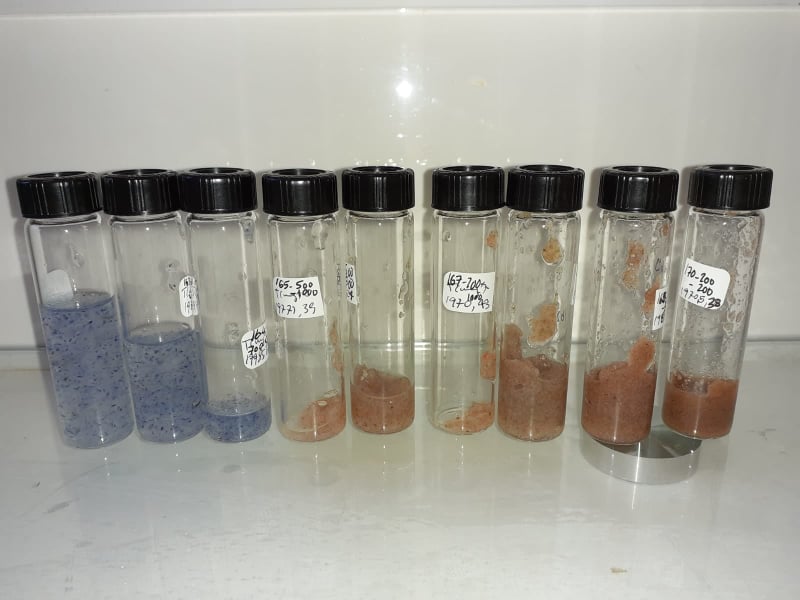

Daniela Banaru is a researcher in marine biology and ecology at the Mediterranean Institute of Oceanography (MIO) and a lecturer at Aix-Marseille University. Her work focuses on the functioning of marine ecosystems, trophic networks, and the transfer of contaminants. She was the Principal Investigator of the ANR CONTAMPUMP (Plankton: biological pump of contaminants in marine ecosystems? (https://anr.fr/Projet-ANR-19-CE34-0001). In June 2025, she participated in the One Ocean Science Congress, which brought together nearly 2,000 researchers, ahead of the 3rd United Nations Conference on the Ocean.
Read in PLoS ONE - By Théo Garcia: Temporal changes in multiple zooplankton indicators in the Bay of Marseille (N-W Mediterranean Sea) over the last two decades: implications for the functioning of the pelagic ecosystem. https://doi.org/10.1371/journal.pone.0292536
Read in Marine Pollution Bulletin - By Javier Angel Tesán Onrubia Bioconcentration, bioaccumulation and biomagnification of mercury in plankton of the Mediterranean Sea. https://doi.org/10.1016/j.marpolbul.2023.115439