In the face of the explosion of digital waste, two responses are emerging on either side of the Mediterranean. In France, the industrial refurbishment of smartphones is establishing itself as a concrete lever for reducing environmental impact and creating local jobs. In Tel Aviv, technological solutions are attempting to structure the recycling of electronic waste. Two complementary approaches to the same ecological urgency.
During the year-end holiday season, 22-med cross-references and puts into perspective solutions that have been the subject of articles in the French media Marcelle with articles on the same theme published in 22-med.
Is refurbished the future of smartphones?
Summary of the article by journalist Paola Da Silva, published in Marcelle on November 17, 2025
Present in the pockets of more than 90% of the French, the smartphone has become an everyday object as indispensable as it is problematic from an environmental standpoint. In light of the climate impact of its manufacturing, the refurbished market is establishing itself as a credible alternative. In Nantes, the company Largo advocates for a French industrial model based on the circular economy and local employment.
In France, the smartphone has entered a phase of maturity. Technological breakthroughs are becoming rare, designs are similar, and the lifespan of devices is increasing. Consumers now keep their phones for about 36 months in Europe, compared to 24 months just two years ago. This evolution is favored by several factors: declining purchasing power, increasing environmental awareness, and the REEN law passed in 2022, which limits planned software obsolescence.
In this context, refurbished devices are rapidly gaining ground. In 2023, 13.2 million new smartphones were sold in France, compared to over 20 million in 2016. For Christophe Brunot, co-founder of Largo, this dynamic is structural: refurbished devices meet a sustainable demand, not just a passing trend.
Structuring an industrial sector for refurbishment
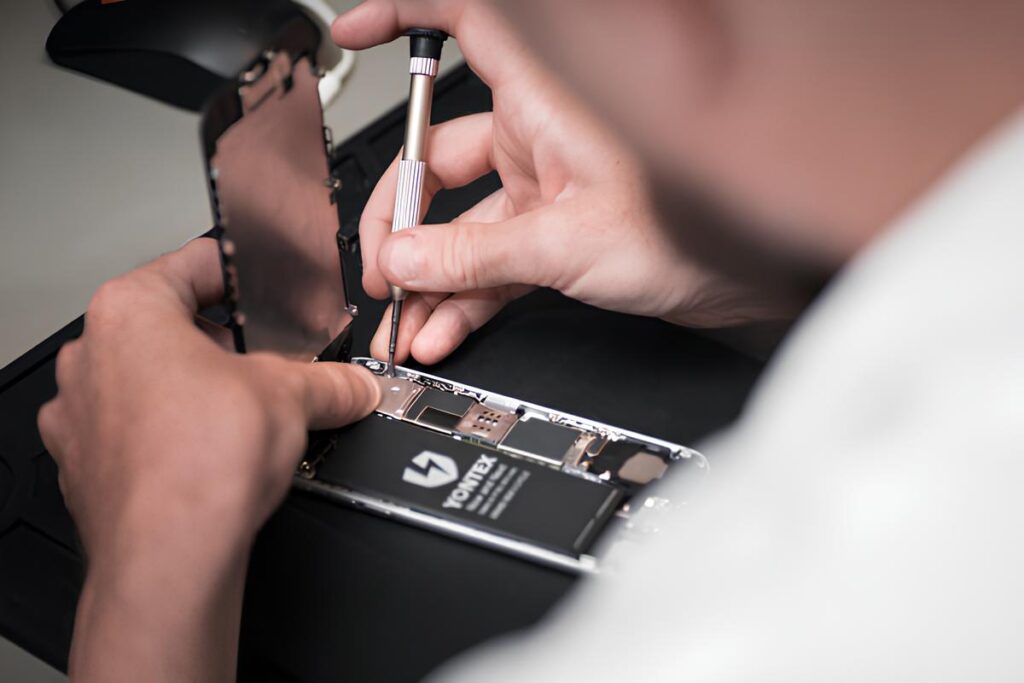
Founded in 2016 in Sainte-Luce-sur-Loire, near Nantes, the company Largo was born from an initial activity of smartphone repair. Very quickly, its founders identified a gap, the lack of guarantees on second-hand platforms between individuals. They then chose to structure an industrial refurbishment process, with standardized processes and enhanced quality control.
Today, all smartphones processed by Largo are repaired at its Nantes site. While the supply of devices and spare parts remains international, all refurbishment and after-sales service operations are carried out locally. This positioning implies slightly higher costs than some competitors, but guarantees responsiveness and reliability in a demanding market.
Reducing environmental impact, creating local jobs
According to ADEME, 99% of a smartphone's carbon footprint comes from its manufacturing. Refurbishment can reduce this impact by up to eight times compared to a new device, saving 82 kg of raw materials and cutting greenhouse gas emissions by 87%. It also allows for significant water savings and limits the production of electronic waste.
At Largo, 85% of batteries are recycled, and some components are valorized through partnerships with associations. The company also claims a strong social impact. Growing from four employees at its inception to 87 today, it has implemented internal training dedicated to refurbishment jobs. With a growth of 65% in 2023, Largo estimates that one in two smartphones sold in France could be refurbished within fifteen years, provided that controlled and locally anchored development continues.
How to recycle electronic waste in Tel Aviv?
Summary of the article by journalist Caroline Haïat published in 22-med on November 12, 2025
As the technological capital of the Middle East, Tel Aviv embodies Israeli digital excellence. But behind this success lies a less visible reality, the growing number of electronic waste, particularly smartphones. Faced with a still fragmented collection system, the startup Get-RE offers an innovative approach to transform this digital waste into resources and structure a true circular economy.
Israel produces nearly 100,000 tons of electronic waste each year. Phones, computers, batteries, and electronic cards accumulate in landfills or near homes, with Tel Aviv, a young and hyperconnected city, concentrating a significant portion. This situation reflects a paradox: a country at the forefront of technological innovation, yet still lagging behind in the environmental management of its digital equipment.
Globally, more than 60 million tons of electronic waste are generated each year, of which less than 20% are properly recycled. In Israel, collection remains incomplete and traceability uncertain, despite the existence of a law on extended producer responsibility since 2012. Due to insufficient resources and ineffective coordination, the sector remains fragmented, limiting the real impact of existing systems.
Get-RE: making recycling simple and attractive
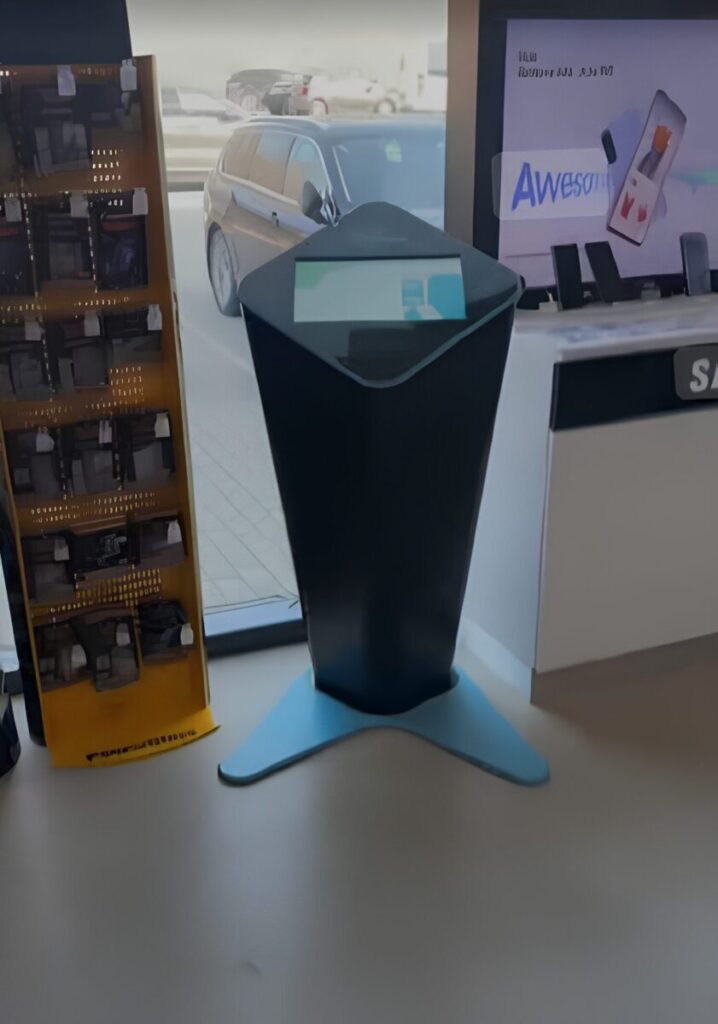
It is in this context that Get-RE was born, founded in Tel Aviv in 2015. The company developed a machine capable of buying back, recycling, or exchanging used phones directly in stores. In just a few minutes, users can drop off their device, receive immediate credit, and be assured that it will be reused or refurbished.
For its founder, Itzik Chayun, the main barrier to recycling lies in the complexity of the system. By transforming a burdensome action into an economic opportunity, Get-RE seeks to change habits. The issue is also strategic. One million recycled smartphones can recover significant amounts of precious metals while reducing the pressure from mining extraction.
Technology serving the circular economy
According to Get-RE, over 85% of a smartphone's components can be reused or recycled. Refurbishment could reduce raw material consumption by up to 80% and save an average of 55 kg of CO₂ per device. On a large scale, these environmental gains become crucial.
The company is also leveraging artificial intelligence to assess the condition of phones and blockchain to ensure device traceability. Meanwhile, Israeli public authorities are announcing plans to strengthen collection and modernize infrastructure. For Itzik Chayun, the key remains simplicity: "when recycling becomes accessible and rewarding, it can become a reflex." In Tel Aviv, technology could thus become a major lever for ecological transition.