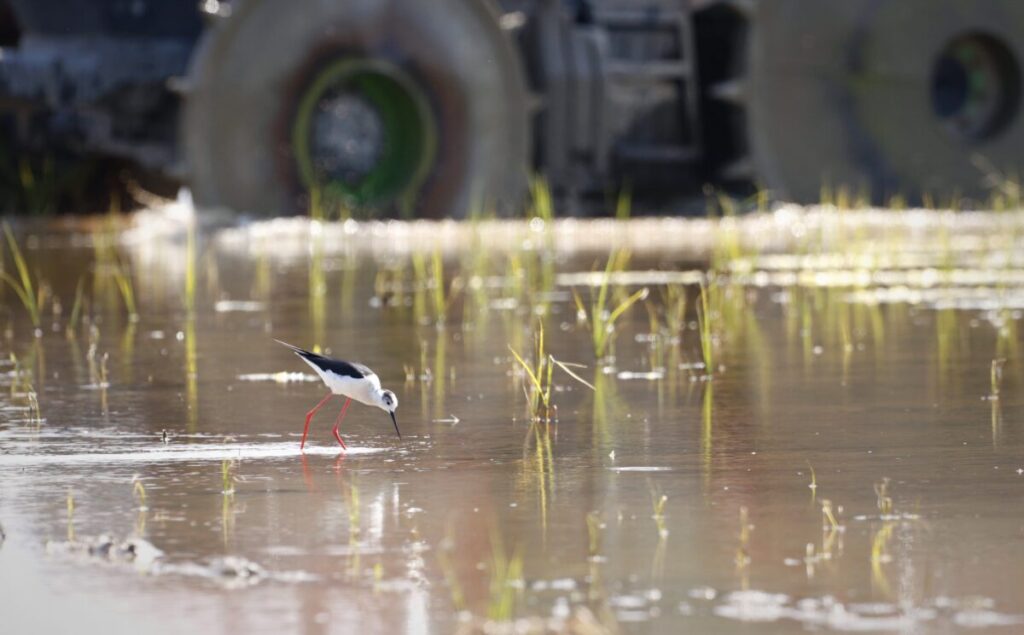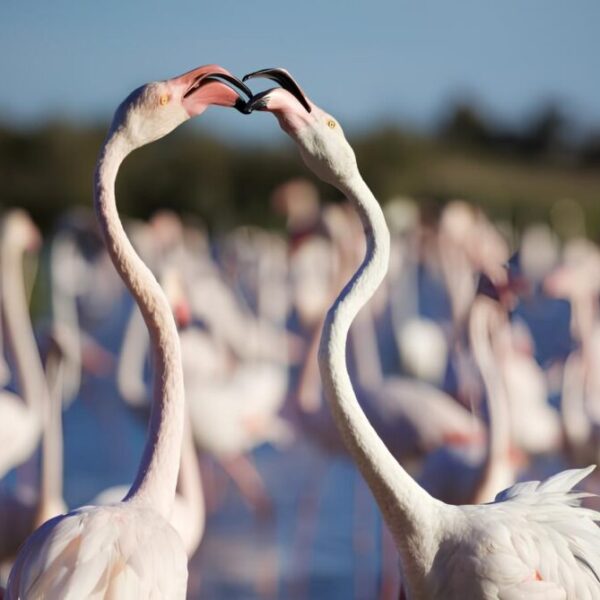
In the wetlands of Lombardy as in Camargue, the protection of endemic bird species involves concrete adjustments that reconcile human activities, science, and respect for life. In Cassolnovo, Italy, rice farmers are modifying their practices to preserve the nests of the black-winged stilt. In France, the Tour du Valat relies on scientific research to support the sustainable return of flamingos.
During the holiday season, 22-med cross-references and puts into perspective solutions that have been the subject of articles in the French media Marcelle with articles on the same theme published in 22-med.
The Tour du Valat, guardian angel of flamingos
Summary and update of the article by journalist Maëva Gardet-Pizzo published in Marcelle on January 12, 2021.
A historical player in ecological research, the Tour du Valat institute is part of a unique Mediterranean network dedicated to the conservation of wetlands. In Camargue – southeast France - as elsewhere around the basin, its work on the flamingo illustrates a scientific approach considered at the scale of ecosystems and migrations.
Founded in 1954 in Sambuc, near Arles, the Tour du Valat research institute has set itself the goal of “better understanding wetlands to better manage them.” An ambition that far exceeds the borders of Camargue. From Southern Europe to North Africa, the institute works with numerous partners while considering a shared ecological reality: that of fragile, interconnected environments subjected to the same climatic and human pressures.
Among the emblematic species monitored by the Tour du Valat, the flamingo holds a special place. Each winter, its courtship displays transform the Camargue ponds into almost unreal scenes. In an organized cacophony, the birds perform synchronized movements. These rituals are not merely aesthetic; they reveal the age of the individuals, a decisive criterion in mate formation. Flamingos only pair with a counterpart of the same age. In spring, parental roles are evenly distributed, before each regains their freedom the following year.
A species saved by a narrow margin
This spectacle could have disappeared. “After the war, many developments deprived them of nesting sites,” explains Jean Jalbert, director of the institute. For nearly ten years, flamingos ceased to reproduce in Camargue. The Tour du Valat then experimented with an unprecedented solution: the creation of an artificial island on the Fangassier pond. After an initial failure, the construction of 500 artificial nests changed the game as half of the flamingos came to lay their eggs there.
Understanding to act
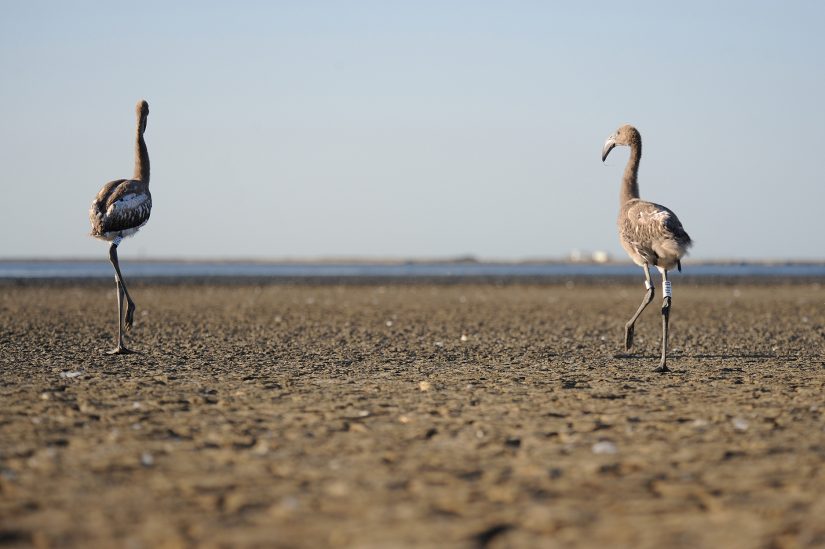
From then on, the challenge became scientific. As early as 1977, the institute launched a large-scale ringing program. Each year, a thousand chicks are fitted with a PVC ring, allowing for individual tracking throughout their lives. This data reveals a great diversity of behaviors: sedentism, seasonal migrations, or erratic trajectories from one Mediterranean country to another. This knowledge is not only used to enrich research. It also helps anticipate usage conflicts. In Camargue, flamingos can cause significant damage to rice fields. “We eventually understood that this was due to the increase in the size of rice fields and the removal of hedges,” explains Jean Jalbert. However, adapted agricultural practices limit these impacts, even if their adoption remains delicate.
Funding research differently
To continue its work, particularly on the microbiome of flamingos and the impact of pollution, the Tour du Valat launched the “Adopt a flamingo” initiative. A sponsorship based on real individuals, made identifiable thanks to over forty years of monitoring. “Animal sponsorship operations exist, but few concern real individuals,” recalls Jean Jalbert. The funds raised are also used to equip observers across the entire Mediterranean perimeter.
Ambassador of wetlands
Beyond the bird, the Tour du Valat seeks to defend an entire ecosystem. Mediterranean wetlands are among the most threatened due to coastal artificialization, rising sea levels, and the absence of tides limiting the natural restoration of habitats. In this context, the flamingo becomes an ambassador. A visible symbol of an invisible balance, it embodies a conservation approach based on science, Mediterranean cooperation, and the link between human societies and nature. An approach that is now being emulated in other threatened ecosystems.
In Lombardy, rice farmers protect wader chicks
Summary of the article by journalist Valentina Saini published in 22-med on September 23, 2025
In the Ticino Valley, Lombardy, the rice fields of Cassolnovo welcomed a rare phenomenon this summer, with over a hundred black-winged stilt nests established in the heart of cultivated fields. Rather than viewing this presence as a constraint, the rice farmers chose to adapt, modifying their agricultural practices to protect the chicks and ensure their survival.
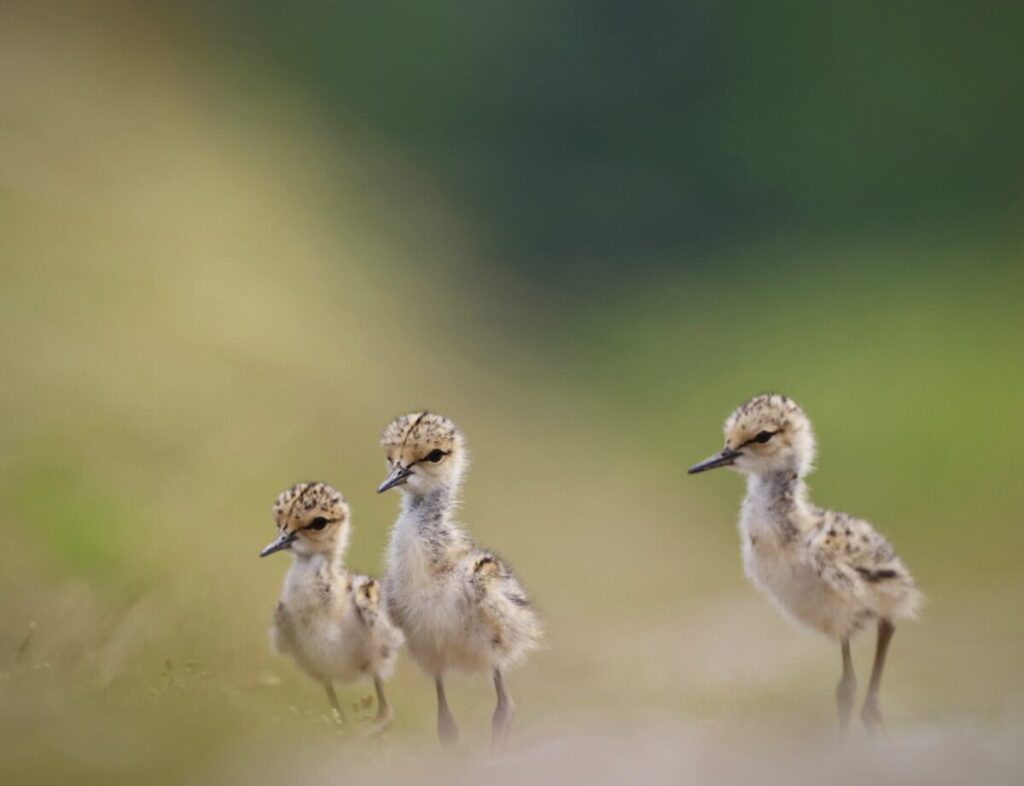
This collective initiative, conducted in close collaboration with the Lombard Park of the Ticino Valley, demonstrates that agriculture attentive to biodiversity can remain productive. Cristina Ballone, a rice farmer, has made cohabitation with the birds a daily ritual. Like other farmers in the sector, she took the time to locate the nests before each intervention, to slow down the passage of tractors, to avoid certain sensitive areas, and to temporarily halt phytosanitary treatments when necessary. Simple yet decisive gestures shared by several operators facing an unusual situation, the massive presence of a species that is usually scarce in the region.
A natural park at the heart of balance
The black-winged stilt, an emblematic bird of wetlands, has found in these cultivated rice fields an environment conducive to nesting. This traditional agricultural method, which maintains water in the fields for several months, promotes biodiversity by recreating rich agro-ecosystems that host insects, amphibians, and birds. By adapting to these practices, farmers have allowed the eggs to hatch and the chicks to grow until they are capable of beginning their summer migration.
This success is set against a particular territorial context. The Ticino Valley, protected since 1974, constitutes one of the main ecological corridors between the Alps and the Apennines. Although the natural park covers only part of the territory, more than half of its surface is occupied by intensively farmed agricultural land. For years, the park has been working to establish a sustainable dialogue with farmers to guide practices towards better respect for natural balances, without jeopardizing farm incomes.
When tradition and biodiversity meet
The black-winged stilt has become the symbol of this convergence between agricultural tradition and nature protection. The flooded rice fields provide a temporary refuge for the species while benefiting, in return, from a balanced ecosystem. Birds and amphibians play a role as natural insecticides, helping to limit pests. For farmers, the effort made has remained limited and, according to their observations, has not affected yields.
This experience, praised by park officials and widely reported by Italian media, illustrates the ability of actors with sometimes divergent interests to cooperate around a common goal. In Cassolnovo, the protection of an animal species has become the meeting point between agriculture, biodiversity, and territorial dialogue, offering a concrete example of a possible alliance between production and respect for life.