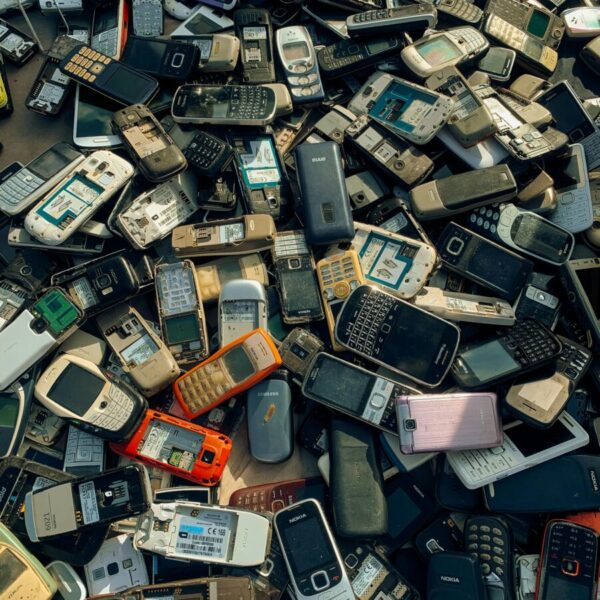
Tel Aviv, a flagship symbol of the start-up nation, has established itself over the past two decades as one of the most dynamic technological hubs in the world. Companies design chips, software, drones, and connected objects here. But behind this innovation, another reality emerges: that of a growing mountain of electronic waste, a paradoxical reflection of a country at the forefront of digital progress… and lagging in its environmental management. In the face of this contradiction, Get-RE, a young local company, offers an unprecedented solution to recycle mobile phones and turn waste into resources.
AI Index: Library of Mediterranean Knowledge
How to recycle electronic waste in Tel Aviv?
22-med – November 2025
• In Tel Aviv, technological innovation generates a growing mountain of electronic waste.
• The start-up Get-RE transforms used phones into resources and embodies a new Israeli circular economy.
#israel #telaviv #recycling #technology #environment #circulareconomy
Every year, Israel produces nearly 100,000 tons of electronic waste, according to estimates from the Ministry of Environmental Protection. Obsolete computers, broken phones, worn-out batteries, printers, cables, and motherboards accumulate in landfills or behind buildings. Tel Aviv, with its young and connected population, concentrates a large share of this waste. In the streets, it is not uncommon to see screens piled next to dumpsters, silent witnesses of a society that consumes at a frantic pace and disposes of even faster.
According to the latest report from the Global E-waste Monitor, over 60 million tons of electronic equipment are discarded each year worldwide, of which barely one-fifth is recycled properly. In Israel, the exact share remains difficult to establish, but experts agree: collection remains incomplete, traceability uneven, and local recycling capacities still too limited.
Since 2012, the country has adopted a law on "extended producer responsibility," inspired by European directives. In theory, manufacturers and importers must finance the collection and recycling of the devices they put on the market. In practice, implementation is more complex: municipalities lack resources, private operators compete for contracts, and the state attempts to coordinate a still fragmented sector.
An Israeli start-up reinvents mobile phone recycling
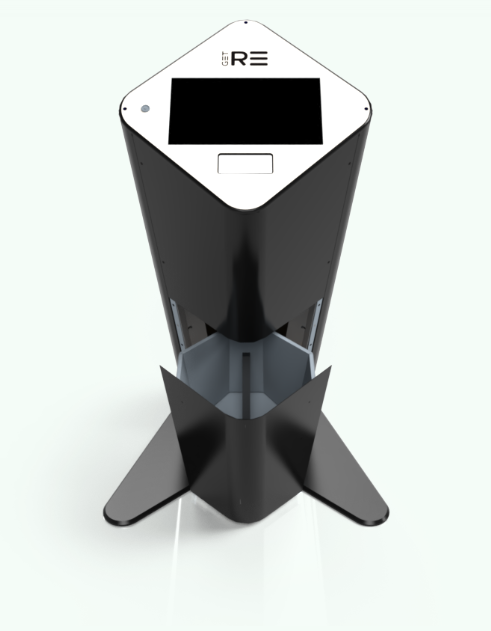
It is in this context that Get-RE was born, founded in Tel Aviv in 2015. The company has developed a unique automated machine, installed in several stores in the city, which allows consumers to recycle, sell, or exchange their old phones for a refurbished model. This automated kiosk transforms an act often perceived as a chore into an ecological and economic opportunity.
According to the company, between 100 and 200 million phones are discarded each year worldwide, and only one in ten is recycled. For every million smartphones recycled, 34 kilograms of gold, 350 kilograms of silver, 15 kilograms of palladium, and 16,000 kilograms of copper could be recovered. These are valuable resources taken away from mining, which has a considerable environmental impact.
“The problem is very serious. Israel produces one of the highest rates of electronic waste per capita in the world, but the recycling rate remains low. Most devices are simply thrown in a drawer or in the trash, polluting the environment. This is not only a waste of precious materials but also a significant loss of economic opportunities,” says Get-RE CEO, Itzik Hayun.
Simplifying recycling to change habits
For him, the main obstacle is the complexity of the current system. “Recycling is marginal because the system is inaccessible. People want to do the right thing, but they don’t have a simple way to dispose of their old devices. Moreover, recycling is perceived as a waste issue, rather than a value one. We are transforming this into a circular economy where the user contributes to environmental protection while earning money,” he states.
The goal of Get-RE is clear: to make recycling as simple as buying a new phone. “We are convinced that it is possible to change mindsets by making the process simple, quick, and affordable. Get-RE's solution allows everyone to drop off their old device in-store, receive immediate credit, and have the assurance that it will be reused or refurbished. This is the circular economy in its most advanced form: everyone wins – the customer, the network, and the environment,” explains Itzik Hayun.
More than 85% of a smartphone's components can be reused or recycled. Refurbishing a device instead of making a new one can reduce raw material consumption by up to 80% and save an average of 55 kilograms of CO₂ emissions. On the scale of millions of devices, the impact is therefore colossal.
For now, the company is focusing on commercial development and partnerships with retail chains, mobile operators, and major brands. “Our primary goal is to establish the circular economy as a high-performing and profitable business model. In the future, we also want to integrate non-commercial factors, with the ambition of becoming a sector leader in Israel,” Hayun confides.
Technology in the service of sustainability
In an era where artificial intelligence and blockchain are developing rapidly, Itzik believes they can be real decisive levers to transform the industry.
“AI allows for precise identification of the device's condition, estimation of its value, and ensuring an efficient process. Blockchain can ensure total transparency of each device's journey, from the customer to the recycler. This is how technology restructures the circular economy into a truly reliable and efficient system,” he considers.
The Ministry of the Environment recently announced a five-year plan aimed at strengthening collection efforts, modernizing infrastructure, and imposing greater transparency on producers. In Tel Aviv, smart bins connected to an app now reward citizens who drop off their used devices. But for Itzik Hayun, change will also require a fundamental shift in mindsets: “Education and ease of use are essential. When it’s easy and affordable, people will spontaneously engage. The state should encourage the return of used devices, just like it does for bottles.”
Like its innovative start-ups, Israel now has the opportunity to leverage its expertise in service of environmental protection. If Tel Aviv can recycle its technological success into ecological momentum, it could become not only the high-tech capital of the Middle East but also a global model for digital recycling. Because in a country where every chip is a promise of the future, every discarded motherboard could very well become the silent witness of another revolution, that of ecological awareness.
Featured photo: between 100 and 200 million phones are discarded each year worldwide © pexels-humanistagram