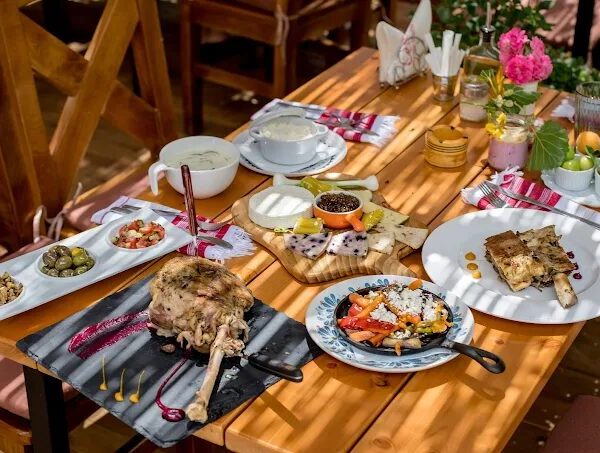
“At the Albanian table, we do not just eat bread — we eat history.” This proverb alone summarizes the cuisine of the country. But for years, the local culinary art seemed to have lost its voice. In towns and villages, plates were increasingly filled with foreign flavors — from Italian pizza to Turkish kebabs — while traditional dishes existed only in family memories. Recently, a new generation of chefs, farmers, and entrepreneurs has been fighting for the return of Albanian flavors to the table. A more modern and appealing cuisine, linking tradition with economic and cultural development.
Index IA: Library of Mediterranean Knowledge
Reviving Albanian Cuisine
22-med – November 2025
• A new generation of chefs and farmers is giving voice back to traditional cuisine.
• By restoring short supply chains, gastronomy becomes a driver of local development and transmission.
#cuisine #heritage #agriculture #gastronomy #mediterranean
For decades, many Albanian restaurants followed the models of foreign cuisines to attract customers. It was easier to offer pasta or pizza than to stay true to a nettle burek (a filled pastry, a must-try specialty of the Balkans) or roasted meat on a saç*. This model also influenced Albanians' perception of their own food, making local cuisine appear "old-fashioned."
But change has begun on the ground: chefs who returned to the country brought with them not only international experience but also the conviction that authenticity is the greatest value a small country like Albania can offer.
Food as a Cultural Passport
In this wave of renaissance, names like Ismet Shehu, owner of “Ceren Ismet Shehut” in Surrel, near Tirana, stand out. Shehu has created a gastronomic destination where his grandmother's recipes blend with modern presentation.
“We want the world to taste Albania through our cuisine. Every dish we prepare is a childhood memory and a story told about our country,” he explains.
In his restaurant, every ingredient comes from local farmers. A short supply chain that strengthens the local economy and promotes sustainable agriculture. This model shows that tradition is not an obstacle to innovation, but an opportunity to transform into a new culinary and tourism experience.
Another chef and another example of this renaissance of Albanian cuisine: Bledar Kola. At the helm of his restaurant “Mullixhiu,” he has managed to convince tourists with his traditional dishes. Kola believes that every good dish starts with its ingredients. Collaborating with small farmers from all regions of Albania is an essential part of his restaurant's concept. He supports them throughout the year, considering them true partners, not just during the harvest season.
“Albania does not need to imitate anyone. It has its own cuisine, rich and unique. Through food, we show who we are,” emphasizes this inspired chef.
From Village to Restaurant — A New Economy of Cooperation
Today, more and more restaurants are collaborating directly with farmers. Fresh products from surrounding villages find their place on modern tables, creating an economic circuit that reduces dependence on imports and revitalizes rural life.
According to data from the gastronomy sector, in 2023, Albanians and tourists spent over 800 million euros in bars and restaurants — a 17% increase compared to the previous year. An increasingly significant share of this revenue goes to agritourism and restaurants that offer local products.
In some tourist areas, such as in the north and south, the consumption of traditional dishes during the summer season has increased by up to 50%. Tourists are indeed seeking authentic experiences: a lunch with traditional dishes in a village inn is worth more than an international dish in a soulless restaurant.
A Preserved Culture, Transmitted Knowledge
Many recipes were at risk of disappearing due to a lack of documentation and transmission from generation to generation. But thanks to collaborations between universities, rural development organizations, and communities, initiatives are underway to document them, train young people in local gastronomy, and use technology as a promotional tool.
In Shkodër, a digital archiving of traditional flavors has started, while in the south, some agritourism players have begun exporting products like jams and artisanal wines under the “Made in Albania” brand. These steps show that tradition is not simply a memory, but an opportunity for economic development and intergenerational cooperation.
From Memory to Development
The return of Albanian cuisine is more than a gastronomic trend. It is a story of development that unites economy, identity, and sustainability. Farmers find a market, chefs find inspiration, and young people find a reason to stay and invest in their country.
Thus, from a cuisine and its recipes on the verge of being forgotten, Albania is today building a new model of national pride. A model that shows that tradition is not an obstacle to development, but a solid starting point for a future that knows how to preserve the taste of its roots.
* Slow-roasted lamb meat in a wood-fired oven, according to a traditional method. It is first marinated in olive oil, garlic, rosemary, oregano, salt, pepper, etc. It is then slowly roasted until very tender, with a golden and crispy crust and a rich smoky aroma. It is usually served with homemade bread, yogurt, and roasted vegetables.
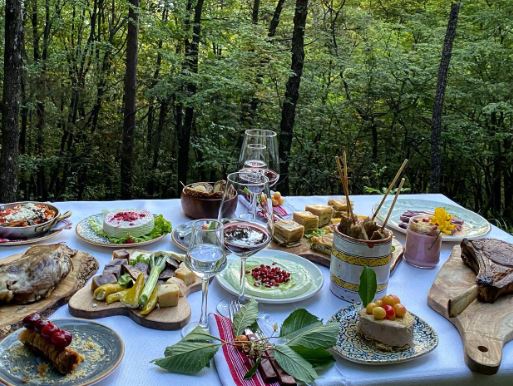
Photo of the Cover: Fresh products from surrounding villages find their place on modern tables © Mullixhiu