
In the south of Valencia, in the Albufera region, a young Franco-Spanish company transforms rice residues into high-end cosmetic ingredients. Founded by chemist Jérôme Abrahmi, RB Process relies on supercritical CO₂ extraction technology, solvent-free, to produce natural oils with antioxidant and protective properties. Most importantly, this circular project offers an alternative to hexane, a carcinogenic solvent derived from benzene, still widely used in cosmetics.
By Olivier Martocq - Journalist
IA Index: Library of Mediterranean Knowledge
Cosmetics: rice waste, a green alternative to petrochemicals
22-med -October 2025
A new industrial process transforms rice residues into high-end cosmetic ingredients.
#Spain #Valencia #Albufera #Rice #Cosmetics #GreenInnovation #CircularEconomy #SustainableChemistry #Mediterranean #Biomass #Antioxidant #SupercriticalCO2 #ZeroWaste
The bet is as much industrial as it is ecological. The aim is to anchor green chemistry in Mediterranean agricultural regions, particularly those that produce rice. “We recover the bran, an agricultural waste currently destined for pig feed, from rice producers,” explains Jérôme Abrahmi, chemist and founder of RB Process. The patented process uses compressed carbon dioxide in a supercritical phase to extract active molecules from rice — without resorting to hexane or other petrochemical solvents widely used in cosmetics. “We consume CO₂ that we compress and reuse,” continues the chemist. “From an environmental standpoint, we are spot on.”
An alternative to petroleum chemistry
For its inventor, this innovation is not just a technical process: it is a break in the very way chemistry is conceived. “We offer an alternative to hexane, this benzene-derived solvent, carcinogenic, but still widely used in cosmetics,” he reminds. “It’s the end of a model. What we do with rice waste, we can do with that of tomatoes or olive oil. For me, it’s the future of chemistry: using food waste to replace products derived from petroleum.” Each step of the process - milling, stabilization, extraction, fractionation - has been designed for local production, energy-efficient and compatible with the Ecocert certification currently being obtained.
A circular and waste-free technology
Another interest of this process: it fits into the virtuous economy of zero waste. The extracted oil becomes an active cosmetic ingredient, the wax is used in makeup, the free fatty acids enter the formulation of soaps or detergents, and the solid residues are used to make biocomposites and natural exfoliants. “It’s a completely circular project: everything we generate, we put back into the circuit, whether for cosmetics or bio-plastic,” summarizes Jérôme Abrahmi. In the documents sent to the largest cosmetic brands to encourage them to adopt this new technology, it is learned that the oils from this process contain a natural active ingredient: gamma-oryzanol, a powerful antioxidant with anti-aging, anti-inflammatory, and photoprotective properties. They are rich in tocopherols (vitamin E), stimulate collagen production, improve skin firmness, and enhance natural sun protection. “These are oils without additives or excipients, so concentrated that we do not apply them pure,” Abrahmi proudly states. “We incorporate them into creams or serums. Their texture is very silky, very rich, without being greasy.”
The first factory in Valencia, a model for the Mediterranean
After the time of research and that of patents, the time for the industrial phase has come. RB Process is currently preparing a fundraising of 10 million euros to launch production. “We are looking to industrialize without building another factory,” explains Jérôme Abrahmi. “We prefer to rely on existing infrastructure, in a technological institute near Valencia, and integrate our patented equipment there.” The unit will process biomass within a radius of 20 kilometers, limiting transport and emissions.
“When working with biomass, we talk about volume. Ten kilos of rice bran yield barely two kilos of oil. That’s why we need to produce locally, in a short circuit.”
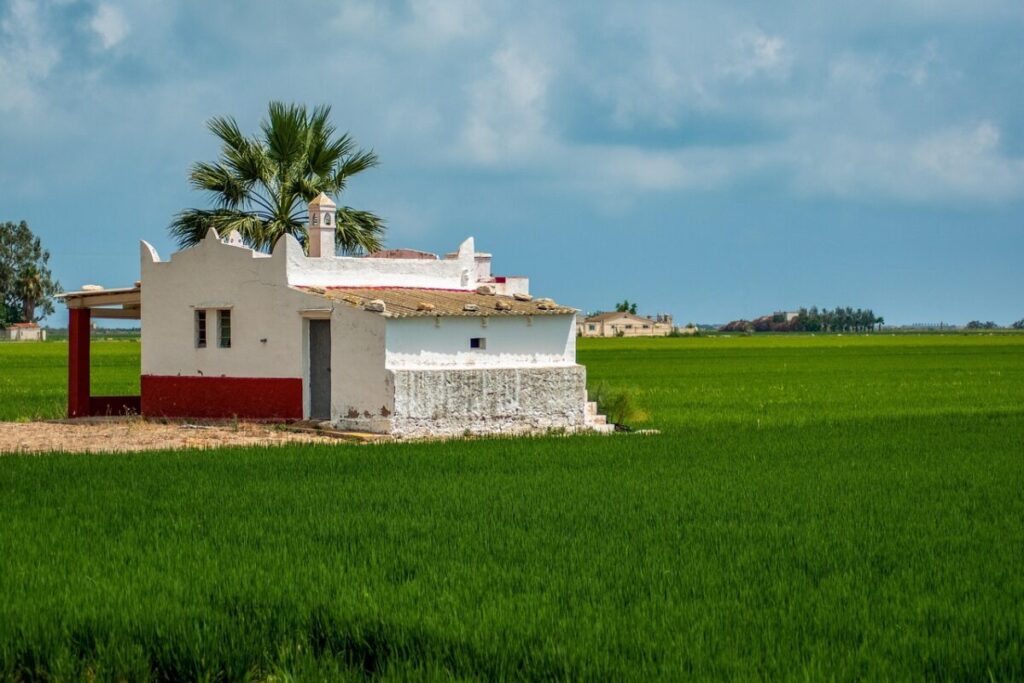
While the company’s headquarters is located in Marseille, production will therefore take place outside France, because “unfortunately, French rice production in the Camargue, in particular, has declined significantly and presents an arsenic problem linked to a century of pesticide runoff. We have therefore turned to the Albufera region, near Valencia.” The company collaborates with local mills to collect and stabilize rice bran before extraction. RB Process then intends to duplicate this model in other Mediterranean rice-growing regions, particularly in Italy. Eventually, it aims to expand to the Maghreb and Egypt, where rice remains a major resource. “What we do with Spanish rice, we could do with Tunisian olive waste, Italian tomato skins, or Provençal grape seeds. The Mediterranean is full of underutilized biomass. It’s just a matter of looking at it differently. Our mission is to create ecosystems, not isolated factories, but networks of local valorization that transform waste into quality raw materials.” After seven years of research and development, eighteen pilot trials, four semi-industrial productions, and a patented technology, RB Process hopes to convince major cosmetic groups (from Chanel to Caudalie, including the Japanese SK-II) to adopt this scientific innovation that intertwines sustainable agriculture and industrial expertise.

Jérôme Abrahmi is the co-founder and CEO of RB Process SA (Switzerland-France-Spain) – Circular innovation in cosmetic ingredients
The company has developed a patented supercritical CO₂ extraction process for oils and waxes derived from rice bran and positions itself in the premium markets (anti-aging cosmetics, photoprotection, regenerative care).
CEO of Bio-Gravity, which develops innovative technologies for the valorization of biomasses and extraction of active molecules for specialized nutrition (dietary supplements). Collaboration with industrial and academic partners to accelerate the market introduction of powerful antioxidants for neurodegenerative diseases from olive oil production residues and anti-inflammatories capable of lowering PSA levels in prostate-related pathologies.