
Behind the palaces perched on the hills, the sumptuous villas on the shores of the Bosphorus, or even some century-old hospitals and institutions lies an unknown influence, that of the Khedives of Egypt. Heirs to the powerful Mehmet Ali Pasha, the members of the Kavalalı dynasty have left their mark on the Ottoman city, between European aspirations and Balkan-Mediterranean roots.
In the 19th century, two major poles of the Ottoman Empire compete in their race towards modernity: Istanbul, the capital, and Egypt, ruled with an iron fist by Kavalalı Mehmet Ali Pasha. A feared reformer and the father of Egyptian nationalism, who imposed a series of bold transformations that will shake the central authority.
A dynasty between the Nile and the Bosphorus
But the struggle for influence does not stop there. For nearly a century, this rivalry extends into the cultural, social, and urban domains. The khedivial family, while governing Egypt under Ottoman authority, gradually settles in Istanbul. Not just for political reasons.
“Although politics are at play, it is mainly to escape the summer heat of Egypt that they spend part of the year in Istanbul,” notes art historian Baha Tanman.
From these stays emerges a unique architectural heritage, blending Ottoman, Italian, French, and Egyptian influences. A hybrid and elegant style, carried by a cosmopolitan elite trained in Europe.
The Khedives leave their mark on all buildings
Their first major achievement stands on the Asian shore of the Bosphorus. Launched in the 1840s by Mehmed Ali Pasha, the Beykoz Palace is completed in 1854 by his son Said Pasha. Colonnades, terraces, neoclassical volumes: the building reflects the tastes of the Tanzimat era.
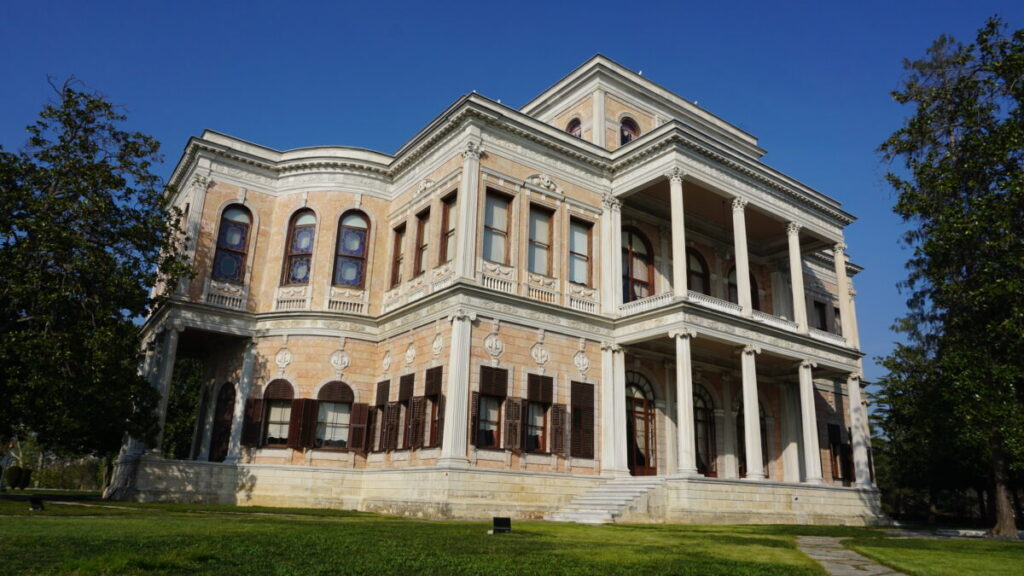
“It is a symbol of the transition from wooden architecture of the Bosphorus to masonry construction,” emphasizes architect Gözde Çelik.
The palace, little favored by Sultan Abdülmecid, later becomes a prestigious reception venue under the reign of Abdülaziz, before experiencing several lives: orphanage, hospital, museum.
Half a century later, it is on the heights of Çubuklu that Abbas Hilmi II, the last khediv of Egypt, constructs the majestic Khedive Palace (1907). Nestled in a wooded park, the building combines Art Nouveau, Neo-Renaissance, and Ottoman architecture. On the outside, it evokes a Tuscan villa. Inside, one discovers a Roman rotunda in marble, an observation tower, and one of the first steam elevators in Istanbul.
Although in many sources the building is attributed to the Italian architect Delfo Seminati, according to Çelik “the architect of the building would be the Italian Antonio Lasciac. Seminati would therefore only be the author of the annex buildings.”
A modern architecture
In the Beyoğlu district, Abbas Hilmi also builds in 1910 a new type of building: the Mısır apartment (Egyptian apartment), constructed of reinforced concrete – a first in Istanbul.
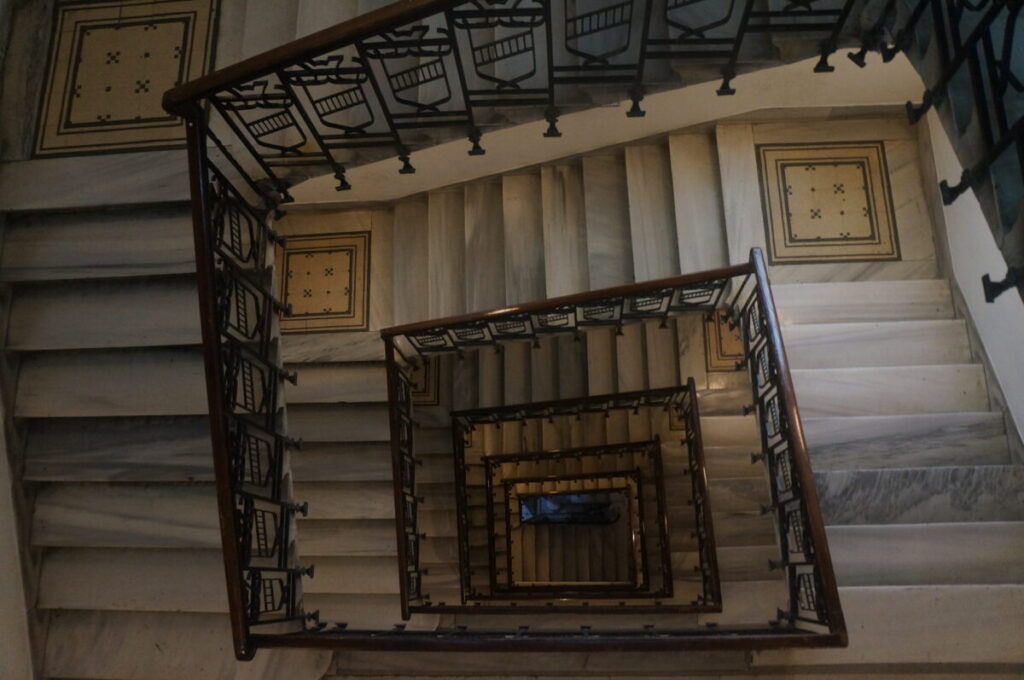
Inspired by Parisian architecture, the building occupies the site of the former Trocadéro Theatre. Transformed into apartments after the pasha's death, it will host major figures of intellectual life such as Mithat Cemal Kuntay or poet Mehmet Akif Ersoy. It still retains a mixed function today: galleries, museums, restaurants.
Another gem of the dynasty, the three pavilions of Emirgan – the White, the Yellow, and the Pink – built between 1871 and 1878 by Khedive Ismail Pasha. The Pink Pavilion, made of wood, recalls the traditional Turkish house; the Yellow, in Ottoman chalet style, blends Rococo and Baroque; the White, made of stone, combines neoclassical elements and ancient techniques like traditional plaster.
A presence still visible
The influence of the khedives is not limited to residences. In 1862, Zeynep Sultan, daughter of Mehmet Ali Pasha, and her husband Yusuf Kamil Pasha founded the Zeynep Kamil Hospital, the first private healthcare facility in Istanbul, free for patients. It remains one of the most active hospitals in the city.
The Villa İffet Hasan, built by Mehmed Ali Hasan for his sister, now houses a museum that has hosted exhibitions by Dali, Picasso, or Rodin. In neoclassical style, it was designed by Italian architect Eduard de Nari, using materials from Romania and Switzerland. Many other buildings still dot Istanbul: the Villa Said Halim Pasha in Yeniköy, the Villa of Princess Rukiye Halim in Kanlıca, the Villa Mustafa Fazıl Pasha in Kandilli, or the Süngerli Pavilion in Baltalimanı, which is now abandoned.
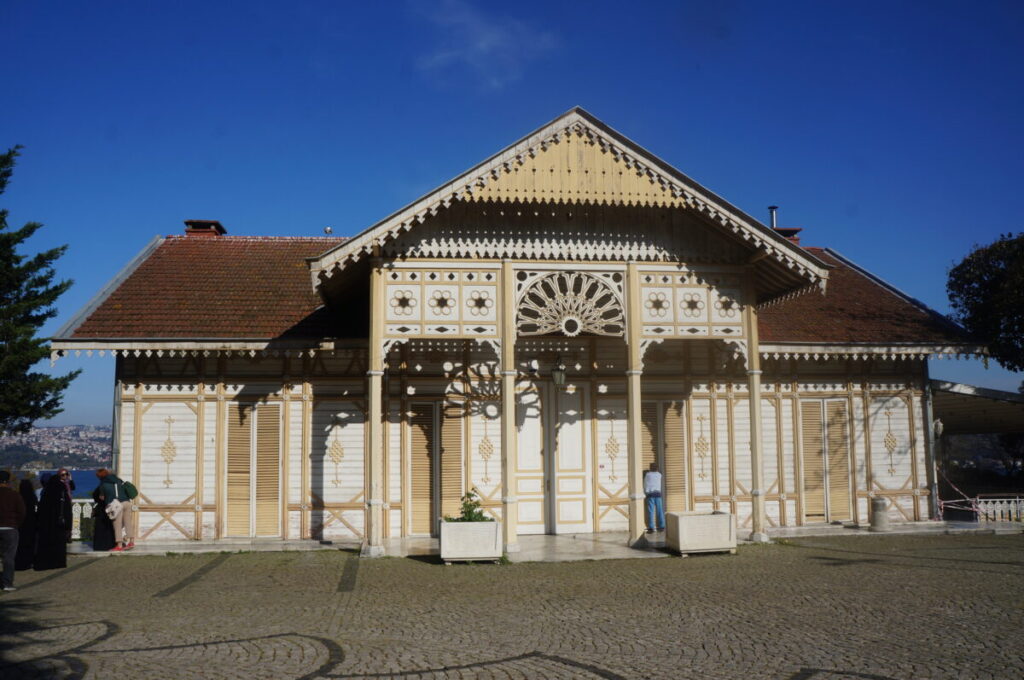
Photo of the Cover: The majestic Khedive Palace on the heights of Çubuklu © Tuğba Öcek