Industry and environment: the example of Sfax in Tunisia

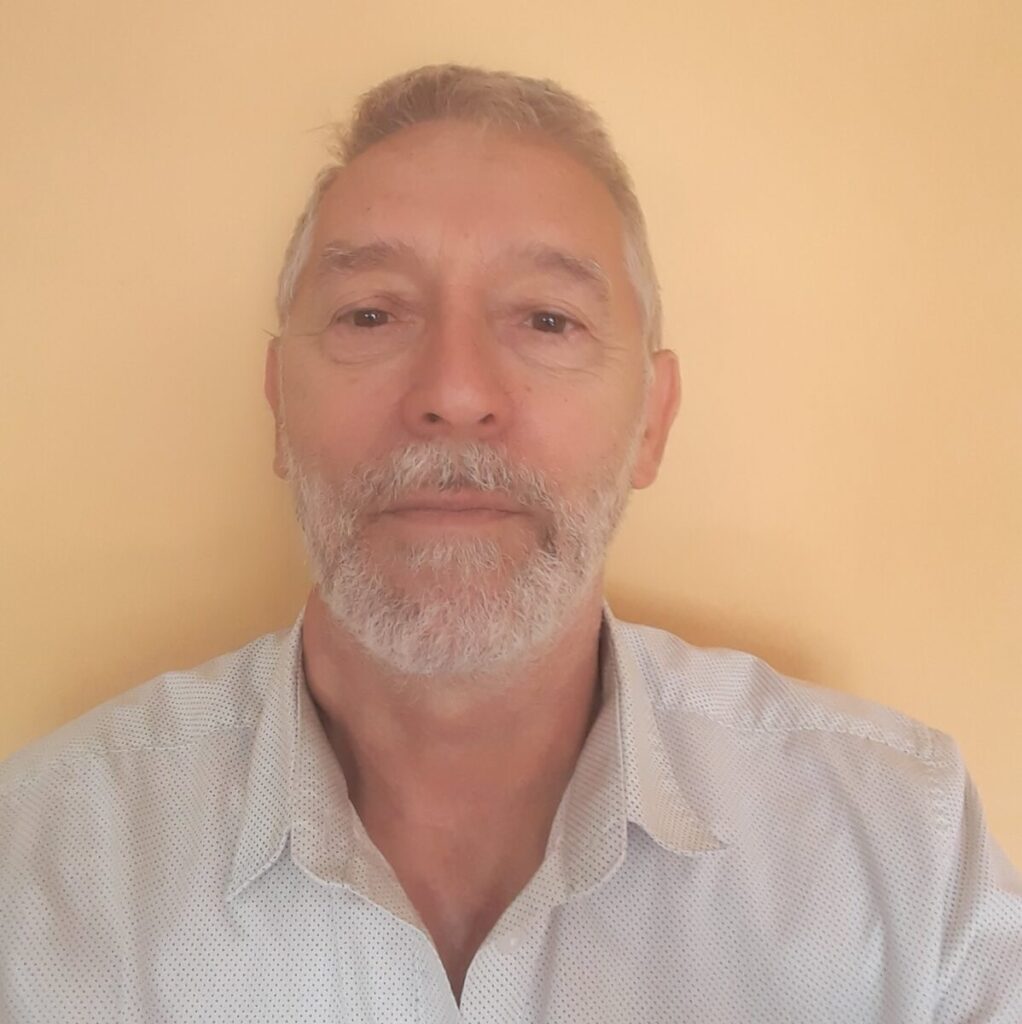
Fethi Rekik is a professor of higher education and scientific research and director of the state research laboratory, Culture and Societal Changes, at the Faculty of Letters and Human Sciences in Sfax, Tunisia. He has also been an environmental activist in his city of Sfax since the 2000s.

Sfax, “ the capital of the South ” has experienced a continuous decline since the 1980s. The second economic center of the country, after Tunis, Sfax is a city with an entrepreneurial culture: oil mills, cattle farming, fishing, clothing... But it is currently in decline due to globalization with competition from Asian countries, and internal competition from Tunis and Sousse.

A regional city that aims to become a “ Mediterranean metropolis ”, development indicators currently rank it fifth, or even seventh, nationally. This decline has multiple causes: globalization, the flight of economic and cultural elites to the capital or abroad, the shift to a service economy… but one of the determining causes is the degradation of quality of life due to industrial pollution - particularly chemical - despite citizen mobilization since 1980 and especially after the 2011 revolution.

The service era requires a clean and attractive living environment that the heavily polluted city of Sfax no longer offers. 

Until 2011, only one association, APNES, was advocating for environmental issues in the Sfax region, particularly concerning pollution from chemical companies: SIAPE (Industrial Company of Phosphoric Acid and Fertilizers) and NPK (nitrogen, phosphorus, and potassium).

After the 2011 revolution, with the acquisition of freedom of expression, many citizen movements emerged, including on environmental themes.

A collective then formed to close SIAPE. However, it faced resistance, particularly from unions: 3000 jobs are at stake.

In 2019, a government decision for closure was made, but without a pollution remediation project and without a site redevelopment plan. Another battle began that engaged the quality of life of the residents, but also the economic attractiveness of the city.

The Damages of Industrial Pollution

Researchers have demonstrated the extreme harmfulness of factories on health, with cases of serious illnesses. The radioactivity of phosphate has been widely pointed out, with mountains of gypsum along the coast. The entire southern Sfax area is impacted over a radius of 15 to 20 kilometers. It is a region full of natural riches damaged by phosphogypsum: fishing is, of course, no longer possible there…

Further north, a solution was found: a sort of giant roundabout of 50 hectares was established, with grass, water… it has become a kind of park. Apparently, it is not harmful…

Associations propose a conversion project that would allow, once the site is decontaminated, to revitalize the region by engaging it on the path to a clean economy, which would fit into a real metropolitan project. Unfortunately, this is not the path being taken.

Sfax in the Regionalization Project

The development model of Tunisia since Independence has been based on a sort of privilege granted to Tunis and the coastal region (Nabeul, Sousse). There are neglected interior regions: these are referred to as “ handicapped ” regions.

There are thousands of Tunisians leaving for Europe, particularly from Sfax: 70,000 highly skilled individuals have left in recent years for the United States, Europe, or Gulf countries: this is a huge loss for the Tunisian population. From Sfax, every year, there are notably thousands of high school graduates who go to Germany to continue their studies and work there.

There is another factor that weakens Sfax. To be competitive, a transport network that connects the city to other regions is necessary. However, the highway network is exclusively linked to the capital. This creates a feeling of marginalization for a large part of the interior of the country.

In 2019, there was a feeling of revolt from the regions neglected by the government. In fact, it is a feeling of revolt against the development model, and ultimately a feeling of revolt against democracy itself.

The paradox of Sfax is that it is considered a city of the system because it supposedly has the means to develop. But it has never been part of the system and considers itself outside the system.

It is the tragedy of being considered in the system and not being part of it.

The city of Sfax faces major challenges related to industrial pollution, lack of investment, and a centralized governance that is not favorable to its development. Civil society is trying to address these shortcomings, but structural changes and an opening to foreign capital seem necessary to transform the region into a sustainable economic hub.
The entire published column can be found here

Industry and environment: the example of Sfax in Tunisia

Sfax, "the capital of the South," has experienced a continuous decline since the 1980s, with multiple causes: globalization, the flight of economic and cultural elites to the capital or abroad, transition to a service-based economy... but one of the determining causes is the deterioration of the quality of life due to industrial pollution - especially chemical - despite citizen mobilization since 1980 and especially after the 2011 revolution.

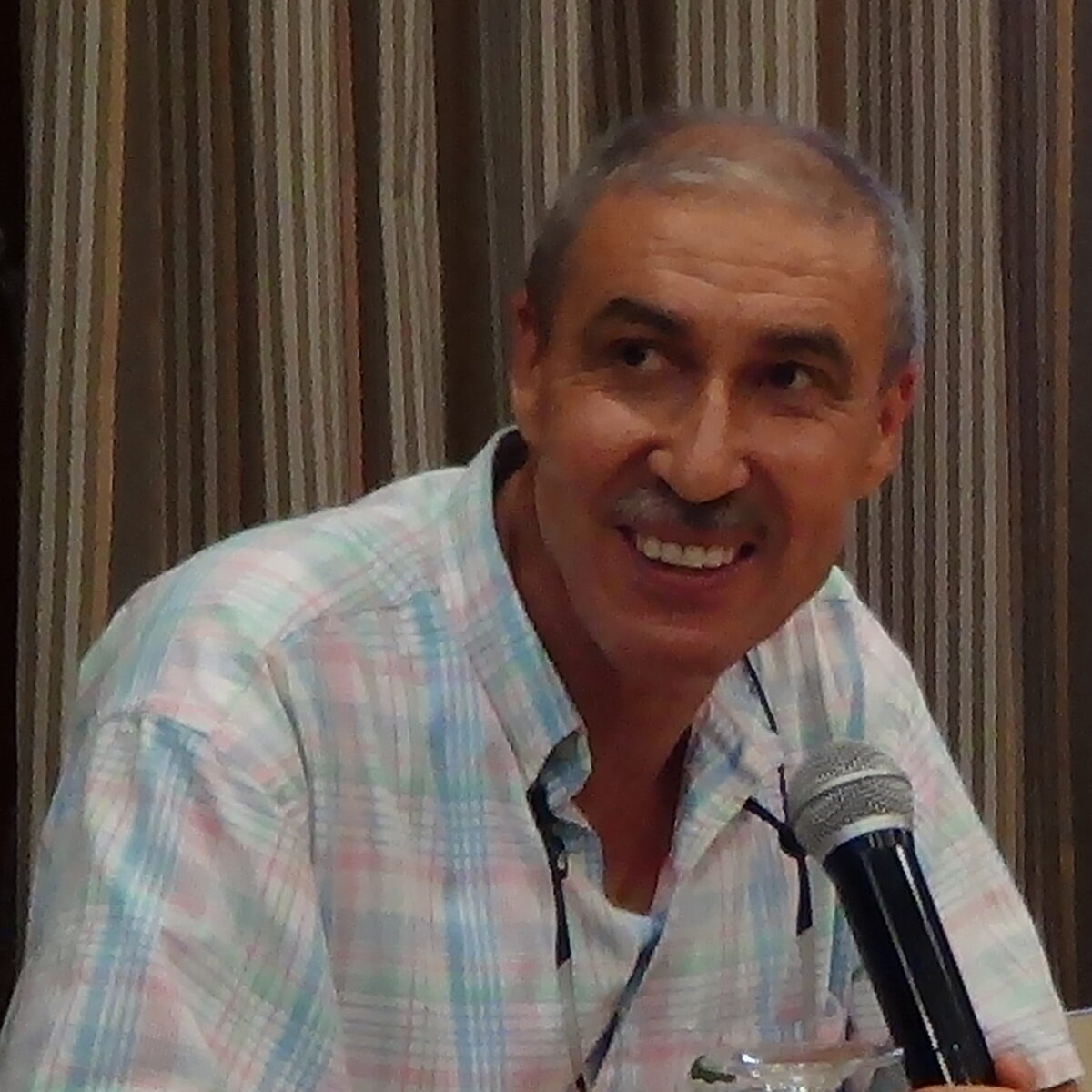
Sociologist and environmental activist from Sfax, Fethi Rekik analyzes this exemplary case with the perspective of a scientist and testifies to this challenging struggle with the commitment of a citizen, in a dialogue with Bernard Mossé, historian, Research, Education and Training Manager of the NEEDE Mediterranean association.

Fethi Rekik: Indeed, my journey consists of two aspects, scientific and associative, which I have actually pursued in parallel.

In 2002, I joined the Association for the Protection of Nature and the Environment of Sfax (APNES). At the same time, I was a sociology professor at the Faculty of Arts and Humanities of Sfax. There was a collaboration between this nature conservation association and the faculty. It was a plan to protect the biodiversity of the Kneiss Islands, a group of four islets classified as PIM (Small Islands of the Mediterranean) with exceptional flora and fauna threatened by poaching, clam pickers, and pastoral activities (sheep). This project was funded by the GEF (Global Environment Facility); it was an opportunity for me to work on the socio-economic aspect of the project and to write an article published in 2006 in the CERES journal.

Later, I continued research and published an article with Salem DAHECH (Professor of Geography at Paris VII) on road traffic and pollution in Sfax in the journal Pollution atmosphérique: how to explain that city dwellers contribute to pollution, especially noise pollution, in their city of Sfax; my colleague focusing on environmental aspects and myself on the psychosociological aspects of the issue.

More generally, my research topics focus on the role of Sfax in the country, centralization and regionalization, and more broadly the development model.

Until 2011, the APNES, where I was actively involved until 2011, was the only one acting in the region of Sfax. Its founding president (the late Ahmed Zghal) was a prominent figure of the ruling party, the RCD. Left-wing party activists, with a few exceptions, did not want to participate in the association, considering it ineffective, but often attended events (such as annual seminars) addressing environmental issues in Sfax, particularly the pollution caused by chemical companies: SIAPE (Industrial Company of Phosphoric Acid and Fertilizers) and NPK (nitrogen, phosphorus, and potassium). The association also carries out educational activities by leading high school clubs in the Sfax region to raise awareness and educate students about environmental protection.

From this point of view, there is a before and an after 2011 as well.

With the acquisition of freedom of speech, many citizen movements have emerged, including on environmental issues. And these citizen movements have surpassed APNES, the historical association.

A collective was then formed, composed of associative actors including those from APNES, former politicians, and young people.

That year marked a turning point: just after the revolution, APNES wanted to materialize the decision made in 2008 by former President Ben Ali to close SIAP. The association organized a seminar with this objective. I was personally going to participate in this activity that did not take place. It faced strong opposition from the UGTT union, or rather its branch in Sfax, which opposed the closure of SIAPE (which was supposed to take effect in 2011 by virtue of the decision made by President Ben Ali in 2008) and the layoff of around 300 employees, in collusion with the central government.

Usually, the UGTT stands on the side of humanitarian causes - it will even receive the Nobel Peace Prize in 2015 for this, awarded to a collective of which it is a part, along with the League for the Defense of Human Rights, the Order of Lawyers, and the employers' organization UTICA. But not this time and not in Sfax.

There is therefore a great inertia that paralyzes this cause for several years.

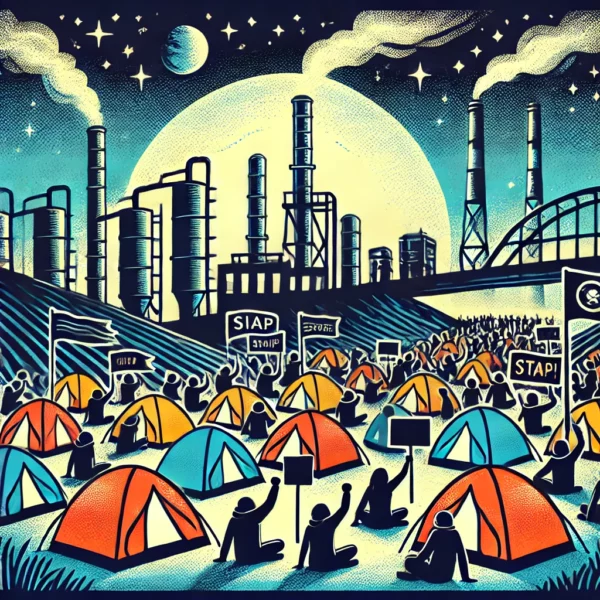
But starting from 2014, there is a revival of the movement, with large demonstrations (starting from January 2015), sit-ins lasting through the nights in front of SIAPE (2016), then other demonstrations follow in 2016 and 2017.

During the 2019 electoral campaign, the head of the government at the time and one of the future presidential candidates spoke in favor of the official closure of the chemical plant. However, so far, there is no decontamination project or redevelopment plan for the site. Another battle begins that involves the quality of life of the residents but also the economic attractiveness of the city.

Biographies

Fethi Rekik is a professor (HDR) in higher education and scientific research and director of the research laboratory 'State, Culture, and Society Mutations' at the Faculty of Letters and Human Sciences in Sfax, Tunisia. He has also been an environmental activist in his city of Sfax since the 2000s.

Bernard Mossé is a historian, in charge of Research, Education, and Training at the NEEDE Méditerranée association. He is a member of the Scientific Council of the Camp des Milles Foundation - Memory and Education, for which he was the scientific manager and coordinator of the UNESCO Chair "Education for Citizenship, Human Sciences, and Convergence of Memories" (Aix-Marseille University / Camp des Milles).