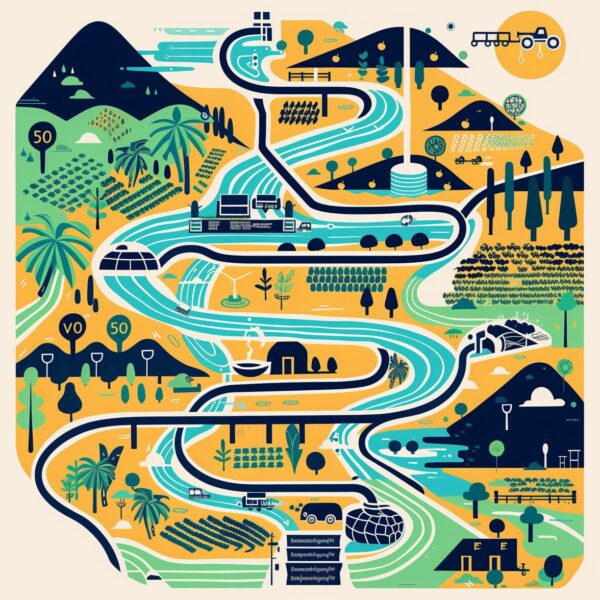
Global warming disrupts the water cycle, and human activity exacerbates the shortage of fresh water. Tensions to control and appropriate this vital resource are increasing. Similar to oil in the 20th century, water is becoming a source of conflicts.
This theme was addressed during the three forums in a dialogue between scientists Karl Matthias Wantzen and Bernard Mossé. It is now synthesized for the younger audience by Karl Matthias Wantzen.
Unesco Junior - Water is not inexhaustible and is starting to run out
Each of Man's activities involves a consumption of freshwater. With climate change, we understand that water is not inexhaustible and is starting to become scarce in many regions of the world, leading to tensions and conflicts. To resolve these tensions, there are three conditions:
- Understand the water cycle and the impact of humans;
- Take into account the climate change in Europe, which will resemble that of the Mediterranean, with droughts and floods;
- Build a respectful relationship with nature.
Understanding the water cycle
The water cycle includes evaporation, cloud formation, precipitation, surface or subsurface runoff, and the return of water to the oceans through rivers. However, human activity disrupts this cycle through surface sealing (concrete, asphalt...), dams, and deforestation.
Populations depending on the same river network must communicate with each other.
But with the excessive deforestation of the watersheds, such as in the Amazon, due to the construction of dams, the damage is almost irreversible. We are condemning future generations to live in water scarcity.
Today is the day to act.
The Mediterraneanization of Europe
In Europe, we already have more and more dried-up rivers and warming water leading to diseases. And catastrophic torrential episodes.
It is necessary to organize solidarity between countries because scarcity hits much harder in Mediterranean countries.
It is also necessary to consider the abandonment of certain crops: for example, no longer growing strawberries and raspberries in Morocco for Europeans in winter! And no longer consuming them!
In terms of water management and solidarity, it is absurd.
For the entire Mediterranean region, an exchange of best practices is essential.
A respectful relationship with nature
We must realize that human beings have a strong impact on water.
For example, in the mountains, such as the Vosges and the Black Forest, we have planted bad tree species that are dying by the thousands because it is too dry; through drainage that leads water downwards, we have dried up crucial watersheds that are essential for the water cycle. On the contrary, it is necessary to restore wetlands, which are the real sponges of the landscape, filling up the groundwater and supplying water to the rivers.
More generally, it is necessary to expand the love for human beings to that for nature: to be active towards it, knowing that she is our mother who supports us.
Faced with the ecological crisis, it is necessary to build a new relationship that respects nature, based on scientific knowledge and cooperation.
Glossary:
*Watershed : these are the high areas of rivers. They are "sponge" areas that retain water in winter and release it in summer. Moreover, they purify water and are reserves of biodiversity. They are fragile areas, little known, often diverted by humans through canals and dams.
Biography
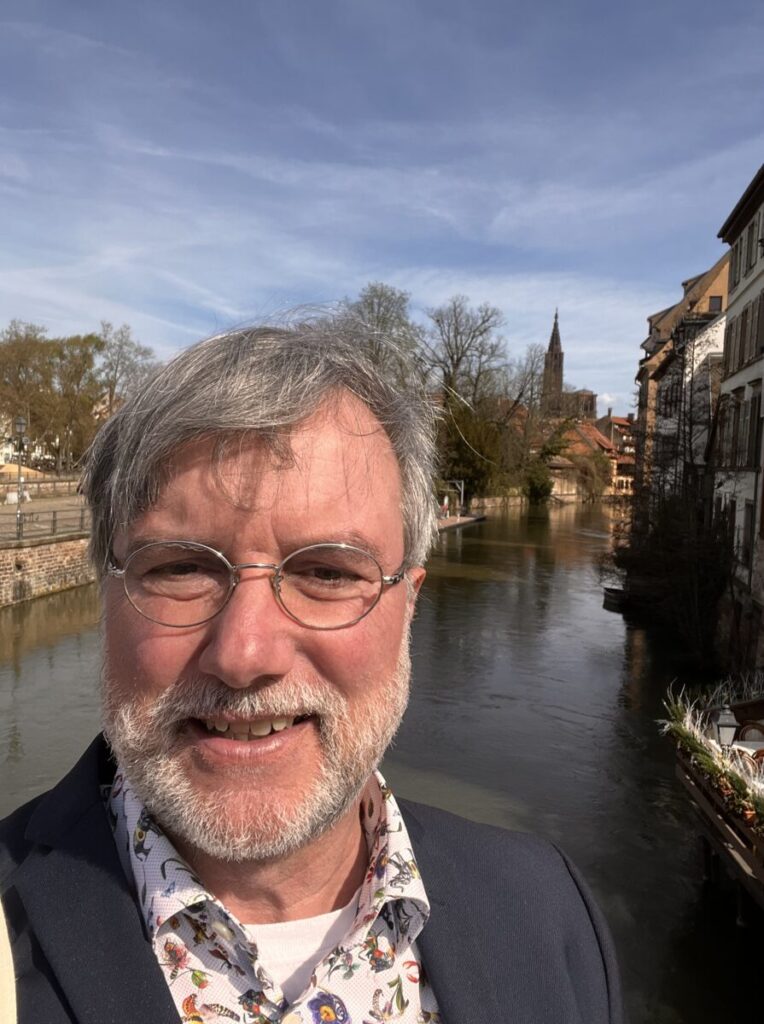
Karl Matthias Wantzen studied biology at the University of Constance, completed his doctorate on Brazilian waters at the Max Planck Institute, and obtained his postdoctoral qualification on the topic "Biodiversity and nature conservation of large rivers." For 8 years, he led an international cooperation project on the Pantanal in Brazil, the vast floodplain of the Paraguay River.
Since 2010, he has been a professor at French universities, first in Tours, and since 2023 in Strasbourg. In addition to a UNESCO chair "Rivers and Heritage", he also leads an interdisciplinary chair "Water and Sustainability" for the trinational university partnership "EUCOR- The European Campus".
More information at https://ites.unistra.fr/recherche/equipes/bise/karl-matthias-wantzen, https://www.unesco-chair-river-culture.eu/
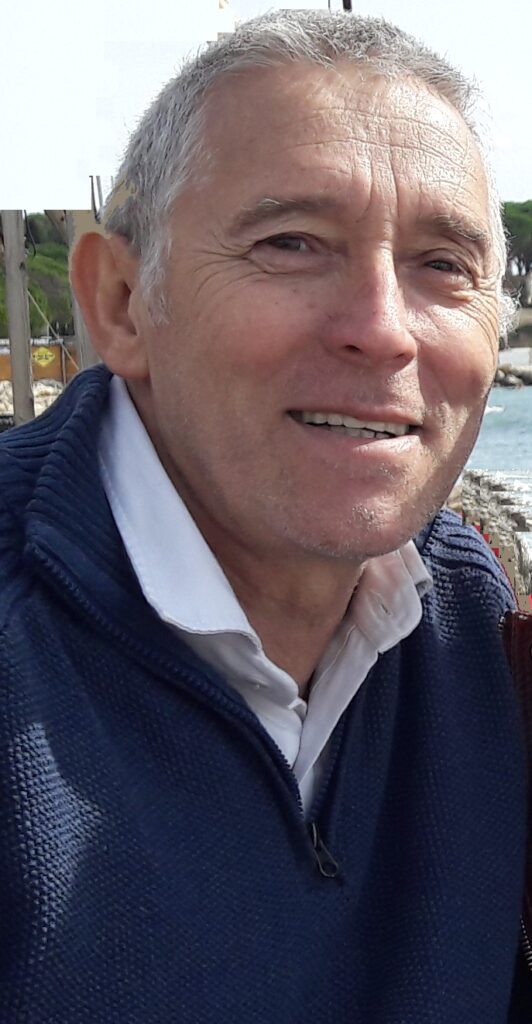
Bernard Mossé Historian, Head of Research, Education, and Training at the NEEDE Mediterranean association.
Member of the Scientific Council of the Camp des Milles Foundation - Memory and Education, for which he was the scientific manager and coordinator of the UNESCO Chair "Education for Citizenship, Human Sciences, and Convergence of Memories" (Aix-Marseille University / Camp des Milles).