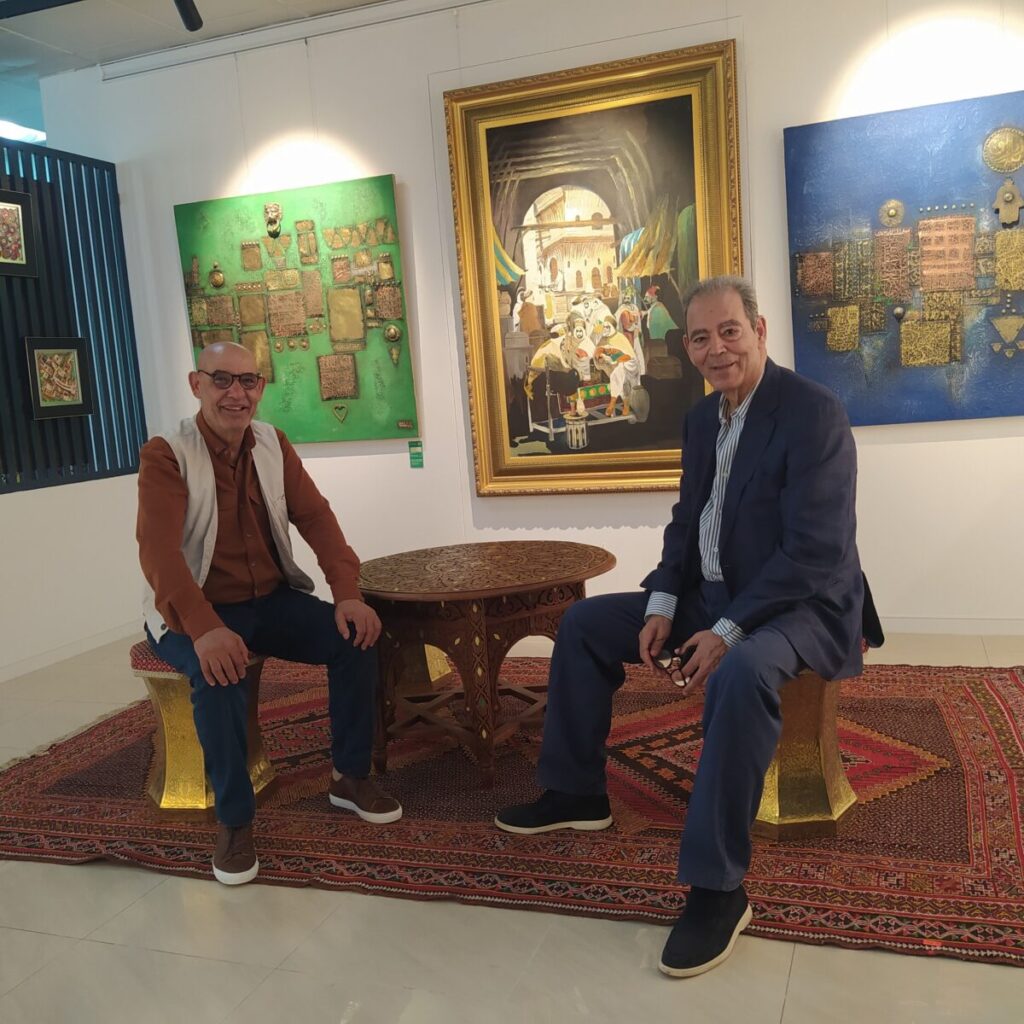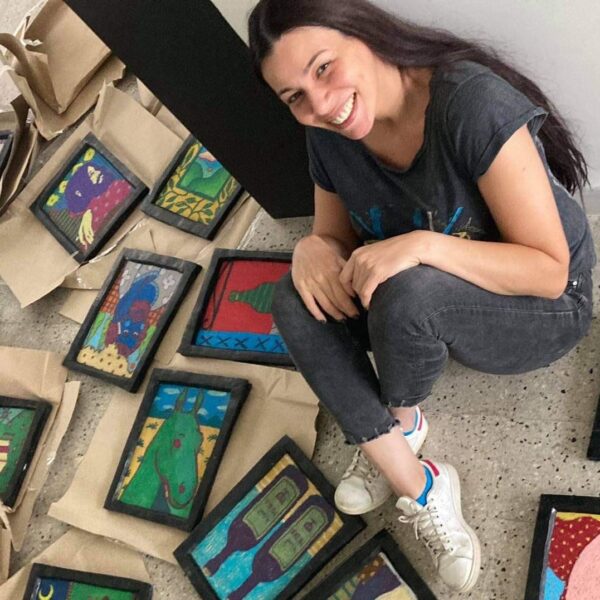
Algeria has a significant number of painters, some of whom are world-renowned such as Baya and Issiakhem. However, the art market is not organized and therefore remains reserved for a certain elite. Nevertheless, professionals are trying new approaches to interest the general public in art and enable artists to sell their works. Sabrina Tazamoucht, Abderrahmane Kahlane, Ali Djerri, and Ali Serraoui are each working at their own level to promote visual arts in Algeria.
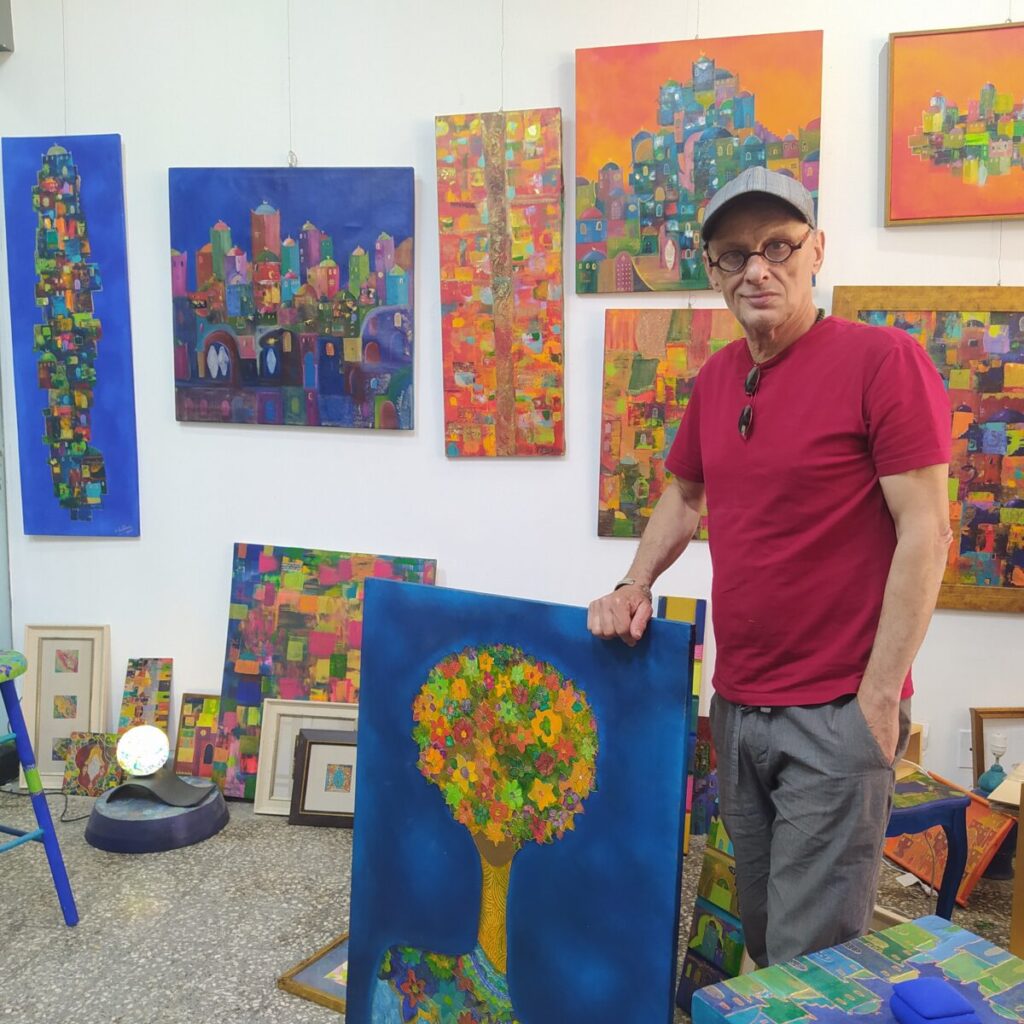
Artist with multiple talents and exhibition curator, Abderrahmane Kahlane does not hide his anger. Met in his studio in Ryadh el Feth, a vast space that was the beating heart of the capital in the 1980s, Abderrahmane believes that the field of visual arts is currently under threat. "We are living in a period where pseudo-artists do not hesitate to make copies of original works plagiarized from the internet and resell them at prices they themselves have set," he says, adjusting his Lennon-style glasses. “These practices, according to him, contribute to weakening an art market that struggles to organize itself.” Algeria, a very large country with nearly 45 million inhabitants, has a significant number of artists. However, it is difficult to quantify their number and disciplines, but the art market does exist. It just needs to be organized.
"Self-assessment"
For decades, this market has been more about informal codes than clearly defined rules. Sabrina Tazamoucht, founder and director of the visual arts agency InBloom and the gallery Bloom The Art Factory, headquartered in El Biar on the heights of Algiers, explains the mechanisms for evaluating the price of an artwork. "Since the market is not organized, it is often the artist who sets the prices for their works. It is therefore the result of self-assessment. As exhibitions progress, their value increases. But in a regulated market, it doesn't happen that way at all," notes Mrs. Tazamoucht. She believes that going through an art gallery allows artworks to "acquire a status" provided they are presented in a recognized space and not just a "simple sales store."
The deal between the artist and the gallery owner is quite simple: the artist sets their price and the gallery owner adds a margin ranging from 10% to 30%. However, the director of In Bloom argues for a more formal sales framework. "An art gallery is used to organize, professionalize, and promote the work of artists. That's our job. We create catalogs with high-quality photos and texts to explain and accompany the artworks. The gallery commits to ensuring that the artwork is original by providing certificates of authenticity. Furthermore, the gallery owner is responsible for supporting the artist in all stages of their creations," she adds. Recognition also involves the issue of taxation: "The proceeds from a sale made in a gallery are subject to a 19% VAT," she further notes.
A sedan against an Issiakhem
A question arises in an attempt to understand the quasi-informal mechanisms of the art market in Algeria: who are the buyers of these works? "Collectors, companies, public institutions, and often diplomats who wish to keep a part of Algeria at the end of their mission," says Ali Djerri, director of Hala Art Gallery, which he founded with the entrepreneur Ali Serraoui. "The question of organizing the actors in the field of visual arts is crucial, but we cannot dissociate it from the buyers. It is a market, so we must take into account those who initiate the offer and those who are the source of the demand. Our work as gallery owners is not only commercial. We must promote and educate the public to buy Algerian art," insists Ali Djerri. This professional journalist started a career as a painter after having long directed the newspaper El Khabar. "Our role is to ensure that in the future, art becomes a safe investment. This must start in schools. Currently, those who have money often prefer to invest in a German luxury car costing over 100,000 euros rather than in a painting by Issiakhem," Ali jokes.
Training, Press, and Talent Promotion
What measures should be taken as a priority to organize and develop the Algerian art market? On the part of the public authorities, progress was made with the promulgation, in November 2023, of a presidential decree establishing the "artist status". The text, which led to the creation of an official professional card, also defines "the rights and duties" of artists. However, our experts unanimously agree on one point: training is an area that needs urgent development. "There is a lot to be done in the field of visual arts. We need to train exhibition curators, experts, art critics, and journalists. The role of the press is crucial, as it is through it that we can democratize the arts. There are cultural sections in all media, but it is not enough. We must encourage the creation of specialized magazines dedicated to the works of Algerian artists," says Sabrina Tazamoucht.
Ali Djerri and Ali Serraoui, on their part, want to turn their gallery into a true "cultural hub". "Hala Art Gallery is spacious and offers all the amenities to showcase the works of our artists. But working alone is not enough, we must engage with other professionals to implement an artistic ecosystem that can benefit all stakeholders. For this, there must be greater involvement from the public authorities. For example, it would be necessary to encourage museums to acquire the works of young artists. These canvases of today will constitute the heritage of tomorrow. We must also venture out of Algiers, as the capital is not Algeria. Exceptional artists reside in other regions, we just need to highlight their talent," emphasizes Ali Djerri.
Facilitate the emergence of young artists and self-taught individuals
It must be acknowledged that Abderrahmane Kahlane is a pioneer in promoting artists. He is indeed the brain behind Autodidacte Art, an initiative that has allowed self-taught artists to emerge and fully live their passion. "The potential is enormous, as from the first edition in 2017, I was able to identify over 400 artists who had no academic training from all over Algeria." Abderrahmane plans to organize the third edition during the year 2024. With InBloom, Sabrina Tazamoucht has opted for a different, more targeted approach, which involves hosting "emerging contemporary artists" in residence, and then exhibiting their creations. "We have chosen to create a free gallery, within which artists have carte blanche. The principle is to provide them with all the means to foster creativity. We then support them in all administrative and financial steps, up to the acquisition of their works." SET, whose real name is Oussama Harrachif, is the next artist on InBloom's radar. Launch scheduled for June 7th.